Universities are working with an increasingly diverse student population. This means it is important that educators think about how they ensure that all students feel a sense of belonging and have an equal opportunity to succeed. Approaches such as Universal Design for Learning within curriculum development, teaching, and assessment help create equitable learning environments where all students are valued and supported in their learning. Inclusive teaching recognises that the diversity of perspectives that students bring to class can help develop a deeper, more critical understanding of concepts. Inclusive teaching is a work in progress which calls for ongoing reflection and dialogue. In collaboration with the Community of Inclusive Learning (CoIL), this symposium is an opportunity to engage in that dialogue.
The focus of this symposium will include:
- Accessible learning technologies
- Universal Design for Learning – practical examples
- Innovative approaches to supporting student engagement
- Diversity as fundamental to academic and social progress
- Barriers to flexible pedagogy and how to address them
- Understanding power dynamics in learning and teaching spaces
- Accessible and warrantable assessment strategies
Enquiries
If you have any queries about the Symposium, please contact melbourne-cshe@unimelb.edu.au
Abstracts are invited from University of Melbourne academic and professional staff. The sessions will be programmed in parallel streams.
Proposers are encouraged to be creative in their mode of presentation to enhance their impact and stimulate discussion. Whatever the format, the proposed session should be no longer than 15 minutes with 10 minutes for Q&A. Presentations can include empirical studies, practitioner-focused examples of best practice, or techniques and technologies for enhancing learning and the student experience, for example.
Submit a 500-word abstract (not including references) in Microsoft Word format, outlining your intended presentation for the Symposium. Your abstract should include:
- Title
- Background/context, How the presentation relates to the Symposium Theme and the 5 themes of the ASE Strategy, including relevant literature
- Description of the research, initiative or practice
- Method(s) of evaluative data collection and analysis OR position/provocation statement
- Evidence of outcomes and effectiveness
- Contribution to scholarship and/or practice
- Engagement/Format, identify how you plan to engage your audience. For example: the use of a reflective question or conversation prompt.
- References, APA7 format.
- Do not include the author names and affiliations in the abstract to facilitate double-blind peer review
All abstracts will be reviewed by the Symposium Committee against the following criteria:
- Contribution to scholarship and/or practice
- Relevance to the University beyond own context
- Alignment with the Symposium themes.
Abstract submission
The call for abstracts is now closed.
Important dates
- Friday 10 October
-
Abstracts close
- Monday 20 October
-
Notifications being sent to authors
- Wednesday 5 November
-
12-1pm
Accessibility briefing (accessible presentation delivery, accessible slides, etc.)
- Thursday 6 November
-
10-11am
Accessibility briefing (accessible presentation delivery, accessible slides, etc.)
- Friday 21 November
-
Presentation slides are ready to share on Symposium website
Enquiries
If you have any queries about the abstract submission process, please contact melbourne-cshe@unimelb.edu.au.
| 9.30-10.00am | Registration & morning tea Foyer, Level 2, Kwong Lee Dow Building | |||||
| Plenary sessions (Q.230 Lecture Theatre) | ||||||
|---|---|---|---|---|---|---|
| 10.00-10.55am | Welcome and opening remarks | |||||
| 10.05-10.55am | Keynote address A right to higher education and a new way forward for students with disabilities in Australia Professor Paul Harpur OAM, Professor at The University of Queensland and leading international and comparative disability rights legal academic Moderator: Dr Belinda Johnston, Associate Director Accessibility and Inclusion, University of Melbourne | |||||
| 10.55-11.00am | Comfort break | |||||
| 11.00am-12.00pm | Panel discussions and Q&A: Inclusive Learning at the Crossroads Professor Andrew Perfors, Professor of Psychology and Director of the Complex Human Data Hub, The University of Melbourne Dr Jessica Riordan, Research Project Leader, Staff & Student Wellbeing, The University of Melbourne Associate Professor Sally Treloyn, Associate Professor in Ethnomusicology and Intercultural Research, The University of Melbourne Moderator: Dr Belinda Johnston, Associate Director Accessibility and Inclusion, University of Melbourne | |||||
| 12.00-1.00pm | Networking lunch (Foyer, Level 2, Kwong Lee Dow Building) | |||||
| Concurrent sessions | ||||||
| Inclusive digital learning environments Q.230 Lecture Theatre Chair: Dr Jessica Lees, MDHS | Inclusive assessment and teaching strategies Room Q.227 Chair: Dr Arshia Kaul, FBE | Supporting diverse student needs Room Q.219 Chair: Huong Trinh, SASS | ||||
| 1.00-1.30pm | Co-designing a more accessible Canvas LMS: Enhancing digital learning environments through neurodivergent student perspectives Dr Bhawana Bhatta, Science & Meredith Hinze, Arts | Inclusive assessment by design: Collaborative approaches to equitable assessment in ABP Hui Seung Sarah Song, ABP & Michael Burville, Student and Scholarly Services | Beyond "Access": cultivating strengths and supporting complexity — Inclusive higher education for twice-exceptional (2e) learners Rhiannon Lowrey, FoE | |||
| 1.30-2.00pm | We're going to need a bigger boat: Insights from improving STEM Canvas content Dr Catherine Sutton, FEIT, Rebecca Yang & Reuben Fry, Student and Scholarly Services | Teaching the international cohort: A pedagogy of engagement Dr Alice Boer-Endacott, Arts | Creating an inclusive learning environment for Students with disability: What I learned from my 'Plus One Pledge' A/Prof Judith Marychurch, Law | |||
| 2.00-2.30pm | Inclusive reflection and ePortfolio pedagogies for blended and online learning Kate Mitchell, Student and Scholarly Services & Dr Asli Mccarthy, MDHS | Designing more inclusive assessment while maintaining secure learning A/Prof Grace Thompson, FFAM | Navigating ADHD Together student support groups at CAPS: Key learnings and insights from the mental health professionals facilitating the program Dr Bridget Moller & Rebecca Gomo, Student and Scholarly Services/Counselling and Psychological Services | |||
Keynote presentation
-
Professor Paul Harpur OAM, Professor at The University of Queensland and leading international and comparative disability rights legal academic
As a member of the Universities Accord Ministerial Reference Group, founding member of the Department of Education roundtable on disability higher education matters, member on the Higher Education Standards Panel, among other roles, the speaker today has been privileged to be front and centre on disability reforms in higher education. Professor Paul Harpur OAM will emphasise in his speech, that the current approach to supporting students with disabilities in higher education was designed to resolve a problem that existed decades ago. While those early interventions helped, the problem we face today is fundamentally different. The landscape has shifted, and our systems must evolve to meet new challenges and expectations.
Originally, disability support frameworks were built around the assumption that only 3–4% of the student population had a disability. Today, that number has surged to over 12% in many universities. This dramatic increase reflects not only better identification and disclosure but also a broader societal shift. And while that might seem a large percentage, it is a common belief that disability is under-reported. 'Reported' being a key word here, as this framework relies on the student initiating the process by what we call 'disclosure'. Another word which brings with it perhaps negative connotations.
In the past, our systems were shaped by social pressure to reduce discrimination. Now, under the United Nations Convention on the Rights of Persons with Disabilities (CRPD), students with disabilities are entitled to demand equality, inclusion, and far-reaching accommodations. The CRPD has introduced, for the first time in a UN human rights treaty, a right to higher education—transforming the obligations of states and universities alike. This shift requires a profound transformation in how disability is approached. The old model focused on retrofitting disabling barriers after they were identified. The new model presumes an equal experience from the outset, designing out barriers through universal design and recognising a right of access. This is not just a technical adjustment—it is a philosophical and legal reorientation. Staff and students with disabilities are now expecting and demanding that their human rights be respected, and universities must respond accordingly.
Despite the normative changes, stakeholders in roundtables, forums, and research consistently report that equality remains an unmet dream. The Disability Royal Commission has highlighted persistent problems in education, and addressing these issues will require significant effort from both governments and universities. Encouragingly, this work is already underway.
We are in the midst of considerable reforms in disability and higher education.
Recent developments include the introduction of a psychosocial code of conduct under work health and safety laws, enhancing protections for staff with disabilities. Disability discrimination is now recognised as a source of harm—a risk that must be actively managed. The Universities Accord reforms have led to the creation of a National Student Ombudsman (NSO), empowered to handle complaints around reasonable adjustments for students with disabilities.
Universities that want to do better have often faced resource constraints, but the government has stepped up. The December 2024 Mid-Year Economic and Fiscal Outlook presented a new approach to funding equity in higher education, increasing funding from \$13 million to \$53 million in 2025. This increased in funding is associated with increased obligations upon universities – many of which are still being developed. Additionally, the Disability Discrimination Act is under review. This review is likely to introduce positive duties and revamp reasonable adjustment laws, at a minimum.So, what can universities do now? We can anticipate disability and be proactive in our teaching and learning, as well as in our research. The Group of Eight (Go8) is powerfully positioned to champion change and further stamp its expertise in research. Now is not the time to sit and wait. It is time to seize the social license and find avenues to succeed. The opportunity is here—to lead, to innovate, and to ensure that disability inclusion in higher education is not just a policy goal, but a lived reality.
Inclusive digital learning environments
-
Matthew Harrison, FoE, Emile van Leishout & Bhawana Bhatta (Presenting Author), Science, and Meredith Hinze (Presenting Author), Arts
This presentation explores the perspectives of neurodivergent students on improving the accessibility and user experience of Canvas LMS. Drawing on survey data and focus group workshops with our neurodivergent student population at the University of Melbourne, we identified a series of key themes, including the need for consistent navigation, improved accessibility features, and better content organisation. The findings highlight the importance of consistency between subject sites, predictable layouts, clear communication, and inclusive design in digital learning environments. We explore practical implications for educators and institutions seeking to enhance the online (LMS) experience for neurodivergent students and create a more inclusive academic environment.
-
Dr Catherine Sutton (Presenting Author), FEIT, and Ashley Anderson, Rebecca Yang (Presenting Author) & Reuben Fry (Presenting Author), Student and Scholarly Services
This presentation outlines the process and lessons learned from making a STEM subject’s Canvas page more inclusive and accessible. This included the page’s structure and design, particularly the Module layout, Assessments and the Welcome page; captioning of recordings (there are over 170 solution videos to tutorial problems!); types of files provided and alt-texts of graphs, complex diagrams and mathematical formulae. A panel of collaborators will share their experience of this process. Such endeavours are crucial to the University avoiding indirect discrimination, and it needs to be recognised that suitable time and support is provided.
-
Kate Mitchell, Student and Scholarly Services and Dr Asli McCarthy, MDHS
Reflection and ePortfolio pedagogies when implemented well, can support metacognitive deep learning, processed based learning, identity development, inclusion aims and student resilience and wellbeing. However, designing appropriate ePortfolio related technologies, activities and student supports can be complex. In this presentation we will outline tips and examples for implementing ePortfolios and reflective practice at University of Melbourne using educational technologies such as H5P and PebblePad, based on evidence-based approaches to inclusive quality online learning that align to accessibility, Universal Design for Learning and ePortfolio high-impact practice.
Inclusive assessment and teaching strategies
-
Timsy Gupta, Bridget Keane, Geoff Kelly & Michael Burville (Presenting Author), Student and Scholarly Services and Hui Seung Sarah Song (Presenting Author), ABP
How can assessment design in higher education better support equity, access, and inclusion? This session shares insights from a collaborative project between the Faculty of Architecture, Building and Planning (ABP) and Teaching and Learning Innovation, focused on aligning assessment practices with the Disability Discrimination Act and Disability Standards for Education. Through participatory workshops, a self-assessment tool was co-developed to support academics in embedding inclusive practices. This presentation outlines the project’s approach, key findings, and outcomes, and invites participants to reflect on their own assessment designs. Attendees will leave with practical strategies to enhance accessibility and student belonging in their teaching.
-
Dr Alice Boer-Endacott, Arts
Crafting a teaching space which is accessible to students from a variety of nationalities and disciplines so that they can engage with the content, the teacher, each other, and the assessment tasks, can be challenging. This presentation explores the pedagogical approach taken to foster this outcome across three subjects taught in the Executive Masters of Arts.
-
A/Prof Grace Thompson, FAAM
Assessment signals to students what is considered valuable in their learning, how success is measured, and how they are tracking against these measures. Each discipline has learning and teaching traditions the recognise and foster excellence. Students with disability are the fastest growing diversity group at the University of Melbourne, with flow-on considerations for Student Support Services. Universal Design for Learning is a framework to guide the development of more inclusive learning materials that recognise learner diversity. This presentation will discuss the advantages of inclusive assessments that can circumvent students needing to disclose disability and staff needing to reactively create adjustments.
Supporting diverse student needs
-
Rhiannon Lowrey, FoE
This presentation explores how higher education can better support twice-exceptional (2e) learners—students who are both gifted and experience disability. Drawing on international research and the Australian handbook for teachers Too Quirky, Too Quick: 2E, it highlights how current equity frameworks often overlook 2e learners’ complex, asynchronous profiles. A strengths-based model is proposed, combining Universal Design for Learning, flexible assessment, and mentoring to cultivate potential while addressing challenges. Using a composite case vignette, the session provokes participants to re-imagine inclusion as generative rather than compliance-driven, ensuring that excellence and disability are understood as co-existing realities within diverse student cohorts.
-
A/Prof Judith Marychurch, Law
Crafting a teaching space which is accessible to students from a variety of nationalities and disciplines so that they can engage with the content, the teacher, each other, and the assessment tasks, can be challenging. This presentation explores the pedagogical approach taken to foster this outcome across three subjects taught in the Executive Masters of Arts.
-
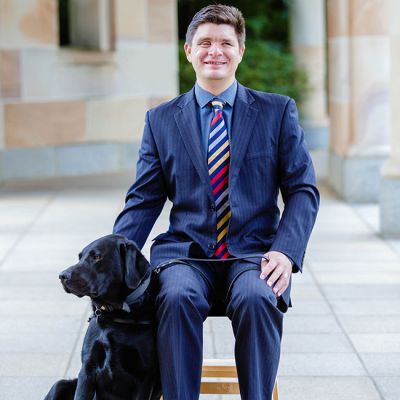
Keynote speaker
Professor Paul Harpur OAM
Professor Paul Harpur OAM is a leading international and comparative disability rights legal academic, current Australian Research Council Future Fellow, leader in higher education reforms, an Associate with the Harvard Law School Project on Disability, and duel Paralympian. He competed in the Sydney 2000 Paralympics and the Athens 2004 Paralympics and has the Paralympics Australia Pin #614. Professor Harpur is a TEDx speaker (“Universities as Disability Champions of Change”). He is chair of the University of Queensland Disability Inclusion Group, as well as holding international posts, including as an Associate with the Harvard Law School's Harvard Project on Disability, an International Distinguished Fellow, with the Burton Blatt Institute, Syracuse University, Berkeley Center on Comparative Equality and Anti-Discrimination Law, and is a former Fulbright Future Scholar. Professor Harpur is active in university-wide and sector-wide higher education change. Illustratively he has chairred the UQ Disability Inclusion Group since 2016 and sits on a range of university-wide committees. At the sector-wide level, during 2023 Dr Harpur served on the Ministerial Reference Group for the Universities Accord. He also serves on the Higher Education Standards Panel (HESP), which is a statutory body under Part 9 of the Tertiary Education Quality and Standards Agency Act 2011 (Cth). The HESP is charged to advise and make recommendations to the Minister and to the Tertiary Education Quality and Standards Agency (TEQSA) on the Higher Education Standards Framework and to TEQSA on matters including TEQSA’ strategic objectives, corporate plan, performance against that plan, reform agenda, streamlining of activities and resourcing requirements and its regulatory approaches. He also serves on the Advisory Board for the Australian Centre for Student Equity and Success, formerly the National Center for Student Equity in Higher Education. In April the Univertas 21 (U21) Senior Leaders Group adopted the U21 Framework for Equitable and Inclusive Global Engagement to guide EDI across the 30 university Network. This Framework as a committee, the U21 EDI Management Committee, to which Professor Harpur was appointed in 2025. His transformational work and service has been recognised with numerous diversity and inclusion, human resources and leadership citations and awards. In the 2024 Australia Day Honours, Professor Harpur was awarded a Medal of the Order of Australia by the Governor General of Australia (OAM). The citation for his OAM is “for service to people with disability”. Professor Harpur has published 220+ publications. Professor Harpur's recent publications include 2 books with Cambridge University Press:
- Discrimination, Copyright and Equality: Opening the E-Book for the Print Disabled (2017)
- Ableism at work: disablement and hierarchies of impairments (2019)
Featured speakers

Dr Belinda Johnston
Dr Belinda Johnston is an Associate Director, Accessibility and Inclusion at the University of Melbourne. Belinda is a skilled public policy professional with experience across a range of social policy portfolios in Victorian Government central and line agencies as well as in the university and TAFE sector.

Professor Andrew Perfors
Professor Andrew Perfors is the Director of the Complex Human Data Hub in the School of Psychological Sciences as well as the Academic Lead for LGBTIQA+ Inclusion at the University of Melbourne. His research focuses on understanding how people learn from and share information with each other, and how that learning changes the information environment itself. He is also a passionate teacher whose approach to education centres around the importance of establishing a sense of belonging and safety for everyone.
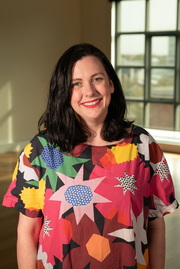
Dr Jessica Riordan
Dr. Jessica Riordan (nee Johnston) is an early career researcher with a passion for conducting neurodiversity-affirming research, translating research into practice, and inspiring positive societal change through community-led advocacy and education. Drawing on her research background in developmental psychology and lived experience of neurodivergence, Jessica co-founded the University of Melbourne Neurodiversity Project in 2023 and is currently serving as the Project Leader for Staff and Student Wellbeing.

Associate Professor Sally Treloyn
Dr Sally Treloyn is Associate Professor in Ethnomusicology and Intercultural Research in the Faculty of Fine Arts and Music. At the Wilin Centre for Indigenous Arts and Cultural Development, Sally plays a strategic and supportive role in the Indigenous research and research training, teaching and learning, and community engagement. Sally is an active researcher in music sustainability and archives and access, with a specialism in Indigenous song in the Kimberley and Pilbara regions. They have led multiple Australian Research Council Linkage and Discovery Projects and was the recipient of a Future Fellowship between 2016 - 2021, conducting research with community organisations and artists in multiple sites in Australia, Canada, South Africa, and Uganda.
| Date | Wednesday 26 November 2025 |
|---|---|
| Time | 10.00am-2.30pm, registration and morning tea from 9.30am for 10am start |
| Location | In-person on Parkville Campus or online via Zoom |
| Cost | The Symposium is free for the University of Melbourne staff and graduate researchers |
| Registration | Registration is closed |
Video tour for the symposium venue
Enquiries
If you have any queries about the registration process, please contact melbourne-cshe@unimelb.edu.au.
Video tour for the symposium venue
Enquiries
If you have any queries about the registration process, please contact melbourne-cshe@unimelb.edu.au.