Implementing Interactive Oral Assessments
Frequently Asked Questions (FAQs) for Subject Coordinators
Implementing Interactive Oral Assessments
Background
This resource was co-developed by the Centre for the Study of Higher Education (CSHE) and the Faculty of Arts Future of Assessment Working Group to provide detailed practical guidance for subject coordinators considering the use of interactive oral assessments (IOAs). It addresses common questions related to marking, feedback, scheduling, bookings, workload, preparation, access, equity, and academic integrity. The content is informed by a detailed review of academic literature and practical guides, along with participants’ firsthand experience designing, preparing for, and implementing IOAs as part of a Faculty of Arts pilot. Practical examples are included, as are six detailed case studies.
The information in this resource is designed to complement other University of Melbourne resources relating to IOAs, including:
- The CSHE’s IOA resource for staff, which provides broad advice relating to design and delivery
- Teaching and Learning Innovation’s (TLI) IOA resource for staff, which focuses on practical and logistical guidance
- Resources and information about the Faculty of Arts IOA Pilot
- Education at Melbourne’s advice for staff
- Academic Skills resource for students
- In addition to the detailed CSHE case studies (available here), other case studies based on University of Melbourne subjects can found at the links below:
1. Staff workload considerations
1.1 How much time does it take to run and mark and IOA?
The time required to run and mark IOAs varies widely depending on cohort size, assessment design, weighting, and logistics. While some staff find the workload comparable to essay marking when distributed, others report it to be unsustainable for large cohorts without additional support. In general, scenario-based group IOAs conducted during class take less time than individual artefact-based IOAs scheduled outside class hours.
Individual artefact-based IOAs can be time-intensive because they often require assessors to read submitted artefacts in advance, prepare tailored questions, schedule and run sessions and complete rubrics and feedback during or after the session. For larger cohorts, the workload may increase significantly, requiring additional hours outside class and extra staffing. However, when an artefact-based IOA is linked to a written assessment, reducing the word count of the written component and reallocating some of that content to the IOA can help balance workload and save time on marking (see Practical example: Anticipated workload / performance expectation for a sample IOA compared to an equivalent written assessment).
Workload peaks can occur when IOAs are clustered at the end of the semester, especially for academics teaching multiple subjects. Spreading IOAs across the teaching period may help reduce pressure.
Real-time marking and feedback can also be mentally demanding, so for large cohorts, consider strategies such as staggered scheduling and shared marking responsibilities. Specific sections of rubrics may need to be re-drafted to support tutors delivering real-time marking.
-
Consider a subject with 100 students and two tutors, each managing two tutorial groups of 25 students. The IOAs are individual, scenario-based, and scheduled outside regular class time. Each session lasts 15 minutes—10 minutes for the IOA and 5 minutes for feedback—with marking completed during the session. Only one assessor is present during the IOAs, and all sessions are recorded to enable double marking (where required).
- Total marking time:
100 students × 15 minutes = 1,500 minutes (25 hours) - Total staff time required:
Including marking, setup and coordination = 3,000 minutes (50 hours) - Time per staff member (subject coordinator + two tutors):
50 hours ÷ 3 = 16.7 hours each
For comparison, an equivalent written task of 1,000 words might require two tutors to spend around 20 minutes per essay to mark and provide feedback:
- Total marking time:
100 essays × 20 minutes = 2,000 minutes (33 hours) - Plus moderation:
Add 1 hour = 34 hours total - Time per tutor:
Approximately 18 hours each
In this example, the IOA requires an equivalent amount of time to conduct and mark than the written task, although more of the coordinator’s time is required than for the written task only.
If the IOA (10 minutes + 5 minutes for feedback) is linked to an artefact (i.e. a 1,000 word written task), the workload increases:
- Reading and preparing feedback on written assignment (plus moderation) per tutor:
18 hours - Implementation of IOA and delivery of feedback:
16.7 hours - Time per staff member (subject coordinator + two tutors):
34.7 hours
By comparison, marking 2,000 words of written assessment at 40 minutes each would take two tutors around 33.3 hours. Again, the total time spent is equivalent for both the IOA + artefact and the written task only, but more coordinator’s time is required for the IOA than for the written task only. - Total marking time:
1.2 How does the work of delivering an IOA fall across a semester?
When first implementing an IOA in a subject, an initial investment of time will likely be required for design and preparation. This phase typically includes developing marking rubrics, redesigning the assessment structure, preparing resources for students (and tutors, if relevant), planning logistics, and considering special considerations and reasonable adjustments. This phase may require several weeks of lead time; however, once developed, these resources can be reused in future iterations.
Depending on when the IOAs are scheduled in the teaching period, staff workload can then be distributed across the semester, with varying intensity at different stages. For example, the workload could be spread across four non-consecutive weeks, with each week focusing on different aspects of the process. The Practical example below (Distributing workload across a semester) is based on an artefact-based IOA scheduled at the end of the semester but could be adapted to suit other designs and timings.
-
Context: An undergraduate subject with 107 students and 5 tutors. Students submit a 1500-word individual essay in Week 12, followed by an individual IOA held in the first week of the exam period.
Logistics and Introduction Phase (Week 2): The coordinator concentrates on organising logistics, such as room bookings and setting up the student booking system. Students are introduced to the concept of IOAs in class. During this time, the coordinator might also record role-play exemplars of IOAs to share with students and tutors.
Training and Preparation Phase (Week 9): Staff train tutors and ensure all students have booked their IOAs. Scaffolded oral communication activities are implemented in classes.
Essay Marking Phase (SWOT Vac): Once students have submitted the linked essay, these are marked by tutors and used to develop 2-3 tailored questions for each individual student.
Implementation Phase (Exam period): This period is dedicated to conducting and marking the IOAs. Tutors run the IOAs according to the schedule and complete the rubrics immediately after each session.
2. Scheduling and bookings
2.1 How long should an IOA be?
The University’s assessment guidelines suggest that the duration of oral presentations can be determined based on their assessment weightings and word count equivalence (see the table below for examples in a standard 12.5-point undergraduate subject).
Suggested durations for oral presentations in a standard 12.5-point undergraduate subject1
Assessment weighting | Word count equivalence | Individual presentation | Group IOA presentation2 |
|---|---|---|---|
10% | 500 words | 5 minutes | 10 minutes |
25% | 1000 words | 10 minutes | 20 minutes |
50% | 2000 words | 20 minutes | 40 minutes |
2 A cap on group sizes will need to be determined – for presentations, the assessment guidelines suggest this is no more than 3 students.
However, IOAs are generally more interactive and dialogical than a typical oral presentation. Therefore, durations for these kinds of assessment may need to vary depending on the context and situation. When deciding on the appropriate duration for an IOA, it may be helpful to consider the following factors:
- Assessment weighting: Higher-weighted assessments typically warrant longer durations.
- Experience of students with the IOA format: Novice students may need more time (e.g., a few minutes at the start to settle their nerves)
- Complexity of the subject matter
- Number of learning outcomes being assessed
- Level of detail required in student responses (use equivalent word count as a guide)
As a general rule, aim to keep individual IOAs to a maximum of 20 minutes and pair or group IOAs to a maximum of 30 minutes to prevent student fatigue and maintain assessor focus.
Remember that the chosen duration should allow students to effectively demonstrate their knowledge and skills while remaining manageable for assessors. Allocate extra time for assessor administration tasks—such as reviewing linked artefacts, providing feedback, and completing marking—beyond the assessment itself. Depending on the context, additional time may also be needed for introductions and rapport-building to help ease student nerves. The Practical example below suggests how a coordinator might decide on an appropriate duration for an IOA in their subject.
-
Lee is the subject coordinator for a second-year undergraduate Politics subject worth 12.5 credit points. In past semesters, the assessment design featured a 1000-word essay (worth 25%) designed to align with two specific learning outcomes. Lee would like to replace this essay with an individual IOA of equivalent word count. University assessment guidelines suggest that a standard 10-minute oral presentation is equivalent to approximately 1000 words. However, Lee recognises that an IOA differs from a standard oral presentation due to its interactive nature.
Lee decides to schedule a 12-minute IOA for the following reasons:
- The interactive format results in a lower word-count equivalence compared to a standard oral presentation. A 12-minute IOA allows for approximately 7-8 minutes of student speaking time, with the remainder allocated for assessor questions and brief pauses. This is appropriate for a 25% weighting.
- This timeframe provides sufficient time to assess the two learning outcomes comprehensively.
- It fits well into a 20-minute scheduling block, allowing time for assessor set up and administration on either side of the assessment.
- The duration is below the 20-minute maximum recommended to avoid overwhelming or fatiguing the student (or assessor).
By choosing a 12-minute duration, Lee ensures a balanced assessment that aligns with university guidelines while accounting for the unique characteristics of an IOA. This approach allows for meaningful interaction and thorough assessment within a timeframe that is manageable for both students and assessors.
2.2 When in the semester should I schedule an IOA?
IOAs can be strategically scheduled at various points throughout the teaching or examination period, depending on the learning objectives, as well as resourcing constraints and practical considerations. The specific timing can also be influenced by the relationship of IOAs to other assessments, potentially when used to verify learning in an earlier task (e.g., a written essay), or when replacing written examinations.
IOAs that take place early in the teaching period can serve as diagnostic tools or engagement checkpoints, fostering personal connections between students and teaching staff. When implemented in the middle of the teaching period, IOAs can act as bridges between earlier assignments and final tasks, encouraging reflection on the learning process and supporting progressive skill development. When used later in the teaching or examination period as summative assessments, IOAs can help to assure that students have achieved key learning outcomes for the subject. That said, concentrating all IOAs in the exam period may create workload pressures, particularly for staff managing multiple subjects with marking demands at that time.
The Practical example below highlights how IOAs could be implemented at different times in a teaching period. When deciding on the most appropriate timing, consider the learning outcomes being assessed, practical constraints such as staff availability and room bookings, and the overall assessment regime of the subject. Ultimately, the scheduling of IOAs should be tailored to enhance student learning, provide meaningful feedback, and align with your subject's broader assessment strategy.
-
Context: A graduate-level subject aimed at ESL students to help them develop the advanced language skills required for successful graduate study in English
Mid-Semester IOA:
- In Week 5, students submit a 750-word critical review (15%), completed in pairs
- In Week 7, during class, students complete a linked 10-minute IOA (15%). Students complete the IOA in pairs, and interaction is led by the assessors.
- The focus of the IOA is on demonstrating understanding of the review, elaborating on summaries and evaluations, and explaining writing choices.
- Students receive in situ feedback at the end of the IOA.
End-of-Semester IOA:
- In Week 9, student submit a 2,000-word literature review (40%) completed individually.
- In Week 12, students complete a linked individual 10-minute IOA (20%) outside class hours.
- The focus of the IOA is demonstrating understanding of the review’s themes, evaluations, and writing choices, as well as showcasing oral communication skills.
- Students receive in situ feedback at the end of the IOA.
This design provides early feedback to guide improvement, reduces risk of academic misconduct by verifying learning at multiple stages, and builds student confidence with IOAs through progressive oral engagement.
2.3. Can I run IOAs online?
As pointed out in the CSHE IOA guide, conducting IOAs online can raise concerns about assessment integrity. Students might rely on scripts or seek help from advanced generative AI tools, and in rare cases, even use digital avatars to impersonate themselves. While there is currently no University policy requiring IOAs to be conducted in person, this form of IOA is unlikely to be considered by the University as ‘secure’ in future.
If choosing to use online IOAs, consider enhancing security and integrity by incorporating robust measures such as identity verification, controlled environments, and session recording. Students should also be familiar with the chosen platform (e.g., Zoom, Microsoft Teams) before the assessment. These steps promote fairness and authenticity.
Some suggested practices for online IOAs include verifying student identity before starting, using secure platforms (e.g., Zoom with waiting rooms and authenticated logins), recording sessions individually for auditing and remarking, provide clear instructions on technology requirements and privacy, and piloting and documenting principles for secure online IOAs for future reference. Also, it is a good idea to have the contact details for IT support on hand in case of any technical issues.
Online IOAs may also serve as reasonable adjustments for students unable to attend in person (e.g., for health reasons), provided they meet the same security standards as face-to-face assessments.
2.4 Can I run IOAs in tutorials?
Some coordinators choose to incorporate IOAs into regular tutorial sessions, as this can offer benefits such as immediate feedback and discussion while reducing the logistical challenges of scheduling outside class time. Tutorials can also be used to prepare students for IOAs through low- or no-stakes practice activities.
The practicality of running IOAs during tutorials depends on factors like class size, IOA duration and type, and the length and frequency of tutorials. For example, in a 55-minute tutorial with 22 students, individual 10-minute artefact-based IOAs would be difficult to accommodate. However, this approach often works well for scenario-based IOAs completed in groups or pairs (see the Public Relations and Communication case study for an example).
Another option is to schedule IOAs outside regular classes, either as an additional activity in the subject, or as a replacement for an existing class (e.g., tutorial) in the subject. This can provide flexibility for both students and assessors, though it requires consideration of potential timetable clashes and room availability. Bookings may be spread across the week rather than confined to scheduled class times, depending on staff and student availability.
2.5 Should an IOA take place in front of other students, or in private?
When deciding between private or public IOAs, consider the learning outcomes, nature of the assessment, student comfort levels, and practical constraints. In some cases, it makes sense for the IOA to be implemented in front of other students (e.g., as in certain scenario-based IOAs, such as client presentations, teaching demonstrations, or when peer-based learning is a goal). In other cases, such as when securing a previously submitted artefact, there is value in conducting them privately between the assessor(s) and the student (or students, if a group task is involved). Click on the tabs below for some advantages of each format.
-
- Authenticity: It gives students an opportunity to present and defend ideas in a highly authentic setting that mirrors that of a likely future workplace.
- Transferable confidence: Performing successfully in this setting may help students build confidence that can be applied to other unfamiliar or high-stakes contexts.
- Accountability: This format reduces opportunities for passive participation and promotes individual accountability.
- Peer learning: Observers gain exposure to diverse approaches and performance levels, helping them calibrate standards and identify strategies for improvement.
- Motivation: Some students try harder when they know they are performing in front of peers (the ‘reputation effect’).
- Peers as questioners: Peers can play a useful role in supporting the interactive component of an IOA by contributing questions. It often helps to share examples of questions that align with the assessment criteria and to clarify what makes a question fair and relevant. If peer questions don’t fully cover the intended scope, assessors can add their own to ensure balance and consistency.
-
- Comfort and confidence: A private setting may help students feel more at ease and less anxious, enabling a more authentic demonstration of their knowledge and skills. This approach is especially beneficial for students who are quiet in class due to discomfort speaking in front of peers—a concern often raised by international students. Private IOAs allow these students to engage more freely without fear of embarrassment.
- Individualised attention: Private sessions enable assessors to engage directly with each student, providing focused interactions that can be difficult to achieve in larger groups or during group IOAs. This one-on-one format supports deeper discussion, personalised feedback, and ensures every student receives equal opportunity to contribute.
- Confidentiality: Private sessions ensure that individual student performances and feedback remain confidential. They provide a safe space for discussing sensitive topics, such as ethical issues, personal reflections, or intercultural matters, without fear of peer judgment.
2.6. How can I schedule IOAs to improve efficiency?
When conducting IOAs as an additional activity within the subject (see Section 2.4), consider block scheduling rather than scattering sessions across the day. For example, some coordinators schedule assessments in 2-hour blocks over several days, while others allocate blocks across 2–3 full days for larger cohorts (e.g., 50 students). Include short breaks (e.g., 5-10 minutes) between sessions to reduce assessor fatigue and allow time for administrative tasks.
It may also be useful to build in a buffer—such as an extra 60-90 minutes at the end of each day—for unexpected issues, like last-minute rescheduling or students experiencing high anxiety and needing additional support. Ensure that students are informed early about IOA timing and format, with reminders provided about dates and locations via Canvas and in-class to reduce anxiety and limit missed sessions.
2.7 How much time should I allow between artefact submission and the IOA?
When IOAs are linked to a submitted artefact (such as a written assignment), it’s helpful to allow enough time to review the work and prepare relevant questions. The interval will depend on factors like class size, complexity of the task, and staff availability. As a general indication, many coordinators find that one to two weeks between submission and the IOA works well, with longer gaps for large cohorts or more complex assignments
2.8 What booking systems work well for scheduling IOAs? What about for large classes?
As part of the Faculty of Arts IOA Pilot, Canvas Calendar, Microsoft Bookings and TimeEdit/Allocate+ have been trialled for scheduling IOAs. Information about each of these systems (based on feedback from the Pilot) is provided in the table below (to view, click the Comparison of University Booking Systems tab). Additional recommendations have been provided by Business Services in this report. The Teaching and Learning Innovation IOA resource also provides useful information about booking systems.
-
Feature / AspectMicrosoft BookingsCanvas CalendarTimeEdit/Allocate+Integration with other university systemsMicrosoft Outlook CalendarCanvasMyTimetable, Room BookingsComplexity of setupModerateLowHighSetup support neededMinimal - self-guides availableMinimal - self-guides availableHigh - requires timetabling team and operational support.Best use caseSmall cohorts; individual bookings.Moderate cohorts (works well for tutorials); group bookings.Large cohorts; exam-period scheduling.Scalability for large cohortsLimitedLimitedExcellentStudent experience (from the Arts Pilot)Mixed navigation feedbackLiked visible time slotsEasy navigationLiked visible time slotsSome wanted notificationsConvenientLinked to main systemsSome found it complicated to useCoordinator feedback (from the Arts pilot)Easy to set up and convenient.
If students have their Outlook calendars set to a different time-zone this can cause scheduling issues.
Outlook calendar integration may fail, allowing double-booking even when time is blocked.
Easy to set up and navigate.Does not link with Outlook Calendar, so bookings need to be manually added.
Easy for students to navigate.Can export appointment lists for each tutor.Small scheduling errors are hard to spot in TimeEdit but can create lots of email traffic from students.All scheduled slots appear in Canvas SpeedGrader as separate sections, which can confuse tutors during marking.
3. Preparing students for IOAs
3.1 How do IOAs assure learning outcomes?
Compared to traditional written assessments, IOAs provide a more secure assessment of learning. They require students to demonstrate genuine understanding and apply knowledge in real time, making plagiarism or outsourcing highly unlikely. By combining authenticity, spontaneity, and conceptual depth, IOAs ensure that students can articulate their ideas and apply what they have learned in meaningful ways. This assurance is achieved through:
- Real-time, unscripted responses: Students must respond to unscripted questions about their work during the IOA. This format tests their ability to think strategically and articulate ideas spontaneously, rather than relying on memorised or AI-generated content.
- Linking theory to practice: IOAs often involve scenario-based or deliberative tasks that simulate professional contexts (e.g., crisis communication, client briefings). This design integrates theoretical knowledge with practical application, ensuring students can use concepts meaningfully rather than just reproduce them in writing.
- Verification of written work: When IOAs are linked to artefacts such as written assignments, they serve to warrant the authenticity of the artefact. Students must explain their arguments, sources, and writing choices verbally, which validates authorship and understanding.
- Assessment of higher-order skills: IOAs assess critical thinking, communication, and decision-making processes—skills that written tasks often fail to capture. For example, students can be asked to justify their reasoning, defend judgments, and elaborate on underdeveloped ideas, which evidences genuine learning beyond surface-level knowledge.
3.2 What do students like about IOAs?
Students often appreciate the conversational nature of IOAs, finding them to be less stressful than traditional written exams—particularly when the assessor is familiar to them. Informal conversations at the end of IOAs sessions are also valued, as they help strengthen rapport when IOAs occur mid-semester and provide a sense of closure when scheduled at the end of the subject. This can make the experience feel more engaging and less isolating than conventional written assessments or exams.
Many students enjoy the novelty of this format, especially if they are accustomed to written tasks. They welcome the opportunity to explain their ideas and writing processes in person, which allows them to demonstrate knowledge beyond what is captured in written work. This is particularly beneficial for those who struggle with written expression or want to clarify complex arguments. Immediate verbal feedback is frequently highlighted as a major advantage, as students prefer this over waiting weeks for written comments, finding it more personal, actionable, and meaningful.
In scenario-based IOAs, students value the authenticity and real-world relevance of the tasks. When scenarios align with industry practices, they can see how these assessments prepare them for future careers and help develop essential communication skills. They also appreciate the chance to apply new knowledge and engage in professional-style conversations with assessors, including asking and answering questions. These interactions mirror workplace practices, helping students refine their understanding and improve the quality of their responses.
For more on students’ perceptions of IOA, read this blog post written by two coordinators of a subject in the Faculty of Arts.
3.3 What makes students nervous about IOAs?
A common reason that some students feel nervous about IOAs is uncertainty about what is involved and unfamiliarity with the format. Offering clear information about the purpose and structure of IOAs and taking steps to set expectations early in the semester may help ease concerns.
Students may also worry about the depth and complexity of questions, feeling unsure about whether they can demonstrate sufficient knowledge or solve applied problems under pressure. Sharing sample questions and practice scenarios can build confidence and help students prepare effectively.
Performance in front of others can heighten anxiety for some students, who fear being judged by peers during public IOAs. Offering private options or explaining the benefits of peer learning can help mitigate this concern.
Cultural and language barriers can heighten anxiety during IOAs. International students or those from culturally and linguistically diverse backgrounds may feel additional pressure, particularly if they lack confidence in their English-language skills. Providing opportunities for practice and reassuring students that minor language errors will not affect their marks can help reduce this stress.
Gender stereotypes and cultural assumptions can also influence performance. To ensure fairness, use a clear rubric that prioritises content over presentation skills and train assessors to apply it consistently.
Time pressure and assessment weighting can significantly contribute to student anxiety. Limited time to complete an IOA, particularly when it carries substantial grade weight, often heightens stress. To mitigate this, schedule adequate time for the assessment and clearly explain how marks are distributed so students feel prepared and confident.
Terminology also matters. Referring to the IOA as an “exam” tends to increase anxiety, whereas framing it as a “conversation” or “professional discussion” can help students approach the task with greater confidence and ease.
3.4 How can I prepare students to succeed in IOAs?
Research shows that students who feel nervous before an IOA often perceive the experience positively once they have completed one. This shift occurs because the format is more conversational and less intimidating than expected. Experiencing the process firsthand helps demystify the assessment, reduce anxiety, and build confidence for future IOAs. Click on the tabs below for some strategies that can be used to help students feel more prepared and confident going into the IOAs.
-
From the start of the teaching period, provide students with a clear overview of the assessment design, including where the IOA fits within the subject, whether it is linked to an artefact (e.g., a written essay), and how it is weighted. Make this information easily accessible on the LMS from the beginning of the semester so students can set expectations and prepare effectively.
Include details about the format (and scenario, if relevant), assessment criteria, and expectations before, during, and after the session. Provide clear guidelines on the use of notes, the unscripted nature of the conversation, and technical instructions for online assessments. Upload all supporting materials—rubrics, exemplar videos, and practice questions—to the LMS early so students can review them throughout the semester.
Consider hosting an information session in Week 1 with time for Q&A to explain the IOA process, its purpose, and benefits. Clarify how IOAs differ from traditional oral presentations, emphasizing the importance of engaging in a dialogic conversation rather than relying on pre-prepared scripts. Reassure students that marks focus on understanding and reasoning, not perfect English or polished delivery. Encourage preparation by revisiting readings and written work rather than memorising scripts.
It may also be useful to point students towards this Interactive Oral Assessment resource developed by Academic Skills to help them learn about what an IOA involves and how to go about preparing for one:
Where feasible, allow students to collaboratively review and refine the assessment rubric early in the semester. This promotes understanding of key criteria and fosters a sense of ownership over the process.
-
As the semester progresses, share exemplar videos of IOAs (using different scenarios and assessors) that illustrate both strong and weak performances. Facilitate class discussions to identify effective strategies and common pitfalls. Encourage students to practice marking these exemplars against the rubric to build assessment literacy.
Dedicate class time to low-pressure practice sessions in small peer groups. Incorporate peer review to enable feedback exchange, deepen understanding of the rubric, and refine oral skills. Encourage self-reflection after practice sessions—students may record these sessions to support this process.
If resources allow, offer workshops on oral communication skills, stress management, and effective interaction techniques.
-
Collect feedback throughout the preparation period via anonymous surveys or informal discussions to gauge the effectiveness of resources and support. Use this feedback to refine exemplar videos, rubrics, and workshop content. Continuous adaptation ensures relevance and inclusivity for all students, including those who are neurodivergent or have Academic Adjustment Plans.
Maintain ongoing communication with students leading up to the IOA to address concerns and provide encouragement. This proactive approach helps alleviate anxiety and ensures students feel supported.
-
Begin by establishing rapport and asking a few easier questions to help reduce student nerves. Allowing students to refer to their written work during the IOA can also support recall and minimise stress. To maintain academic integrity, assessors can provide students with copies of their written work rather than allowing students to bring their own notes or “cheat sheets” into the session.
4. Marking and feedback
4.1 How do I give feedback on an IOA?
There are various approaches to delivering formative and summative feedback to students who have participated in an IOA, including in situ verbal feedback, post-IOA feedback and marking sheets. These methods are elaborated on in the tabs below. Each approach attempts to balance students’ need to receive timely and valuable feedback while also keeping the process as manageable as possible for teaching staff.
-
One approach is to provide constructive verbal feedback immediately after each student’s IOA. By allocating a dedicated time frame (e.g., five minutes) within the IOA schedule, you can promptly address any misunderstandings related to learning outcomes. This method also gives students the opportunity to seek clarification on points that may be unclear, which they tend to appreciate (see Section 3.2 for more on this). If the IOA is being used to assure student learning on a linked artefact (e.g., a written report), it is advisable to provide feedback on both components at the same time (see Section 4.2 for details).
-
Feedback can also be provided after all IOAs are complete. This might include general comments for the whole class on common strengths and areas for improvement, and/or individual feedback for each student. These comments can be shared in different formats, such as text, short audio or video clips shared via Canvas, or by offering verbal comments in class.
If the IOAs were recorded, these files can be shared with students to support self-evaluation against the feedback received. When adopting this approach, ensure that each student’s IOA is recorded and saved as individual files to maintain privacy and prevent inadvertent disclosure of other students’ information (see Section 4.5 for further details).
-
Subject coordinators can develop marking sheets featuring rubric criteria and checklists of common areas where students typically excel and those that tend to be problematic. These could be produced as physical or digital files that can be completed during or immediately after the IOA. Physical sheets could be handed directly to the student after their IOA (be sure to retain a record of the student’s mark), while digital files can be uploaded to the Gradebook in Canvas.
-
In the Public Relations and Communication case study, assessors use a comprehensive marking sheet for scenario-based IOAs that are implemented during class time. The marking sheet consists of 10 rubric criteria. For each criterion, there are tick boxes corresponding to different grade levels. At the bottom of the sheet, there's also a dedicated space for qualitative observations where assessors can note aspects outside the marking rubric. This approach enables efficient grading in situ, while also capturing nuanced feedback that goes beyond the rubric criteria. It provides a holistic view of the student's performance, balancing quantitative assessment with qualitative observations. By using a marking sheet like this, assessors can maintain consistency in grading while acknowledging the unique aspects of each student’s IOA performance.
-
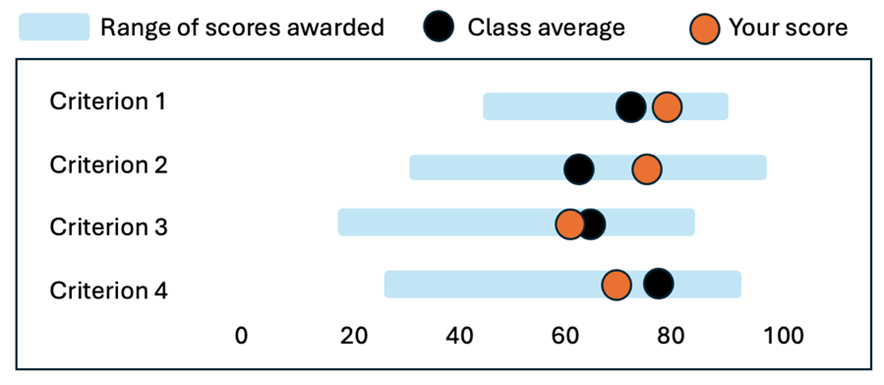
A useful alternative or complement to marking sheets is a visual summary for each rubric criterion, displaying the student’s individual performance relative to the overall range of marks awarded for that criterion across the class, and the class average score (see the figure below). It can be paired with individual feedback comments for each student to support further improvement.
Visual summary of student’s individual performance relative to the class
4.2 What if the IOA is being used to assure learning on an assessed artefact?
When an IOA is linked to a submitted artefact (such as a written essay) and is intended to assure learning in that artefact, it is important to encourage students to meaningfully engage with both parts of the assessment. Not doing so could undermine its purpose of verifying authorship and understanding in the submitted artefact. There are two approaches that may be useful here.
The first is making the linked IOA a hurdle requirement for the subject. In this scenario, if the student is unable to answer any questions during the IOA about the submitted artefact, they fail the subject. If either the IOA or the linked artefact is a hurdle requirement, it’s important to make this clear in the subject handbook and assessment instructions.
The second is assigning weightings (either separately or combined) to both the submitted artefact and the linked IOA and marking both holistically using a single rubric. If assigning separate weightings, ensure the IOA has a substantial weighting (e.g., > 10%) so that students don’t decide to deprioritise or skip this component.
In many cases, combined marks work best when provided after both components have been completed—particularly if they contribute to a single grade or when the IOA serves as a hurdle requirement linked to a prior task. One way to implement this is by creating a single Canvas Assignment within the appropriate Assignment Group, where students submit the written component and later receive their overall grade and combined feedback.
Feedback that references both components can highlight how they complement each other. Where feasible, having the same assessor mark and provide feedback for both parts can help maintain consistency and coherence in judgment.
4.3 How do I train tutors to mark IOAs?
Preparing tutors for implementing and marking IOAs often benefits from a multifaceted approach that focuses on building confidence and consistency. Formal training sessions or workshops can provide a useful foundation, introducing key differences between IOAs and traditional oral presentations, outlining implementation strategies, and offering guidance on developing effective conversational prompts. These sessions can also create space for tutors to raise questions and share uncertainties. For larger cohorts, attention to consistent use of rubrics and standardised marking approaches can help maintain fairness. Moderation meetings after IOAs may also be valuable for checking mark alignment and discussing feedback practices.
Practical activities can complement formal training. For example, mock IOAs—where tutors role-play as both students and assessors—offer hands-on experience with the rubric and provide insight into the student perspective. Reviewing exemplars, such as pre-recorded IOAs, and engaging in group calibration discussions can further support shared understanding of assessment standards.
Developing skills in impartial prompting (see Section 5.1) and constructive in situ feedback (see Section 4.1) can enhance the quality of the assessment experience for students. Tutors may also benefit from strategies for managing challenging situations, such as when students struggle to respond or when academic integrity concerns arise (see Sections 6.3 and 7.1).
Supplementary resources—such as written guides and instructional videos—can serve as helpful reference points throughout the process (for some existing resources, see Dublin City University’s Teaching Enhancement Unit page). In addition, establishing a community of practice through regular meetings can encourage ongoing dialogue among coordinators, tutors, and teaching staff, fostering the exchange of experiences and continuous improvement in IOA implementation.
4.4 How do I mark a group IOA?
For group IOAs, assessors may choose to award individual marks, group marks, or a combination of both, depending on the specific learning objectives and the nature of the task. The decision should be carefully weighed to balance the goals of equitable mark distribution and the accurate measurement of learning outcomes.
As part of a group IOA, individual students may take responsibility for explaining or answering questions about distinct aspects of the project. Depending on what is being assessed, roles could be:
- Phase-based: exploring whether students genuinely understood ‘their’ stage (e.g., rationale for the project, why a particular approach was taken, how findings were interpreted, what the team learned and would change next time); or
- Accountability-based: exploring how well students can defend a particular dimension of the work (e.g., methodological soundness, resource/time allocation, risks and unintended outcomes, and communication and impact).
It is important to ensure that this division of tasks is fair and equitable in terms of intellectual challenge. Additionally, reciprocal peer evaluation / assessment by team members can be valuable and allow for greater insight into the group dynamic and each team member’s contribution than might be apparent to an external observer. Peer assessments can also be used, and these can potentially contribute up to 10% of the final grades.
4.4 How do I manage double marking of IOAs?
According to the University’s Assessment and Results Policy (MPF1326), double marking is required for failed assessment tasks where a student has failed the subject overall. In the case of IOAs, where it is not possible for the assessment to be marked at two separate points, there are two options available:
- The first is to have two markers present for each IOA, who then agree on a single mark to be awarded. This approach requires careful planning and allocation of staff time and may need to be discussed with the head of school or department.
- The second is to record the IOA, so that the recording can be used for double marking if required. If the IOA is in-person, this can be achieved using a University-supplied video camera, or by using Zoom on a University supplied computer to record the room. If the IOA is online, set up either a Zoom or Teams meeting and use that platform to record (for more on this, see Section 4.5).
Both of these options will also support moderation processes. Note that, as with other assessment types, having an initial meeting with all assessors to go through the rubric and establish the approach to marking will support moderation and consistency (see also Section 4.3).
4.5 What do I need to know if I’m planning to record IOAs?
When recording IOAs, it’s important to explain to students that their IOA will be recorded to align with the University’s Assessment and Results Policy (MPF1326). It might also be helpful to reassure them that, if the discussion runs over the scheduled time, they will still have the opportunity to finish their responses and the recording will continue until the assessment is complete.
To efficiently manage recordings when conducting multiple individual IOAs in a single day—especially when sessions are scheduled back-to-back—consider setting up separate Zoom meetings via the Canvas Calendar for each student. This approach generates individual recordings, which simplifies remarking and supports best practices for privacy, particularly if students will be given access to their recordings for self-assessment purposes. Alternatively, starting and stopping the Zoom recording after each IOA will create separate files, noting that this option works only when recordings are saved locally to the computer rather than to the Zoom Cloud.
The University’s Assessment and Results Policy (MPF1326) requires that assessment records be kept for at least six months. When using Zoom to record, be aware that the default setting for Cloud-stored files is that they are automatically deleted after 60 days. To ensure compliance with University policy, set up Zoom so that it saves all recordings locally to the computer (in a restricted access University OneDrive folder) rather than using Zoom's Cloud storage. If using Microsoft Teams to record, the resulting files will be automatically stored in OneDrive, which has no limits on storage duration.
To help maintain privacy and manage access to recordings, it’s generally preferable to avoid using personal devices for IOAs. A practical option is to use a University-supplied computer and platform to record (e.g., Zoom, Microsoft Teams) and store recordings in a secure University OneDrive folder that is accessible only to the teaching team. This approach supports confidentiality and helps safeguard the integrity of the assessment process. Further information about student privacy in Zoom can be found here.
5. Writing questions for the IOA
5.1 How do I prepare questions/prompts for the IOA?
When preparing questions and prompts for IOAs, endeavour to prioritise validity, reliability, and authenticity. A good question should be clear, concise, and free from ambiguity or double-barrelled structures. A potentially useful approach is to follow Bloom’s taxonomy, beginning with lower-order questions and gradually increasing complexity.
Consistency and neutrality can help support fairness in IOAs. Applying prompts in a similar way across students and maintaining a neutral tone often contributes to reliability. Training assessors in questioning techniques may be helpful, as it can reduce the likelihood of leading questions that compromise validity. Preparing questions in advance and sharing them within the teaching team can encourage consistency, while still leaving room for flexibility in follow-up questions or adjustments, including when assessments need to be deferred. Reflection and occasional calibration among assessors can also strengthen shared understanding.
The CSHE guide on IOAs suggests that three broad types of prompts are particularly effective:
- Redirecting prompts guide students back to the task or clarify vague responses (e.g., “Can you link that back to the scenario we discussed?”).
- Expanding prompts draw out more detail or nuance (e.g., “Can you explain the implications of that choice?” or “Tell me more…”).
- Synthesis prompts encourage integration and reflection (e.g., “How do these perspectives fit together?”).
Combining these prompts can foster dynamic, meaningful conversations that uncover deeper levels of understanding.
For scenario-based IOAs, authenticity is an important consideration. Scenarios that resemble real workplace contexts often make the assessment feel more authentic and meaningful. Ensure that questions are relevant to the specific learning outcomes being assessed.
If the IOA is being used to assure learning in a linked artefact (e.g., a written report), the questions asked during the IOA should be focused on that artefact. One approach is to prepare a small core set of standardised questions for all students, complemented by a few tailored questions (typically one to three) that relate to each student’s submitted work. These personalised questions can be developed during the marking process for the artefact, which often makes preparation more efficient and ensures the conversation reflects the student’s own work. Click the tab below for several examples of standardised questions.
-
- Could you summarise the work you submitted and explain its key findings or arguments?
- What is the central argument of your paper, and what evidence best supports it?
- Which concepts from the subject did you aim to address in your work?
- Were there any readings you found particularly valuable when completing this work, and why?
- How does your work apply theoretical concepts to practical or real-world contexts?
- If you were to revise your work, what would you change and why?
- What did you learn about your own approach to research or writing through this task?
- How might the ideas in your work influence your thinking in future studies or professional practice?
5.2 Can I use GenAI tools to prepare questions based on students’ prior written work?
University-approved GenAI tools such as SparkAI or Copilot can be useful for generating initial question ideas for IOAs, particularly in large cohorts. These tools work best when paired with academic oversight to ensure outputs align with learning outcomes and subject context. Because AI-generated questions can sometimes be generic, it may help to use clear prompts that guide complexity, conceptual depth, and relevance to assessment criteria. A balanced approach might involve using AI to create a broad pool of questions, then refining and adapting the most suitable ones, alongside bespoke follow-up questions developed by assessors to explore deeper understanding.
5.3 Do I need to ensure questions aren’t shared with students before the IOA?
To support academic integrity, it is best to avoid providing the full set of IOA questions in advance, as this can lead to rehearsed responses or reliance on AI-generated scripts. Instead, consider sharing only the opening question or offering sample scenarios and practice questions without revealing the actual prompts. These strategies can help students unfamiliar with the format feel more confident. If preparation materials are provided, refresh scenarios and question sets each semester.
It can also be helpful to keep IOA questions somewhat spontaneous and conversational. Flexible follow-up questions tailored to each student’s responses allow the dialogue to evolve naturally, reducing the risk of scripted answers and better reflecting genuine understanding. Incorporating objects, case studies, or visual aids can make the assessment more dynamic and authentic.
NEXT: 6. Reasonable adjustments and alternative arrangements
6. Reasonable adjustments and alternative arrangements
For more detailed information, click here to download the Faculty of Arts’ Interactive Oral Assessments: Guide for Inclusive Design and Adjustments.
6.1 How do I design IOAs to be as inclusive as possible?
Designing inclusive IOAs requires a multifaceted approach that considers the diverse needs of students. Implementing Universal Design for Learning (UDL) principles - such as offering multiple formats and practice opportunities - can reduce the need for individual adjustments. Key strategies include flexible scheduling, sensory-friendly spaces with clear accessibility information, and allowing time for note-taking without penalising repetition requests.
If oral communication or presentation skills are not part of the learning outcomes, design the rubric to focus on the quality of ideas and arguments rather than language proficiency or delivery. Reassure students that the purpose of the IOAs is to assess knowledge, not performance. However, if oral skills are being explicitly assessed, it is important to provide oracy training as part of the subject.
It's also essential to be aware of potential biases, particularly in assessing interpersonal skills and authenticity, and in peer and self-assessment processes. To ensure fairness, it's recommended to standardise the number of questions rather than the duration of the assessment.
In scenario-based IOAs, it is possible to create flexible scenarios that accommodate various work experiences, allowing students to draw from their professional backgrounds or engage with generic roles as appropriate, and ensuring a safe space for all students to express their identities and reflect on their profession.
6.2 What should I do if a student has an emergency and cannot attend their scheduled IOA?
If a student cannot attend their scheduled IOA due to an emergency, such as illness or an accident, they should be advised to contact the subject coordinator promptly to request rescheduling. To account for these possibilities, consider reserving time blocks for make-up assessments.
Under the University’s Assessment and Results Policy (MPF1326) extensions of up to 10 business days may be granted for assessment due dates. If a student cannot attend the IOA within this timeframe, they should apply for special consideration.
Ensure the assessment is listed in the handbook as an “interactive oral assessment” rather than an “oral exam,” as using the latter term could trigger the special or supplementary exam process—even if the IOA has been rescheduled and completed.
6.3 What should I do if a student has an issue during an IOA?
If a student encounters a problem during an IOA, consider allowing them extra time to complete the assessment. Building short buffers between sessions or at the end of the schedule can help accommodate these situations. Alternatively, you may offer an opportunity to reconvene in a more informal setting. For online IOAs, remind students to notify the assessor immediately if disruptions occur. The recording can be paused if necessary.
If an emergency occurs during the IOA, or the student is displaying concerning behaviour, immediately pause or stop the assessment and carefully assess the situation:
- In urgent scenarios (e.g., where a student has explicitly communicated intent to harm themselves or others) call 000 and, if the student is on campus, also notify University Security (call: 03 8344 6666).
- In non-urgent situations, such as when a student experiences elevated emotional distress or mental health concerns (e.g., a panic attack), suggest they engage with Counselling and Psychological Services (CAPS), and arrange a rescheduled IOA session. Staff can also request a secondary consultation through a counsellor on duty at CAPS (call: 03 8344 6927) for advice, if required, or contact the University Mental Health Crisis Support (call 1300 219 459 or text 0480 079 188). Staff can also make a report to the Safer Community Program (call 03 9035 8675 or email: safer-community@unimelb.edu.au), particularly when the student’s safety (or another person’s safety) may be at risk.
6.4 What adjustments and accommodations are possible for students with equity and disability support needs?
Subject coordinators should proactively invite students to discuss their adjustment needs and follow the Disability Standards for Education (2005), which require reasonable adjustments regardless of registration with Student Equity and Disability Services (SEDS). Common adjustments include accessible rooms, ergonomic seating, rest breaks, and support persons for students with physical disabilities or chronic illness; sensory accommodations and clear communication for neurodivergent students; accessible formats and orientation for students who are blind or have low vision; hearing support systems and interpreters for Deaf or hard-of-hearing students; and structured schedules, social stories, and calming spaces for students with mental health challenges. Additional options include alternative question formats, extra response time, visual aids, and transport assistance.
7. Academic integrity violations
7.1 What do I do if there is a major discrepancy between the standard of the linked artefact and students’ performance in a IOA?
If a student’s performance in a linked face-to-face IOA is significantly weaker than their performance in the submitted artefact —such that they cannot explain their key arguments or adequately demonstrate achievement of the learning outcomes—this may indicate an academic integrity concern. Similarly, if a student shows stronger performance than expected in an online IOA, this would also be indicative of potential academic misconduct.
In cases where the IOA is linked to a submitted artefact and has been designated as a hurdle requirement for the entire subject (see Section 4.2), it may not be necessary to engage in formal academic misconduct processes when students perform poorly on the face-to-face IOA component. Instead, poor performance (supported by a marking rubric) results in failure of the overall subject.
However, in cases where the IOA has been assigned a weighting and is not a hurdle requirement for the subject, coordinators may opt to follow academic misconduct processes. In these scenarios, it is important to proceed carefully and systematically. Start by looking for indicators of potential issues. Warning signs include vague or inconsistent responses, an inability to explain key arguments, or answers that sound highly generic, memorised, or unnatural. These patterns may suggest that the written work does not reflect the student’s own understanding.
During the IOA, probe carefully to clarify students’ understanding. Ask follow-up questions to distinguish between genuine gaps in knowledge and possible misconduct. This approach ensures fairness and gives students an opportunity to demonstrate their learning.
If concerns persist after probing, document any discrepancies thoroughly. Use the rubric to justify marks and note specific inconsistencies between the written and oral performance. This documentation provides a clear record for moderation and, if necessary, further investigation. Recording the IOA session—using Zoom or another university-approved device—may be extremely valuable here. Recordings provide transparency and may be able to serve as evidence if the matter needs to be escalated (for more information about recording IOAs, see Section 4.5).
It can sometimes be challenging to determine whether a student’s poor performance stems from extreme nervousness or potential academic misconduct. Under these specific conditions, offering a formal ‘second attempt’ at the IOA is not supported by University policy. However, you may consider asking the student to engage in additional discussions with you at another time, to determine if academic misconduct reporting is warranted. This approach should be applied consistently across all cases.
As with any concerns around academic misconduct, it is important to follow University guidelines. Also ensure that all actions comply with the University’s student academic integrity policy, the process of investigation, and the workflow established by your faculty or school.
BACK: 6. Reasonable adjustments and alternative arrangements
8. Involvement of GenAI
8.1 What if students use GenAI tools to help them prepare for the IOA?
It is highly likely that some students may use generative AI tools to prepare for IOAs, but the spontaneous and dialogic nature of face-to-face IOAs limits the effectiveness of AI-generated responses (in online settings, it is possible for students to rely on GenAI tools to provide real-time answers to questions – see Section 2.3 for more on this).
Unlike scripted presentations, face-to-face IOAs require real-time interaction where students must explain their reasoning and demonstrate genuine understanding. Assessors can ask probing, unscripted questions based on student responses, making it difficult to rely on memorised answers. This dynamic exchange also allows assessors to quickly identify gaps or inconsistencies that might be hidden in written work.
IOAs often involve applying theoretical concepts to practical scenarios, requiring critical thinking and on-the-spot analysis—skills that AI cannot easily replicate. For this reason, even if students use AI to prepare answers to an initial question, two factors reduce the risk:
- AI-generated responses are typically generic and lack engagement with subject-specific details such as readings, key terms, and weekly content, which may be essential for high marks.
- Bespoke follow-up questions cannot be anticipated or prepared for using AI, as assessors adapt questions organically during the conversation.
Consider guiding students on responsible AI use. One constructive approach is encouraging students to use AI to generate practice questions rather than scripted answers. This helps them anticipate question types and practice responding spontaneously. Using AI to simulate conversations can be a reasonable and effective preparation strategy when combined with genuine engagement with course content.
8.2 Should I allow automated translation tools in an IOA?
Generally, the use of automated translation tools is not advisable, as students’ language proficiency (e.g., IELTS scores) should be sufficient for them to engage in academic conversations as part of their program. To ensure students feel supported without relying on translation tools, the assessment design and rubric can help reduce anxiety. For example, the rubric can reward interaction and engagement rather than penalising minor grammatical errors or brief pauses to compose a response. This can be reinforced by modelling the assessment format so students know what to expect and by clearly explaining the marking criteria. If oral communication is not an intended learning outcome, it is also important to reassure students—particularly those for whom English is an additional language—that miscommunication due to language issues will not negatively affect their marks, provided meaning can be clarified during the IOA.
9. Additional support or resources
9.1. Where can I go for further information or support?
The University of Melbourne’s Centre for the Study of Higher Education (CSHE) have developed a comprehensive resource on designing and implementing effective IOAs, complemented by case studies from a range of disciplines. They also run professional development workshops for academic staff throughout the year. Click here to subscribe to the CSHE newsletter to receive updates on upcoming programs and events.
The University of Melbourne’s Teaching and Learning Innovation (TLI) have produced a resource focused on planning and delivering IOAs, and a case study from Engineering (available here). You can also contact the TLI team if you would like to discuss or gain support redesigning your subject or assessments for Assuring Learning at Melbourne, or how to deliver IOAs or other assessment formats using educational technologies.
The Education at Melbourne site provides resources and information to support teaching staff at The University of Melbourne. They provide several examples of IOAs here.
The Academic Skills team at The University of Melbourne have produced a web resource to help students learn about interactive oral assessments, including how to prepare and what to do during the assessment. This resource can be easily embedded by teaching staff in subject materials. The Academic Skills team can be also contacted for enquiries related to preparing and helping students navigate IOAs.
Case studies
References
Anette, K., & Johan, K. (2014). Interactive oral assessment supporting active learning. Proceedings of the 10th International Conceive Design Implement Operate (CDIO) Conference, Barcelona, Spain. https://cdio.org/knowledge-library/documents/interactive-oral-assessment-supporting-active-learning
Carbonel, H. (2024, June 06). Interactive oral assessments, a meaningful option for your module? UniDistance Suisse. https://unidistance.ch/en/edudl-resources/article-edudl/interactive-oral-assessments-a-meaningful-option-for-your-module
Colvin, E., & Gaffey, J. (2023). Implementing interactive oral assessment in criminal justice subjects: Reporting on student experiences of novel assessment items. Journal of Criminal Justice Education, 35(3), 506-527. https://doi.org/10.1080/10511253.2023.2200465
Colvin, E., & Hartley, J. (2024). Teacher reflections on assessing Indigenous cultural competency in a criminal justice subject through interactive oral assessment. Journal of Criminal Justice Education, 1-19. https://doi.org/10.1080/10511253.2024.2422314
Davey, S. K., Birbeck, D., Nallaya, S., Sallows, G., & Della Vedova, C. B. (2025). Utilising one-on-one interactive oral assessments as the major final assessment within a bioscience course. Assessment & Evaluation in Higher Education, 50(7), 1154-1171. https://doi.org/10.1080/02602938.2025.2502577
Driscoll, B. (2025). Interactive oral assessments: A guide for inclusive design and adjustments. https://staff.unimelb.edu.au/arts/education-students/assuring-learning/interactive-oral-assessment/IOA-Guide-for-Inclusive-Design-and-Adjustments.docx
Droulers, M., Krautloher, A., & Shaeri, S. (2025). Interactive oral assessment: Co-existence of formative and summative purposes. Teaching in Higher Education, 1-19. https://doi.org/10.1080/13562517.2025.2549945
Du Plessis-Walker, H. (2021). Interactive oral as method of assessment. https://acdev.orgdev.coventry.domains/application/files/8116/3299/1560/Interactive_Orals_Guide.pdf
Foley, M., Li Ng, J., & Loh, V. (2024, January 26). ‘Tell me what you learned’: Oral assessments and assurance of learning in the age of generative AI. Teaching@Sydney. https://educational-innovation.sydney.edu.au/teaching@sydney/tell-me-what-you-learned-interactive-oral-assessments-and-assurance-of-learning-in-the-age-of-generative-ai/
Gibbs, K., McKay, L., & Park, E. (2025). Voices of preservice teachers: An evaluation of interactive online oral assessment to assess learning. Innovations in Education and Teaching International, 1-14. https://doi.org/10.1080/14703297.2025.2507295
Girme, L., Ward, M., & Crehan, M. (n.d.). Interactive oral assessment: 3-year design and development cycle. https://www.dcu.ie/sites/default/files/inline-files/interactive-oral-assessment_-3-year-development-and-design-cycle_v1.pdf
Interactive Oral Assessment Community of Practice- Griffith University. (2023). Interactive oral assessments user guide. https://cdn.csu.edu.au/__data/assets/pdf_file/0003/4352061/Interactive-Oral-Assessments-User-Guide.pdf
Joughin, G. (2010). A short guide to oral assessment. https://eprints.leedsbeckett.ac.uk/id/eprint/2804/1/100317_36668_ShortGuideOralAssess1_WEB.pdf
Kalman, E., Miller, B., & Liu, D. (2024, April 18). Five myths about interactive oral assessments and how to get started. Teaching@Sydney. https://educational-innovation.sydney.edu.au/teaching@sydney/five-myths-about-interactive-oral-assessments-and-how-to-get-started/
Krautloher, A. (2024). Improving assessment equity using interactive oral assessments. Journal of University Teaching and Learning Practice, 21(04). https://doi.org/10.53761/4hg1me11
Learning Design and Teaching Innovation -University of Newcastle. (2025). Oral Assessment design and checklist. https://www.newcastle.edu.au/current-staff/teaching-and-research/teaching-resources/ldti/ldti-teaching-resources/resources/oral-assessment-design-and-checklist
Lim, S. M., & Lim, C. Y. (2023). Use of interactive oral assessment to increase workplace readiness of occupational therapy students. The Asia Pacific Scholar, 8(2), 86-88. https://doi.org/10.29060/taps.2023-8-2/sc2804
Lodge, J., Taylor-Griffiths, D., & Newman, K. (2025, July 30). Interactive orals at scale: What happened when we tried to draw the owl? HERDSA Connect. https://herdsa.org.au/herdsa-connect/interactive-orals-scale-what-happened-when-we-tried-draw-owl
Logan-Fleming, D., & Sotiriadou, P. (2020). Interactive oral assessments: A viable solution to mitigate potential reverse effects of global threats to the higher education sector. https://app.secure.griffith.edu.au/exlnt/uploads/attachments/09569/493e94a4b8454848830a005e9397a32c614f745b.pdf
Logan-Fleming, D., Sotiriadou, P., Daly, A., & Guest, R. (2020). Interactive oral assessment; an authentic and integral alternative to examination. Griffith University. https://tinyurl.com/IO-assessments
Newell, S. J. (2025). Employing the interactive oral to mitigate threats to academic integrity from ChatGPT. Scholarship of Teaching and Learning in Psychology, 11(3), 527-536. https://doi.org/10.1037/stl0000371
O’Riordan, F. (2023). Interactive oral assessment: User guide. https://www.dcu.ie/sites/default/files/inline-files/interactive-oral-io-user-guide.pdf
O’Riordan, F., Thangaraj, J., Girme, P., & Ward, M. (2025). Interactive oral assessment: Staff perceptions, challenges and benefits of this robust, authentic assessment design approach. Innovations in Education and Teaching International, 1-14. https://doi.org/10.1080/14703297.2025.2477160
Rae, M., Tai, J., & Dawson, P. (2025). Giving voice to women students: Designing oral assessments for inclusion and validity. Assessment & Evaluation in Higher Education, 1-14. https://doi.org/10.1080/02602938.2025.2580622
Ryan, T., Ziguras, C., & Mulder, R. (2025). Interactive oral assessments. A guide for educators. https://melbourne-cshe.unimelb.edu.au/__data/assets/word_doc/0011/5332538/Interactive-Oral-Assessments-A-Guide-for-Educators.docx
Samadi, H., & Fabic Chee, G. V. (2024). Leveraging oral assessments to enhance learning and integrity in teaching data analytics. In T. Cochrane, V. Narayan, E. Bone, C. Deneen, M. Saligari, K. Tregloan, & R. Vanderburg (Eds.), Navigating the Terrain: Emerging frontiers in learning spaces, pedagogies, and technologies. Proceedings ASCILITE 2024. Melbourne, Australia. https://doi.org/10.14742/apubs.2024.1282
Sotiriadou, P., & Logan-Fleming, D. (2025). Harnessing the potential of interactive oral assessments in blended learning: Lessons from case studies. In P. K. Misra, S. Mishra, & S. Panda (Eds.), Case Studies on Blended Learning in Higher Education: Design, Development, and Delivery (pp. 193-210). Springer Singapore. https://doi.org/10.1007/978-981-96-0722-8_11
Stevenson, L., Miller, B., & Sitbon, C. (2025, June 3). Interactive oral assessment in practice. Teaching@Sydney. https://educational-innovation.sydney.edu.au/teaching@sydney/interactive-oral-assessment-in-practice/
Tan, C. P., Howes, D., Tan, R. K. W., & Dancza, K. M. (2021). Developing interactive oral assessments to foster graduate attributes in higher education. Assessment & Evaluation in Higher Education, 47(8), 1183-1199. https://doi.org/10.1080/02602938.2021.2020722
Teaching and Learning Innovation. (2025). Interactive oral assessment (IOA). https://www.unimelb.edu.au/tli/learning-design-and-assessment/assessment-and-feedback/interactive-oral-assessment
TeachWell Digital. (2025, August 19). Interactive oral assessments. https://teachwell.auckland.ac.nz/assessment/interactive-oral-assessments/
Ward, M., O’Riordan, F., Logan-Fleming, D., Cooke, D., Concannon-Gibney, T., Efthymiou, M., & Watkins, N. (2023). Interactive oral assessment case studies: An innovative, academically rigorous, authentic assessment approach. Innovations in Education and Teaching International, 61(5), 930-947. https://doi.org/10.1080/14703297.2023.2251967