Assuring Learning in Supervised Student Projects
Background
The University of Melbourne considers supervised student projects to be a form of secure assessment. Assuring learning in these projects is supported by assessment designs that draw on evidence from multiple dimensions, including the products students create (e.g., reports, theses, or creative works), the performances through which they demonstrate and defend their knowledge and skills (e.g., interactive oral assessments), and the processes through which they develop ideas, solve problems, exercise judgement, and make decisions over the course of the project (e.g., responding to and implementing supervisor feedback).
This resource outlines five key strategies that may help strengthen assurance of learning in supervised student projects, whether undertaken individually or in small groups. Recognising the considerable diversity of project contexts across educational levels, disciplines, programs, faculties, and schools, the guide does not advocate a single model of practice. Instead, it acknowledges that effective approaches to project design, assessment, and supervision will vary according to local contexts, intended learning outcomes, and available resources.
The guidance presented here draws on literature relating to project-based learning, assessment design, and assurance of learning, as well as insights from interviews with academic leaders, project coordinators, and supervisors from across the University who have experience designing, supervising, and assessing supervised student projects.
What are supervised student projects?
Supervised student projects are substantial assessment tasks undertaken across a sustained period of time (e.g., usually at least one whole semester) under the guidance of an academic or industry supervisor. Structured around clearly articulated milestones and timelines, and usually with a specific artefact, work, or product as the final goal, they require students to show independent or collaborative learning in order to complete a complex project (Healey et al., 2013; Holdsworth et al., 2009) - often one for which there is no single correct outcome or solution (Biggs et al., 2022).
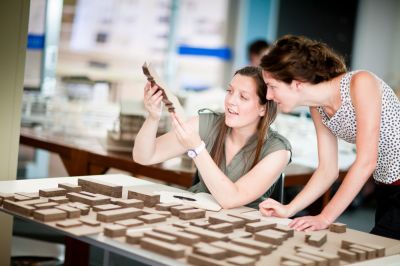
A defining feature of supervised student projects is that achievement can be demonstrated not only through the production of a major artefact, work, or product, but also through sustained engagement in a process of learning, development, and inquiry. Regular interaction with supervisors is central to this process (Ateeq et al., 2026; Healey et al., 2013), providing opportunities for students to demonstrate their developing knowledge and capabilities while enabling supervisors to offer guidance, formative feedback, and ongoing oversight of progress.
Supervised student projects are particularly well suited to assessing applied knowledge and skills because they require students to integrate and extend learning developed through prior coursework through inquiry, investigation, application, design, creation, and problem-solving (Biggs et al., 2022; Healey et al., 2013; Žerovnik & Nančovska Šerbec, 2021). Given their capacity to assess complex program-level intended learning outcomes that may be difficult to evaluate within individual subjects (Biggs et al., 2022), they are a cornerstone of many final-year undergraduate and advanced graduate coursework programs, particularly at Honours and Master's level (Healey et al., 2013). Typically situated in authentic disciplinary, professional, or creative contexts, projects may take a variety of forms, including minor theses, capstone projects, artistic or creative works, professional portfolios, design projects, and industry-based projects.
Design Strategies for Supervised Student Projects
As supervised student projects can vary considerably across educational levels, disciplines, programs, faculties, and schools, there is no one model or approach that can be considered optimal for assuring student learning. Nevertheless, consultations with academic leaders, coordinators, and supervisors across the University identified a range of design features perceived to strengthen assurance of learning while preserving the authenticity, flexibility, and disciplinary relevance that make supervised student projects such a valuable form of assessment. These features broadly align with five key assessment design strategies, outlined in the box below.
1. Leverage Ongoing Academic Oversight
Regular engagement with students by supervisors, and other academic staff where feasible, provides opportunities to observe, discuss, and evaluate learning throughout the life of the project, rather than relying solely on evidence from final artefacts, works, or products.
2. Assess Process as Well as Product
Assessment provides a more comprehensive picture of student learning when it captures evidence, not only from final artefacts, works, or products, but also from the processes through which they are developed.
3. Implement Staged Formative Milestones
Projects structured around progressive milestones can generate evidence of learning and enable students to develop, receive feedback on, and refine their work before producing final artefacts, works, or products.
4. Integrate Interactive Oral Assessments
Opportunities for students to explain, demonstrate, and defend their understanding, decisions, and work through dialogue and questioning can generate valuable additional evidence of learning.
5. Generate Authentic Evidence for Learning
Authentic disciplinary, professional, and creative tasks and outputs can provide compelling evidence of student learning while fostering engagement, ownership, and real-world application.
1. Leverage Ongoing Academic Oversight
A distinctive feature of supervised student projects is the sustained relationship between supervisors and individual students or small project groups. Through regular engagement over an extended period, supervisors develop a detailed understanding of students' knowledge, skills, decision-making processes, progress, and responses to feedback. This longitudinal perspective can provide valuable evidence of learning and development that is often not apparent from a final artefact alone, particularly when supervisory interactions are formalised, structured and documented (Ateeq et al., 2026; Healey et al., 2013).
In some disciplines, supervisors or other staff may also directly observe students, either individual or in small groups, as they engage in activities such as laboratory experiments, fieldwork, data collection and analysis, studio practice, rehearsals, client interactions, project or research group meetings, and technical demonstrations. Such observations can provide rich evidence of how students apply knowledge, exercise judgement, navigate challenges, and develop their work in authentic contexts, particularly when guided by rubrics to ensure consistency and clarity. These observations offer valuable insight into students' learning processes, complementing evidence derived from final project outputs (see also 5. Generate Authentic Evidence of Learning).
Academic oversight need not rest solely with supervisors. Assurance of learning may be strengthened when project coordinators, mentors, or other teaching or research staff are involved at key stages of the project. Participation in milestone reviews, presentations, seminars, progress checkpoints, and other assessment activities (see also 3. Implement Staged Formative Milestones) can create additional opportunities to observe and evaluate student learning while providing independent points of reference against which evidence gathered through supervision can be corroborated (Nikolic, 2024).
Some programs incorporate supervisor evaluations or input at major assessment points, such as progress reviews or final submissions, allowing observations gathered across the project lifecycle to inform judgements about student achievement (Nikolic, 2024). Given supervisors' close involvement in students' work, however, these contributions are often complemented by moderation processes or independent assessment by other academic staff. Such arrangements help ensure that supervisory insights contribute to robust assurance of learning while maintaining fairness, consistency, and objectivity in assessment decisions.
2. Assess Process as Well as Product
Assessment of process involves recognising and evaluating aspects of learning and development that occur throughout the project lifecycle (Mulder et al., 2023). Although in many cases, the final artefact, work, or product will remain a useful and tangible demonstration of learning and achievement (Nikolic, 2024; Fawns et al., 2026), many of the intended learning outcomes associated with supervised student projects may actually be developed through the process of undertaking the project itself (Fawns et al., 2026; Mantai et al., 2024). These may include outcomes such as project planning, critical thinking, problem-solving, research capability, professional judgement, responsiveness to feedback, teamwork and collaboration, independence, project management, and reflective practice.
Assessment designs used in supervised student projects can therefore draw on evidence of both product and process (as well as performance – see 4. Include Interactive Oral Assessments). Evidence of process may be generated through diverse sources, tasks and activities, including milestone assessments, progress reviews, peer- or supervisor-informed evaluations, reflective components, portfolios, hurdle requirements, and other activities that capture students' learning throughout the project lifecycle (see also 3. Implement Staged Formative Milestones). In group projects, assurance of learning may require evidence of both collective project achievement and individual student learning. This can be supported through approaches such as individual reflections and peer evaluations.
Assessing process does not diminish the importance of the final artefact, work, or product. Rather, it enables assessment to capture a broader range of intended learning outcomes, provides a richer picture of student achievement, and strengthens assurance of learning by creating a visible record of students' development, decision-making, and engagement throughout the project (Fawns et al., 2026).
3. Implement Staged Formative Milestones
As discussed in 2. Assess Process as Well as Product, assurance of learning in supervised student projects may be strengthened when assessment captures evidence of how learning develops throughout the project, rather than relying exclusively on a final artefact, work, or product. This is often achieved through staged or scaffolded formative milestones that guide the progressive development of a final artefact, performance, portfolio, exhibition, design, thesis, report, or other project outcome (Mulder et al., 2023).
By generating evidence at multiple points across the project lifecycle, staged assessment designs make learning and project development more visible, enabling assessors to draw on a broader evidence base than a final submission alone (Nikolic, 2024). In addition, these milestones support learning by creating structured opportunities for feedback, reflection, and dialogue, while allowing supervisors and other academic staff to monitor progress and observe how students refine their work over time (see also 1. Leverage Ongoing Academic Oversight).
Maintaining records of feedback and progress discussions within university-supported systems can support transparency and accountability by providing a clear account of the project's development over time. This is particularly important where students receive feedback from multiple sources, such as supervisors, academic staff, industry partners, or peers, as it helps make visible how different forms of input have contributed to the evolution of the work.
The nature and timing of project milestones can be aligned with the discipline, project type, and stage of development. While the examples in Table 1 illustrate common approaches, effective staged assessment designs typically combine developmental milestones, feedback opportunities, and final outputs in ways that align with the project's intended learning outcomes and context. Project duration and scope will also influence assessment design. Longer projects generally provide more opportunities for staged milestones, feedback, and evidence gathering, whereas shorter projects may require more streamlined approaches.
Importantly, not all milestones need to be heavily weighted or formally graded (Mantai et al., 2024). Some may serve primarily as opportunities for feedback, reflection, discussion, or developmental support, while others may contribute directly to the final grade. Hurdle requirements and threshold standards can further support assurance of learning by ensuring that students engage meaningfully with key developmental activities and demonstrate minimum levels of achievement in critical aspects of the project. Click on Table 1 tab below for examples of assessment milestones.
-
HumanitiesResearch ProjectsEngineering / DesignCreative DisciplinesProfessional / Industry ProjectsProject InitiationProposal, concept note, project pitchResearch proposal, research question, project planDesign brief, project specification, concept proposalCreative proposal, concept pitch, project briefClient brief, project plan, consultancy proposalEarly DevelopmentLiterature review, annotated bibliographyLiterature review, methodology statement, ethics applicationPreliminary designs, feasibility analysisConcept development, early sketches, creative development planNeeds analysis, stakeholder consultation, project scopingMid DevelopmentDraft chapter, progress reportData collection update, methodology review, progress reportPrototype, design review, technical progress reportStudio critique, rehearsal, work-in-progress presentationProgress review, design iteration, client updateLater StagesSeminar presentation, thesis workshopCompletion seminar, conference-style presentation, poster presentationTechnical demonstration, design presentationExhibition, performance, artist presentationClient presentation, demonstration, project reviewFinal SubmissionThesisThesis, dissertationFinal design, prototype, technical reportExhibition, performance, creative work, portfolio, exegesisConsultancy report, portfolio, professional project outputReflection and ReviewReflective statement, project reviewResearch reflection, learning portfolioDesign reflection, project reviewReflective commentary, creative process documentationProfessional reflection, project evaluation, learning portfolio
4. Include Interactive Oral Assessments
Interactive oral assessments (IOAs) provide valuable opportunities for students to demonstrate, explain, and defend their learning through performances. By engaging in real-time dialogue and spontaneous questioning, assessors can probe students' understanding, reasoning, and decision-making, generating evidence of learning that complements written, creative, or practical assessment outputs. These interactions can help verify individual students' understanding or and engagement with the project. They also provide insight into how students or groups approached the project, addressed challenges, and refined their ideas over time (Mulder et al., 2023; Nikolic, 2024).
IOAs can be incorporated as milestones (see 3. Implement Staged Formative Milestones) at different stages of a supervised student project. Early-stage activities, such as proposal presentations or progress reviews, enable students to articulate project ideas, justify proposed approaches, and receive feedback on their plans. Later-stage activities, such as completion seminars, poster presentations, demonstrations, oral defences, or vivas, provide opportunities for students to discuss project outcomes, defend conclusions, and demonstrate deeper understanding of their work.
A detailed guide focused on answering frequently asked questions about IOAs is available here. Additional supports and resources focused on IOAs are listed here.
5. Generate Authentic Evidence of Learning
As supervised student projects require students to apply disciplinary knowledge, skills, and judgement to meaningful problems, questions, or creative challenges, they often produce outputs or artefacts that reflect authentic disciplinary, professional, research, or creative practice (Healey et al., 2013). Depending on the context, these may include datasets, designs, prototypes, performances, portfolios, consultancy reports, software applications, or creative works.
From an assurance of learning perspective, such outputs can provide compelling evidence of learning. This is because their distinctive and context-specific nature make them more difficult to replicate, outsource, or falsify, providing greater confidence that the work reflects students' own learning and achievement (Mulder et al., 2023). At the same time, authentic projects can strengthen student ownership, motivation, and engagement by connecting learning to disciplinary, professional, and creative practice.
Authentic outputs are often most informative when considered alongside evidence of the processes through which they were developed (see also 2. Assess Process as Well as Product). Assessment may therefore draw on evidence such as laboratory notebooks, design iterations, project logs, reflective commentaries, drafts, sketches, rehearsal records, field notes, supervision records, or portfolios that document project development over time. Click on the Table 2 tab below to see the diverse forms of authentic evidence that may emerge across disciplines and at different stages of a supervised student project.
-
Type of EvidenceExamplesResearch and InvestigationResearch notebooks or logbooks, laboratory records, data collection records, methodology documentation, ethics applicationsCreative and Design DevelopmentDesign journals, sketchbooks, rehearsal documentation, creative development recordsProject Planning and ManagementProject plans, workflow records, project documentation, meeting notesDrafting and IterationVersion histories, drafting records, prototypes, works-in-progress, design iterationsSupervision and FeedbackRecords of supervision meetings, project reviews, markup or version histories showing feedback comments and revisions made in response to feedbackReflection and LearningReflective journals, learning logs, reflective statements, portfolios
Summary
Supervised student projects are a valuable means of assuring learning in relation to complex, applied, and program-level intended learning outcomes, particularly when project and assessment designs capture evidence from multiple sources across the project lifecycle. While effective approaches will necessarily vary across disciplines, programs, and contexts, assurance of learning is often strengthened by drawing on evidence from ongoing academic oversight, project processes, staged formative milestones, interactive oral assessments, and authentic disciplinary outputs. Together, these approaches enable educators to make more informed judgements about student achievement, based on a richer and more robust understanding of what students have learned over time.
Case studies
Case studies are coming soon.
References
-
Ateeq, A., Alfiras, M., Alnimer, R., Milhem, M., & Saif Almuraqab, N. A. (2026). Strategies for managing academic misconduct and supervisory struggles: Enhancing the effectiveness of the professor-student relationship in dissertation supervision. In R. El Khoury (Ed.), Strategic decision-making in dynamic business environments: Systems and control perspectives (pp. 333-341). Springer Nature Switzerland.
Biggs, J., Tang, C., & Kennedy, G. (2022). Teaching for quality learning at university (5th ed.). McGraw Hill.
Fawns, T., Boud, D., & Dawson, P. (2026). Identifying what our students have learned: A framework for practical assessment validation. Assessment & Evaluation in Higher Education. Advance online publication. https://doi.org/10.1080/02602938.2026.2620053
Healey, M., Lannin, L., Stibbe, A., & Derounian, J. (2013). Developing and enhancing undergraduate final-year projects and dissertations. The Higher Education Academy. https://www.advance-he.ac.uk/knowledge-hub/developing-and-enhancing-undergraduate-final-year-projects-and-dissertations
Holdsworth, A., Watty, K., & Davies, M. (2009). Developing capstone experiences. Centre for the Study of Higher Education, The University of Melbourne.
Mantai, L., Swain, C., Bearman, M., & Brew, A. (2024). Assessment of student learning in undergraduate research engagement. Higher Education Research & Development, 43(4), 937-951. https://doi.org/10.1080/07294360.2023.2218808
Mulder, R., Baik, C., & Ryan, T. (2023). Rethinking assessment in response to AI. Centre for the Study of Higher Education, The University of Melbourne.
Nikolic, S. (2024, October 9). GenAI and integrity: The arguments to reshape the thesis assessment structure. Australasian Artificial Intelligence In Education Centre. https://www.aaieec.org/post/genai-and-integrity-the-arguments-to-reshape-the-thesis-assessment-structure
Steel, A. (2024, December 12). The assessment integrity chord: Three notes for assessment harmony and the three ways to achieve each. UNSW Education & Student Experience. https://www.education.unsw.edu.au/news-events/news/assessment-integrity-chord
Žerovnik, A., & Nančovska Šerbec, I. (2021). Project-based learning in higher education. In Technology-supported active learning: Student-centered approaches (pp. 31-57). Springer Singapore.
Acknowledgements
The authors gratefully acknowledge all those who generously contributed their time and expertise through feedback, interviews, or who assisted in identifying potential interviewees. Special appreciation is extended to Dr Claudia Rivera Munoz for her assistance in developing early versions of the case studies that informed this guide.
The authors further acknowledge the use of large language model (LLM) tools, including Microsoft 365 Copilot, to support aspects of the preparation of this guide, including editing for grammar and style and assisting in the synthesis of key themes drawn from the case studies. All AI-generated content was carefully reviewed, verified, and revised by the authors to ensure its accuracy, appropriateness, and coherence.
Dr Tracii Ryan, Centre for the Study of Higher Education
Last updated: September 2026