However, lectures can also suffer from an image problem; namely that they rely heavily on an old-fashioned, didactic, transmission-based approach, and often fail to engage students, particularly when delivered in monotonous or uninspiring ways (French & Kennedy, 2016). Academics are also concerned about falling attendance in lectures and how much students engage with the format (Cassidy, 2025). As lectures are likely to remain a central feature of higher education, it is imperative to improve their quality by incorporating strategies that foster students’ cognitive and affective engagement, interaction, and active learning. This is because low levels of engagement can undermine students’ motivation and persistence, increasing the risk of attrition.
-
For lecturers facing empty seats in a theatre, it is easy to conflate the idea of attendance with engagement: that students are not coming to class because they are disengaged. Enforcing attendance through hurdles can then seem like a possible solution for making students engage with the subject. However, this is somewhat of a false dichotomy. Students may not attend lectures for a host of personal reasons, including financial, logistical, medical and temporal (Rivera Munzo et al., 2025). The recording of lectures that can be watched any time is another factor that is often blamed for students not attending ‘live’ and therefore being obviously ‘disengaged’. However, the evidence for correlating recorded lectures with lower learning outcomes is weak (Nordmann et al., 2019). A well-designed and engaging lecture will have a learning impact regardless of whether it is experienced live or as a recording. Moreover, the benefits of recording lectures far outweigh the concerns over live audience size. Lecture recordings allow improved and equitable access, repeated exposure to content and self-directed learning.
Asking “Why aren’t my students attending?” is therefore a simple question, but with very complex answers, likely involving factors largely outside your control. In any case, physical and/or synchronous lecture attendance does not necessarily indicate engagement levels.
A far more important question to ask is “Are my students learning?” To address this, the concept of engagement is more relevant, since high engagement levels are directly linked to learning motivation and success.
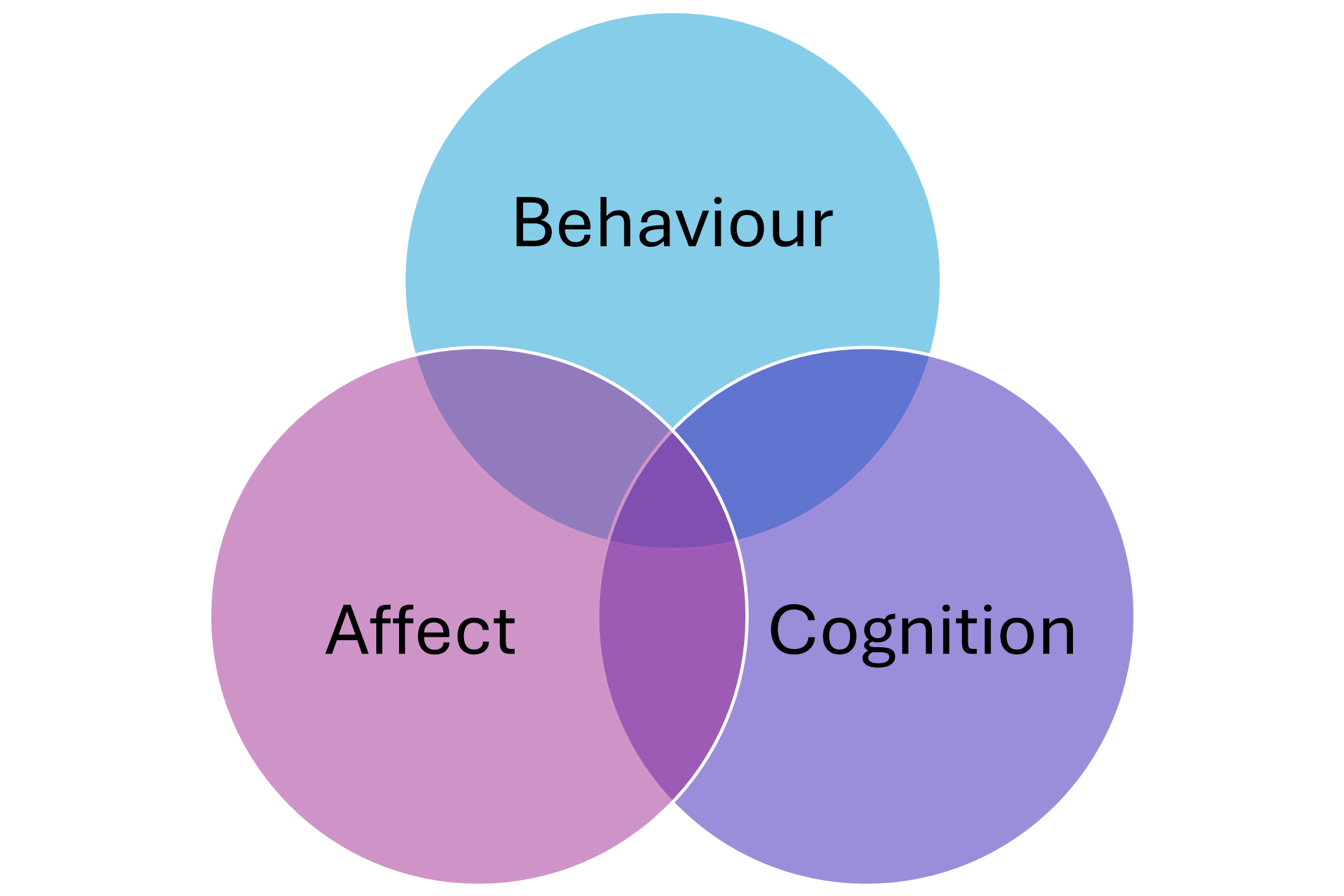
What does engagement look like?
Behaviour: Those observable ways in which students are conducting themselves in the lecture. They can act as indicators of engagement, but they are not always reliable signals when taken in isolation.
Cognition: Cognitive engagement can be a little harder to observe, as it involves the things that are happening inside students’ brains. In other words, it comprises students investing cognitive resources in their learning, making sense of it, and thinking about the content on a deeper level.
Affect: This is the emotional response from students to the lecture – their ‘care factor’. It concerns how invested they are in the experience, their motivations, attitudes and sense of connection to the teacher, content, the learning environment, and their own sense of purpose. Curiosity, inspiration, and even frustration at trying to grasp something new are all examples of affect.
It is likely any individual student will have one or two of these factors in play during a lecture, but true engagement occurs when all three overlap. That student who is staring into their laptop may actually be thinking very deeply about your words, how best to synthesise them into their notes, and be excited to gain this new knowledge. They are engaged in learning, despite seeming to be ‘miles away’.
What makes students engage?
The factors of what creates engagement with a lecture will vary from person to person. Part of your lecture design process will be to prioritise accessibility and inclusivity, so that all students have the chance to engage, participate and benefit from the learning experience. This should include providing lecture materials in multiple formats, such as copies of slides, notes, and recordings (Dean et al., 2016). This multi-format approach supports learners with different processing speeds, or those who may extra opportunities to revisit complex concepts.
-
A simple, yet profound, initial question for a teacher to ask themselves is “What is the point of this lecture?" This means scrutinising the lecture’s content and its alignment with the intended learning outcomes (ILOs) of the subject and course. Ensuring that the lecture identifies and supports the ILOs, and that the importance of these is readily apparent will assist with giving students a reason to engage.Starting and ending lectures with clear indicators as to purpose and importance is a simple way of tackling this. “In this lecture we will cover topic X. Topic X is the first step in meeting outcome Y for this subject, and is fundamental to you developing skill Z. That skill will be something that you will require again and again during a career in….” or “The information in the first part of the lecture is directly related to preparing Assessment 2, which is where you will have the chance to demonstrate the first three learning outcomes of this subject.”It can be surprisingly powerful to address directly what many students may already be wondering: why am I in a face-to-face lecture learning about this topic, rather than watching a YouTube video or learning in another way? Taking a moment to explain the rationale helps them see the value of the format and positions you as intentional rather than defaulting to tradition. For example, you might say that a lecture allows you to bring together diverse sources of knowledge, highlight key themes efficiently, or share stories and examples that bring abstract ideas to life in ways a reading alone cannot. By being transparent about why you’ve chosen a lecture over, say, group work or independent study, you signal respect for students’ time and model thoughtful teaching design—both of which can increase their willingness to engage.
-
Your lecture should be taking the students from a situation of having low skills/knowledge, and on to an improved understanding. This means not assuming (or delivering) too much at the start of the journey, since it is difficult for anyone to engage in a lecture where the content makes no sense or if they have low familiarity with the key concepts and vocabulary being used.
Students are more likely to engage actively in lectures when they come having already worked with the material in some form. Preparation can be encouraged by setting clear expectations and providing incentives for advance work – for example, by assigning pre-class readings on social annotation platforms such as Perusall, where students collectively (and publicly) highlight and comment on readings before class. This not only increases accountability but also primes them to participate actively. Where pre-class readings are graded, students have both intrinsic (the enjoyment of engaging in discussion with classmates) and extrinsic (assessment credit) motivations to come to class well-prepared. Checking-in with students throughout the lecture will assist in maintaining an idea of comprehension levels and assist with making adjustments. -
In-lecture assessment and feedback are valuable tools that could be used to increase lecture participation, promote active learning and support better academic outcomes. Short assessment activities can provide immediate feedback to both students and academics, and when participation has direct and visible consequences for their progress, students are more likely to attend and focus. Low-stakes, formative assessments such as in-class polls, quizzes, or audience response systems provide this motivation while simultaneously reinforcing learning through retrieval practice. Importantly, these approaches do not simply serve as ’attendance checks’; they also generate real-time feedback for both students and instructors, enabling the lecture to adapt responsively to learners’ needs.In a second-year Politics subject, the students are asked to use Perusall to annotate a short policy article before a lecture, highlighting key arguments and posing questions. Because students can see and respond to each other’s comments, the lectures begin with lively discussion around the most “upvoted” questions. This also allows the lecturer to get a pulse check on any common misunderstandings or areas that need reinforcement. The lecturer reports that students come to lectures already primed with ideas and questions.
In a large first-year Economics lecture, the lecturer embeds three short, low-stakes quizzes using a response app. Students answer questions individually, then re-try in small groups after a quick discussion. Marks count for a tiny portion of the subject's grade, but enough to motivate participation. The quizzes break up the lecture, reinforce key concepts, and give the lecturer instant feedback on which topics need clarification. Students comment that the quizzes help make the content stick.
- What the teacher is doing.
- What the students are doing.
- Why this is being done.
- How long each element will take.
| Teacher doing? | Students doing? | Why? (Rationale) | Time |
|---|---|---|---|
Presenting slides 3-8 (talking) | Listening. Taking notes. | Being introduced to "Basic Concept X". Situating Concept X in everyday life so students can appreciate its importance. | 10 minutes |
Monitoring and being available for questions or clarification. | Sharing their own examples of Basic Concept X in peer groups of 2-4. | Building understanding of how this concept is relevant to their everyday lives. | 5 minutes |
Facilitating as students share their examples | Reporting examples (around five volunteers required) | Provide further examples or show commonality of the same experiences to underscore importance of Concept X. | 5-7 minutes |
Evidence from classroom observation studies shows that lecturers often underestimate how much of the time they spend talking and overestimate how interactive their teaching is (Sheridan and Smith, 2020). A practical, evidence-based guideline is that no more than about one-third to one-half of a one-hour lecture should consist of uninterrupted lecturer talk. The remaining time is best used for activities such as think–pair–share, short problem-solving tasks, polling, or guided discussion, which re-engage attention and deepen understanding. In other words, concise, purposeful explanation punctuated by interactive elements is likely to produce far better learning outcomes than continuous talk, however clearly presented and connected to the ILOs.
A deep approach focuses on understanding the meaning and underlying concepts of information, while a surface approach primarily focuses on memorizing facts to complete a task, often with the goal of simply passing an assessment
Not every quiz needs to be difficult or produce a public ranking. Such approaches can discourage students who are still grappling with the material and may push others toward surface learning, where the goal becomes maximising scores rather than developing understanding. In contrast, a short, five-question quiz (designed so that all students can achieve full marks with some thought) can be just as valuable for prompting reflection on prior content as a more complex, speed-based activity like Kahoot.
Timing
Including any extra activities requires an idea of their timing when you are planning the lecture. Be realistic; most things will take longer than you think, so design for that. It is critical not to view this time as ‘losing’ content from your lecture: discussion and questions are valuable aspects of engagement, and the focus should be on what your students are actually learning, not how much they are being told.
Delivery
-
Often we think about what we are going to say and do not consider how we are going to say it. Voice is a vital tool in lecturing, and the best slides and content can be undermined by vocal elements that hinder clarity and engagement. Speaking too fast, whether through nerves or time pressure, can overwhelm listeners and cause them to ‘give up’ trying to absorb the content.
A useful exercise can be timing your words per minute when you are speaking. (For example, reading a long passage for one minute and then counting how far you got into it. For best clarity you should be aiming for around 140-150 words per minute (wpm), though if you are delivering very dense, new technical content, slightly slower is preferable. As a way of comparison, President Obama generally spoke at about 100-120 wpm during his speeches. Casual conversation between friends will run at about 150-170 wpm. A Melbourne Cup race caller will hit between 250-300 wpm. An American livestock auctioneer will get up to 450 wpm, though a lot of this is filler, nonsense syllables.
The volume of your voice is another aspect to consider. If students are straining to hear you, it will impact their engagement. Teaching spaces and technology can be a factor in whether your voice is too low or indistinct to be heard. Check regularly with students to see if they can hear your voice and make adjustments accordingly. Even if you think your natural voice is loud enough, make use of available microphones, as this may assist students with hearing difficulties or those listening online. Keep your face to the class to support lip reading. -
In addition to the factors of planning and aligning your content (above), the material you use to support your lecture will also play a part in engaging your audience. For most lectures, there will be some slides or related visual material to reinforce the learning process.
Slides should be there to support, not replace, the lecturer! They should also be there to serve the students, not the presenter. If the slides are a dense, distracting and overwhelming avalanche of information, the audience will not be engaging with the verbal content, as they struggle to keep across what is going up on the screen. Similarly, if the audience could gain the required information simply by reading all the slides at their leisure, then the purpose of the lecture format is doubtful. Consider too that every time a new slide appears on the screen, attention instantly shifts away from the speaker as the audience start to read the slide.
Your visual elements will play a significant role in lecture engagement, so they must also be designed with inclusivity in mind. Utilising clear, high-contrast visuals and easily legible captions on slides aids comprehension for all learners. (As a general rule, if you need to squint to read your slides on your own PC screen from more than a metre away, your audience will also struggle, even on a big screen.)
Try using the SLIDE Rule to help with building a presentation that is more engaging or at least keeps the focus on the speaker.S Single Idea Keep to one core idea or piece of information per slide. Don’t try to say everything about that idea on the one slide. Say what matters most. L Less is more Keep the total number of slides down and the amount of information on those slides brief. An intriguing or evocative picture can help support your oral explanation better than a slide of dense text. Try to keep below 20-25 words in total on a slide. I Intent Each slide should have a purpose for being included and be aligned with the ILOs. Each element of each slide should similarly have a reason for being there. (“Here’s another thing that kind of relates to the topic” is not a good enough reason to be included.) D Design Design for clarity, not density. Think of your slides as a billboard, rather than a research poster. Font sizes, diagrams and data all need to be clearly legible without the audience squinting. This is even more important if your recorded presentation is being viewed on a device. As a general rule, font sizes of <18 are to be avoided. Complex diagrams with tiny labels are also not best delivered as slides. Use clear, high contrast text and visuals, which also assist with inclusivity. E Expand The content in the slides is there for you to expand on. Not for you to read out to the audience. Use bullet points (no more than five words per point) to provide the skeleton of the points that you will then explain. -
Aside from slides, a variety of technologies can be employed to build engagement in lectures. Tools that allow student responses and collaboration are of particular value. Apps such as polls, surveys and collective boards not only promote active participation, but also provide immediate feedback, allowing lecturers to gauge student understanding and adjust their teaching accordingly (Ryan et al. 2021). Platforms such as shared documents, virtual whiteboards, or discussion forums enable students to work together on projects or solve problems collectively, even in large lecture settings. These interactive tasks transform that one-way lecture dynamic into multi-way conversations that can pique student interest whilst improving retention of key information and promoting critical thinking.
Teaching & Learning Innovation has a list of supported learning technologies as well as workshops and training on a range of topics and tech.
The use of relevant video, audio or multimedia content can be immensely beneficial in breaking up those periods of one-way lecturing, or getting students to think more broadly about a topic (Ryan et al., 2021). Such material can help illustrate complex ideas, provide real-world context, and also create engagement for those with different approaches to learning. Balance is key to this, since a lecture that is just a string of video clips brings into question its purpose.
Lastly, leveraging the Canvas LMS to provide supplementary materials offers a support for extending learning outside the lecture. Additional resources, practice exercises, extended readings, and collaborative digital spaces can encourage deeper exploration of lecture topics whilst accommodating various paces of learning. These tasks and materials should still be aligned with the subject’s ILOs and aim to capture engagement created during lectures and support students’ self-directed learning.
The following are suggestions for building engagement in lectures.
Action | Benefits | What it could look like in action |
|---|---|---|
Start with a hook Use an image or statement that is intriguing, seemingly out of place, makes a bold claim, or connects to common experiences. Tap into curiosity, emotion, or mystery. Make it brief, but vivid. | Builds curiosity and attention from the very start of your lecture. Can increase engagement as students look for the ‘answer’. | You may wonder why I have a picture of a unicorn as the title slide on a lecture about predatory competition… as we go through things today, see if you can guess why. Have you ever gone to the shops and bought everything else except the one thing you went there for? Today we are talking about memory and why forgetting things is actually a feature, not a bug. |
Punctuate your presentation Stop your delivery every 12-15 minutes and give the audience a different task to focus on. | Audience engagement inevitably falls away after 12-15 minutes of listening to a speaker. It can only be rebuilt after a switch in focus. Even a short activity helps reset attention on the topic. The different activities can also act as a feedback channel for the teacher to check understanding or generate new ideas to respond to. | Use the QR code that links to a word cloud. Everyone give me one word you think of when I say “Ancient Rome”. A quick psychology experiment that helps to understand this concept. Everybody raise their right hand….now keep your hand up if you always do what you are told… |
Signposts and milestones Signal to the audience where they are and where you are going. | Breaks the content into chunks and allows the audience to situate what they have learned into a bigger picture. | So that covers the theory side of what we are looking at this morning. Next, I am going to move on and show you how we can observe this theory in action. “I’ve given you the reasons the Balkans were so politically tense in 1914. Now we will move on to the wider and tragic consequences.” |
Encourage interactivity Engagement is not just about the audience connecting with you. Student pairs and seating groups can act as channels of activity that re-focus attention. | Creates a sense of belonging with peers. Fosters active learning. Peer assessment and feedback is important to learning. | Enough of my voice. Turn to the person next to you, and in one minute, think how you might apply the principles of Bayes’ Theorem to spam email detection. For the next 60 seconds Play rock-paper-scissors with the person next to you. Keep track of how many wins and draws there are. Then we will unpack the statistics behind this. |
Stop talking There is nothing wrong with a silence in a lecture if it is productive. | Allows students the time to digest content or undertake the activity you asked them to do. Also allows you to catch your breath, have a sip of water and gather your thoughts for the next segment. | Use the QR code to get to the quiz while I take a break from talking. This quote from Marx is central to the idea. I will give you a moment to read it and consider why it is crucial. |
Curiosity gaps Similar to hooks. Pose questions or interesting facts that you won’t answer immediately. Link the coming content as essential to unlocking the mystery. | Build anticipation and attention. Students will be motivated to listen to unlock the answer. | How can a single, ordinary book on Amazon end up with selling price of 23 million dollars? Because that’s exactly what happened in 2009. I’ll tell you how it happened. But first, we need to understand feedback loops in automated systems. Did you know that Napoleon was once forced into a humiliating retreat by an army of rabbits? No? I’ll tell you about it after we look at some of his more successful campaigns. |
Move Move around the space to engage with different sections of the audience. (This obviously dependent on teaching space, technology and personal mobility.)
| Breaks the monotony of being locked behind a lectern. Is more dynamic and builds connection with the audience. | “OK I am going to come over to this side of the room and ask people what they think.” |
Rhetorical questions Put out some big questions for students to ponder during the ensuing content. | Engages students affectively and cognitively by inviting internal reflection or emotional reaction without the need for an immediate response. | “If people stop participating in voting, can you really say that you still call it a democracy?” “Are natural disasters every truly 100% natural?” |
Tell stories
Every discipline has its stories and its ability to connect to human experience. Stories are powerful tools for engaging leaners because they humanise content as well as build a parasocial relationship with the presenter or the people in the story. | Can help to anchor recall through the emotional or narrative experiences described. Stories from your own practice in a subject build credibility and rapport with students. | Two months ago I got a speeding ticket. 55 in 50 zone! Two in the morning, no other cars around….except the police camera car! So is that fair? Is it justice? Or just enforcing order?.... Let’s use my ticket experience to look at the ethical debate around strict liability. When I was working on a highway bridge project as a young engineer we had a problem with the concrete piers cracking. Every test we ran on the concrete showed it was prefect in quality. But it turned out it was actually something more important that was letting us down… |
Dipsticks Check in with students during or at the end of a lecture to gauge comprehension levels. The “Muddy Moment” is a popular approach to this, asking students which aspects of the content they are finding most challenging or frustrating.
| Allows lecturer to keep a check on meeting ILOs and specific aspects that require reinforcement. Gives students a voice in their learning. | Thumbs up, thumbs down, thumbs sideways to indicate confidence about understanding. Use an anonymous Padlet or note paper to answer the question “What most confuses or frustrates you about today’s topic?” |
Sticky endings
Close with a statement that’s memorable or meaningful in encapsulating the main idea. It might be a powerful phrase, a visual, a challenge, or a call to action. | Students are still thinking about the lecture content after they leave. | So remember, bad code is like bad handwriting: If someone can’t read it, then they come home from the shops with apricots instead of antibiotics. Every map hides something. Whenever you look at a map from now on, don’t just look at what is shown, but what isn’t. And who decided that…and why? |
Summarised Lecture Plan: The Magna Carta and Modern Australian Law
- Students will be able to summarise the historical circumstances that led to the creation of the Magna Carta and identify some of its key principles.
- Students will be able to evaluate the influence of the Magna Carta on modern Commonwealth legal systems, particularly in relation to the rule of law and due process.
-
Slide Content/Script excerpt Goal/Tactic(s) Image of characters from Disney’s Robin Hood film. “Imagine you’re accused of a crime tomorrow… Would you have the right to a fair trial? Believe it or not, the idea of that protection traces back to a muddy English meadow in the year 1215. Why did a medieval peace treaty that didn’t even concern ordinary citizens become foundationally linked with Australian law? That’s our puzzle today.” Hook, Curiosity gap, Rhetorical question Slide: Map of England/France in 1215, an image of King John.
At appropriate point, text appears: vis et voluntas, or "force and will"“We’ll move through four stages as we examine this — context, principles, survival, modern influence.Detailed script (not given for all sections)
“Let’s set the stage. It’s June 1215. King John of England is one of the most unpopular monarchs in English history.
Some of you might already know John’s reputation from the legend of the Robin Hood stories: the greedy, scheming Prince John, squeezing the people for taxes while the brave Robin Hood stole back from the rich to give to the poor, redistributing the capital of the bourgeoisie to the working masses. Now, the Robin Hood stuff was written much later, but it reflects a real truth about John — he was seen as a tyrant, a man who pushed his people too far.
The reality was that John had lost almost all of his family’s lands in France after disastrous wars. In order to try and win this land back, John demanded ever more taxes from his noble barons to fund new military campaigns. Like if your boss was taking money out of your pay to fund his own gambling habit!
John was also ruthless. Chroniclers tell us of hostages starved to death in royal prisons, nobles stripped of their rights, and families forced into disadvantageous marriages at the king’s whim.
John could do all this because up to this point, English kings more or less ruled by the principle of vis et voluntas, or "force and will". They could make arbitrary decisions and claim that as the monarch, their will was divinely guided and above the law. Now there was a custom that they were supposed to obey the law and take advice from their counsellors, and different kings did this to greater or lesser extents. The point is that this custom, and the consequences for breaking it, were not well defined or codified by law. And John was taking it too far. By 1215, some of his nobles had had enough. They marched on London — the key to the kingdom’s finances and legitimacy. Suddenly, John found himself cornered: broke, isolated, and facing armed rebellion.
So in June, he met his enemies on the watery meadows of Runnymede, beside the River Thames. Surrounded by baronial forces, John sealed a document of concessions — the Magna Carta.
For John, it was just a way to buy time. For the barons, this was all about their self-interest. It was a kind of peace treaty to restrain a tyrant, but also to keep more money for themselves. But the irony is that this reluctant bargain — born of failure, rebellion, and pressure — would outlive them all. And while Robin Hood may be a myth, the idea of holding rulers to account before their people is very real, and in some Western legal systems, it arguably begins here, in 1215.”
Signposting, Storytelling, Rhetorical question Text of Clause 39 (“No free man…”)
“Out of 63 clauses in the Magna Carta, only a handful remain relevant today. Clause 39: No free man shall be seized… except by the law of the land. Does this sound familiar? Think about where you have seen this concept in movies or TV. (Pause).”
Movement, Rhetorical question, Silence for reflection
Prompt: “Discuss with your neighbour: One modern principle limiting rulers’ power.”
“Turn to the person next to you. In one minute, come up with any modern legal principles you can think of that reflect the idea of limiting rulers’ power. … Okay, let’s hear a few examples. Exactly: Parliamentary systems, due process, jury trial, limits on taxation.”
Encourage interactivity, Stop talking, Peer learning
Jury box image
“Raise your hand if you’ve ever served on a jury or know someone who has. Do you think jury trial is fair? That fairness comes directly from Magna Carta. “lawful judgment of his peers”. But here’s a twist: did you know the Pope revoked Magna Carta only weeks later? Because he thought it limited his own rights! Let’s see why it survived.”
Punctuate, Interactivity, Curiosity gap
Portraits of Edward Coke, American Revolution, High Court
“Lawyers revived the charter to challenge kings and parliaments: Coke v. Charles I, American colonists, Australian High Court. If a document is constantly reinterpreted, is it still the same document?”
Storytelling, Movement, Rhetorical question
Map of Commonwealth
“Examples: Australia, Canada, India — rule of law, habeas corpus, constitutional review. (Pause 15 seconds). Thumbs up if this makes sense, sideways if unsure, down if I’m not explaining it well.”
Stop talking, Dipstick check
Picture of replica Magna Carta
“But there are those who feel that the influence of Magna Carta has been over-stated, and that its fame as a foundation of democracy and freedom is a myth cooked up centuries later.”
If it really was the birth of citizen rights, why did it take another 600 years for people to be able to vote? And by ‘people’, who do you think that doesn’t actually include?
Hook, Rhetorical question, Interactivity
Prompt: “What does Magna Carta mean today?”
“When you hear ‘due process’, are you really hearing medieval barons caring about the people? There is debate about whether this really is a foundational document in legal history or whether, like Robin Hood, it has been romanticised.
Rhetorical question
Image: Runnymede monument.
“Magna Carta wasn’t perfect and it wasn’t even really focussed on ordinary people, but its legacy is this: no one, not even a ruler, is above the law. That principle shapes your rights today. So next time you hear rule of law, remember it began with a humiliated king in 1215. And Robin Hood wasn’t there.”
Sticky ending, Storytelling, Call to action
Summarised Lecture Plan: Mimicry in the Animal Kingdom
- To present key vocabulary (e.g., Batesian, Müllerian, aggressive mimicry)
- Students will be able to describe and distinguish between major types of mimicry in animals using relevant examples.
- Students will be able to evaluate the adaptive significance of mimicry strategies and analyse how mimicry influences predator–prey interactions and evolutionary dynamics.
-
Slide Script (summary) Tactic(s) Photo of a harmless hoverfly next to a wasp
“Take a look at these two insects. One has a sting, the other doesn’t. But could you tell them apart in a hurry? Your hesitation might save the hoverfly’s life…. or even your own, if you have an allergy. Today we’re exploring mimicry: when animals evolve to look like something they are not.”
Hook, Curiosity gap, Rhetorical question
Roadmap slide: 1) What is mimicry? 2) Types of mimicry 3) Famous examples 4) How mimicry evolves 5) Human parallels
“Here’s where we’re going today. First, definitions. Then the big categories — Batesian, Müllerian, aggressive mimicry. We’ll look at case studies, then circle back to evolutionary mechanisms, and even human applications.”
Signposting
Diagram of Batesian mimicry (hoverfly/wasp, coral snake/kingsnake)
Story: Henry Bates in the Amazon, 19th century — cataloguing butterflies, noticing harmless ones resembling toxic species. “What are you thinking if you are a predator? That’s natural selection at work.” And now you know why it’s called Batesian mimicry! Explain why Batesian mimicry is classified as ‘deceptive’.
Storytelling, Movement, Rhetorical question
Side-by-side images: viceroy & monarch butterfly
Activity: “Turn to your neighbour. In 60 seconds, decide: is the viceroy copying the monarch, or is something else happening?” Pause. Reveal: originally thought Batesian, now considered Müllerian mimicry. What is that?
Encourage interactivity, Stop talking, Curiosity gap
Examples of Müllerian mimicry “rings” (poison dart frogs, bees/wasps)
“Here’s the twist: sometimes two harmful species mimic each other. Why? Shared warning patterns reinforce predator learning. Everyone benefits.” Pose Question: “Is this cooperation, or selfish survival?” Describe why Mullerian mimicry is termed ‘honest’.
Rhetorical question, Storytelling
Video clip: anglerfish lure
Aggressive mimicry: “Sometimes mimicry isn’t about defence — it’s attack. The anglerfish uses a fake lure to trick prey. The assassin bug tricks spiders into thinking they have captured a meal in their web.”
Storytelling, Curiosity gap
Activity prompt slide: “Your turn — spot the mimic.” (QR code to poll or Kahoot with animal pairs)
Students vote on pairs (e.g., stick insect vs twig, owl butterfly vs owl face, tiger vs zebra). Brief discussion of results or clarifications as required.
Punctuate, Encourage interactivity, consolidate ideas.
Photos of orchids mimicking bees
“Not just animals: orchids mimic female bees to trick males into pollinating them. Mimicry spans kingdoms — deception as survival.” Pause for reflection: “Why would evolution favour dishonesty?”
Silence, Rhetorical question, Storytelling
QR code and then Padlet
Dipstick via Padlet: “What’s most confusing you about mimicry so far?”
Dipstick check, Signposting
Human parallels: military camouflage, Q-ships, digital decoys
“Humans borrow mimicry. Camouflage uniforms, disguises, even cybersecurity ‘honeypots’ — all inspired by evolution.” Ask: “Are we mimics too?”
Storytelling, Rhetorical question
Open question slide: “Most surprising example of mimicry you know?” (Have a slide ready of the Dungeons & Dragons monster known as “The Mimic”. Even if it doesn’t come up in discussion, it can be used as a lecturer example.)
Activity: “In pairs, come up with the most unusual example you’ve encountered — documentaries, reading, even fantasy and sci-fi. Share a few with the room.”
Encourage interactivity, Stop talking
Sticky ending slide: Hoverfly + wasp + quote: “In nature, to deceive is to survive.”
Wrap-up: “Mimicry isn’t about cheating — it’s about survival. From butterflies to orchids, from fish to humans, life thrives by pretending to be something it’s not. So next time you see a harmless insect in wasp’s clothing, remember: imitation isn’t flattery. It’s strategy.”
Sticky ending, Storytelling, Call to action
- Teaching & Learning Innovation has a list of supported learning technologies as well as workshops and training on a range of topics and tech.
- Finley, T. “Dipsticks: Efficient Ways to Check for Understanding.” Edutopia, 30 July 2014
- Cohort building through active learning in lectures
- Balcaite, E., Birnbaum, T., and Lakey, E., Reinvigorating and Reinventing the Lecture.
References
Biggs, J., Tang, C. & Kennedy, G. (2022). Teaching for quality learning at university (5th ed.). McGraw Hill.
Bligh, D. A., (1972). What’s the use of lectures?, Harmondsworth: Penguin Education.
Cassidy, C. “‘Teaching to an Empty Hall’: Is the Changing Face of Universities Eroding Standards of Learning?” The Guardian, 19 Feb. 2025, The Guardian, Australia‑News section. https://www.theguardian.com/australia-news/2025/feb/19/teaching-to-an-empty-hall-is-the-changing-face-of-universities-eroding-standards-of-learning
Crawford, J. & Parsell, M. (2025). Lectures in higher education: A 22-year systematic review. Journal of Applied Learning & Teaching, 8(1). https://doi.org/10.37074/jalt.2025.8.1.25
Dean, T., Lee-Post, A., & Hapke, H. (2016). Universal Design for Learning in teaching large lecture classes. Journal of Marketing Education, 39(1), 5-16. https://doi.org/10.1177/0273475316662104
Fredricks, J.A., Blumenfeld, P.C., & Paris, A. (2004). School engagement: Potential of the concept: State of the evidence. Review of Educational Research, 74, 59-119. https://doi.org/10.3102/00346543074001059
French, S., & Kennedy, G. (2016). Reassessing the value of university lectures. Teaching in Higher Education, 22(6), 639–654. https://doi.org/10.1080/13562517.2016.1273213
Nordmann, E., Calder, C., Bishop, P. et al. Turn up, tune in, don’t drop out: the relationship between lecture attendance, use of lecture recordings, and achievement at different levels of study. Higher Education 77, 1065–1084 (2019). https://doi.org/10.1007/s10734-018-0320-8
Rivera Munoz, C. A., Baik, C., Ryan, T., & Mulder, R. A. (2025). Intended and Actual Involvement of Commencing First-Year Undergraduate Students in University Activities. Student Success, 16(2), 1–15. https://doi.org/10.63608/ssj.3782
Ryan, T., French, S., & Kennedy, G. (2021). Beyond the Iron Triangle: Improving the quality of teaching and learning at scale. Studies in Higher Education, 46(7), 1383-1394. https://doi.org/10.1080/03075079.2019.1679763
Sheridan, Brandon J., and Ben Smith. 2020. "How Often Does Active Learning Actually Occur? Perception versus Reality." AEA Papers and Proceedings 110: 304–08. https://www.aeaweb.org/articles?id=10.1257/pandp.20201053
Smith, C. D., & Baik, C. (2019). High-impact teaching practices in higher education: a best evidence review. Studies in Higher Education, 46(8), 1696–1713. https://doi.org/10.1080/03075079.2019.1698539
Trigwell, K., Prosser, M. (2020). Teachers’ Experiences of Teaching. In: Exploring University Teaching and Learning. Palgrave Pivot, Cham. https://doi.org/10.1007/978-3-030-50830-2_3