Feedback is one of the most effective strategies for student learning. In an era of rapid technological advancement and changing educational landscapes, it's crucial to re-examine our approaches to feedback and assessment. This Symposium will explore innovative ideas, research findings, and creative practices for designing effective feedback in assessment, encompassing both traditional methods and emerging technologies.
This Symposium will delve into the principles of effective feedback design, exploring how these can be applied across various feedback methods, from traditional approaches to AI-assisted systems. We will examine how assessment design can be optimised to support meaningful feedback, and how different feedback sources can be leveraged to provide a more comprehensive learning experience. Participants will have the opportunity to engage with cutting-edge research and share their own experiences for enhancing feedback practices in higher education.
Symposium themes include:
- What makes for effective feedback
- Challenges in assessment feedback in the context of Generative AI
- Integration of Generative AI into feedback processes
- Effectiveness of different feedback formats
- Strategies for timely and actionable feedback in assessment
- Peer feedback and its impact on student learning
Enquiries
If you have any queries about the Symposium, please contact melbourne-cshe@unimelb.edu.au
| 9.30-10.00am | Registration & morning tea (Woodward Conference Centre, Law Building, level 10) | |||||
| 10.00-10.05am | Welcome and opening remarks | |||||
| 10.05-10.55am | Keynote address: Professor Michael Henderson, Professor of Digital Futures, and Director of Educational Design and Innovation in the Faculty of Education at Monash University, Australia | |||||
| 10.55-11.00am | Comfort break | |||||
| 11.00am-12.00pm | Panel discussions and Q&A Dr Narelle English, Research Fellow, Lecturer in Assessment, Faculty of Education, The University of Melbourne Professor Michael Henderson, Professor of Digital Futures, and Director of Educational Design and Innovation in the Faculty of Education at Monash University, Australia Professor Elizabeth Molloy, Deputy Dean, Education, Faculty of Medicine, Dentistry and Health Sciences, The University of Melbourne Professor Raoul Mulder, Professor of Evolutionary Ecology, School of BioSciences and Professor of Higher Education, Centre for the Study of Higher Education, The University of Melbourne Moderator: Dr Guy Morrow, Senior Lecturer, School of Culture and Communication, Faculty of Arts | |||||
| 12.00-1.00pm | Networking lunch | |||||
| Concurrent sessions | ||||||
|---|---|---|---|---|---|---|
Reimagining Feedback and Assessment Practices West Room (Room 1006), Level 10, Law Building Chair: Ben White & Jenny Pesina | AI Integration in Assessment and Feedback City Side (Room 1019), Level 10, Law Building Chair: A/Prof Melissa Russell | Authenticity and Adaptation in the AI Era Uni Side (Room 1020), Level 10, Law Building Chair: Dr Donnie Adams | ||||
| 1.00-1.30pm | From Feedback to Feed Forward: Rethinking Rubrics as Catalysts for Learning and Equity Dr Jessica Lees, Faculty of Medicine, Dentistry and Health Sciences | GenAI-Assisted Criterion-Referenced Grading in Engineering Mathematics: Enhancing Feedback, Efficiency, and Assessment Quality Dr Lili Chen & Dr Winn Chow, Faculty of Engineering and Information Technology | Can Authentic Assessment Survive AI? Evidence from a Large-Scale Quantitative Task Dr Wasana Karunarathne, Faculty of Business and Economics, Ashley Hanson | |||
| 1.30-2.00pm | Boosting student autonomy in development of feedback literacy Madeleine Young, Student and Scholarly Services | A simple approach to using AI for reclaiming time and easing the cognitive load of assessment feedback at scale Dr Christopher Woods, Faculty of Business and Economics | Rewriting Assessment at Scale: Using Generative AI to Build Developmental Rubrics for K–12 and Tertiary Education Ben Lawless, Faculty of Education | |||
| 2.00-2.30pm | ExamBuddy! Engaging first year students through self-assessment and anonymous peer feedback Assaf Dekel, Faculty of Business and Economics | Redesigning Higher Education Assessments in the Age of AI: Enhancing Formative Feedback while Mitigating AI Misuse Angela Sojan & Dr Winn Chow, Faculty of Engineering and Information Technology | Attuned Encounters: Rethinking Feedback as Onto-Epistemological Practice in Higher Education Dr Nashid Nigar, Faculty of Education | |||
Keynote presentation
re(?)thinking assessment feedback
Professor Michael Henderson, Professor of Digital Futures, and Director of Educational Design and Innovation in the Faculty of Education at Monash University, Australia
Assessment feedback is one of the most impactful processes in learning, yet it continues to present significant challenges for institutions, educators and students. In light of these challenges, it is not surprising that many people are turning to Generative AI as a potential solution. Certainly, there are fascinating and valuable contributions that can result from our entanglements with Generative AI. Studies are already revealing how students are independently seeking feedback from Generative AI, and how educators are leveraging the syntactic mimicry of Generative AI to enhance feedback encounters. However, not all of these applications are beneficial or address the underlying concerns of feedback. With this in mind it is timely to ask questions about the nature of feedback, what makes for effective feedback, and to consider where Generative AI may fit.
In this keynote, we will revisit notions of feedback as input and process, and explore deeper dimensions of its pedagogical and relational roles. The session invites participants to rethink feedback not merely as a transactional exchange but as a nuanced, dialogic and future focused interaction central to fostering genuine evaluative judgment and learner autonomy. With this in mind I will celebrate some applications of AI in supporting feedback processes, but I also adopt a cautious stance of its role, and somewhat hidden consequences.
Reimagining Feedback and Assessment Practices
-
Dr Jessica Lees (Presenting Author), Faculty of Medicine, Dentistry and Health Sciences & Ashley Anderson, Student and Scholarly Services
This presentation provocatively reimagines rubrics not as evaluative tools, but as invitations for learning. Drawing on Universal Design for Learning (UDL) and feedback literacy, it introduces feed forward rubrics—a low-barrier, high-impact strategy that helps students identify next steps and supports programmatic assessment. Rather than highlighting deficits, these rubrics prompt reflection, self-direction, and growth. The approach aligns with ASE priorities, particularly inclusivity, innovation, and thriving student communities. Participants will engage with reflective prompts and co-design opportunities to consider how rubric language and structure can be reimagined to foster equity, agency, and sustainable learning across diverse cohorts.
-
Morag Burnie, Madeleine Young (Presenting Author), Student and Scholarly Services
We showcase the outcomes of a resource development project led by Academic Skills in collaboration with volunteer student partners and Video Media. The project developed a suite of multimedia and web based self-access materials to support development of student feedback literacy.
-
Assaf Dekel (Presenting Author), Dr Miriam Edwards & A/Prof Sean Pinder, Faculty of Business and Economics
This study examines a self-assessment and peer feedback initiative within a large-cohort first year finance subject. The intention was to foster exam preparedness while also building community. Using FeedbackFruits©, each student solved a question set indicative of the exam, then using a given rubric, they self-assessed and anonymously reviewed a peer’s attempt. This was repeated four times throughout the semester. Subsequently, a mixed-methods study indicated that student participation within these activities had a positive effect on learning outcomes even after controlling for learner aptitude. This study illustrates the impact such a strategy may have on student engagement and motivation.
AI Integration in Assessment and Feedback
-
Dr Lili Chen (Presenting Author), Dr Winn Chow (Presenting Author) & Dr Stella Peng, Faculty of Engineering and Information Technology
This study aims to address the longstanding challenges of grading in engineering mathematics which constrain markers’ ability to provide formative feedback. It explores a criterion-referenced grading approach supported by GenAI. The well-defined criteria focus on students’ overall understanding and therefore enable structured and formative feedback. The research adopts a mixed-methods approach to evaluate GenAI-assisted criterion-referenced grading in an undergraduate Electrical Engineering subject. Initial results show significant improvements in grading time, accuracy, and feedback. The study contributes to both literature and practice by proposing a replicable model for incorporating GenAI into STEM assessment workflows to improve feedback, efficiency, and assessment quality.
-
Dr Christopher Woods (Presenting Author), Dr Sharon Shan & Dr Jason Brown, Faculty of Business and Economics
This session introduces a practical, time-saving method for producing high-quality feedback on reflective writing using Spark AI. Designed to ease the burden of marking large volumes of student work, the tool turns rough assessor notes into clear, actionable feedback and rubric-aligned suggestions for improvement. We’ll walk through how the method works, the initial prompt and subsequent development, showing examples from an undergraduate BCom internship subject. Participants will try building their own version of the AI prompt using a rubric from their teaching context, leaving the session with a draft that they can trial immediately in their own marking.
-
Angela Sojan (Presenting Author), Dr Winn Chow (Presenting Author) & Dr Stella Peng, School of Computing and Information Systems, Faculty of Engineering and Information Technology
The rise of generative AI has disrupted traditional assessment methods in higher education, prompting universities to develop AI assessment guidelines. This study examined the guidelines from five major Victorian universities, analysing their alignment with formative feedback principles and their effectiveness in preventing AI misuse. Through a review of the guidelines and a student survey, this research evaluated ten common assessment approaches. The findings revealed that no single method is universally effective; each has distinct strengths and weaknesses. Based on these insights, the study proposed an AI assessment framework to support educators redesign assessments, enhancing formative feedback while mitigating AI misuse.
Authenticity and Adaptation in the AI Era
-
Dr Wasana Karunarathne (Presenting Author), Faculty of Business and Economics, Ashley Hanson (Presenting Author) & Chris Selman
This presentation explores whether authentic assessment remains valid in an era of generative AI, using insights from a large first-year business statistics assignment completed by over 1,500 students. The assessment was designed to develop data analysis skills, analytical and creative thinking, written communication, and collaborative learning, all essential for business graduates, while maintaining accountability. Students were required to submit supporting files that demonstrated their process and reasoning, ensuring transparency and verifiability. Regular check-ins and structured group work supported engagement throughout the process. The study offers practical strategies for designing assessments that promote genuine learning and integrity in AI-enabled environments.
-
Ben Lawless, Faculty of Education
This presentation explores how ChatGPT can be used to generate developmental assessment rubrics for K–12 and tertiary tasks. It introduces a prompt-engineered workflow and shares practitioner insights from school and university contexts. The session will demonstrate how educators can rapidly co-create rubrics that align with learning progressions, improve feedback, and support inclusive design.
-
Dr Nashid Nigar, Faculty of Education
This presentation reconceptualises feedback as a relational, affective, and onto-epistemological encounter shaped by AI, hyper-diversity, and postcolonial complexity. Drawing on hermeneutic phenomenology and the Hybrid Professional Becoming approach, it explores feedback through lived vignettes—highlighting affective labour, translanguaging, and ethical tensions. Interactive methods include a Padlet memory wall, affective mapping, and a micro-toolkit for interculturally responsive feedback. Aligned with the University of Melbourne’s ASE Strategy, this self-study affirms feedback as situated, relational praxis grounded in care, complexity, and onto-epistemic justice.
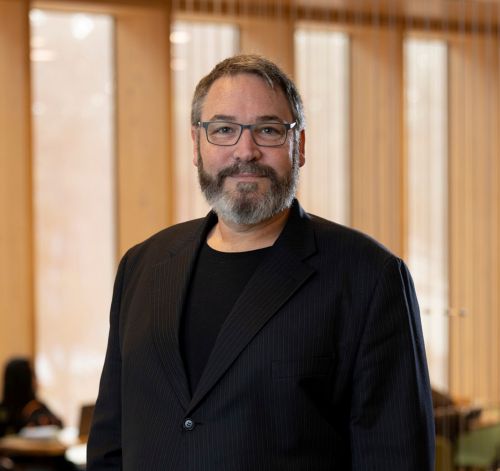
Keynote speaker
Professor Michael Henderson
Michael is Professor of Digital Futures, and Director of Educational Design and Innovation in the Faculty of Education at Monash University, Australia. Michael spends most of this time being enjoyably frustrated by educational technologies. His research focuses on innovative teaching and learning designs and the implications of digital technologies across all sectors of education. He is an internationally recognised educator and researcher with over 175 publications and the recipient of national and international awards for teaching and research. He was identified in 2024 as the Australian field leader in education research. His current research interests are focused on generative AI, assessment and feedback, as well as creativity in online teaching.
Featured speakers

Dr Narelle English
Dr English's research projects are assessment related and she works on projects relating to developmental learning and the design and development of data collection tools and assessments. She has also designed and implemented assessment for teaching programs in the Master of Teaching, Master of Education, the Network of Schools project within the Melbourne Graduate School of Education, and the Department of Education’s Bastow Institute.

Professor Elizabeth Molloy
Professor Liz Molloy is the Pro Vice-Chancellor (Curriculum) leading whole-of-university initiatives in academic program innovation and design, working closely with faculties, leadership from other chancellery portfolios and across the Deputy Vice-Chancellor (Education) portfolio. Liz first joined the University of Melbourne as a lecturer in 2000 and has undertaken an extensive academic career spanning the University of Melbourne, Monash University, and even the Australian Athletics Team as Team Physiotherapist during the Commonwealth Games in Melbourne, Australia (2006). She served as Deputy Dean Education in the Faculty of Medicine, Dentistry and Health Sciences 2023-2026.

Professor Raoul Mulder
Professor Mulder is passionate about maximising opportunities for student learning in higher education, and in scientific, evidence-based approaches to university teaching. He has a long-standing interest in the potential of educational technologies to improve learning outcomes. He has pioneered the use of student peer review and automated grading in his own subjects, and taught one of the early successful MOOCs in Australia. His work in teaching innovation has been supported by a range of grants and university and national teaching awards.
| Date | 10.00am-2.30pm, Tuesday 5 August 2025 |
|---|---|
| Cost | The Symposium is free for the University of Melbourne staff and graduate researchers |
| Registration | Registration is closed |
Enquiries
If you have any queries about the registration process, please contact melbourne-cshe@unimelb.edu.au.