Fostering Collaboration in Higher Education between Australia and Vietnam
Over the past two years, the Vietnam-Australia Centre (VAC) and the Centre for the Study of Higher Education (CSHE) at the University of Melbourne have partnered to create a nine-month professional development program, the Specialist Certificate in University Teaching (SCUT). Designed to build the teaching capabilities of staff from VAC partner organisations and support the continuing professional education of Vietnam's future leaders, the SCUT aimed to transform pedagogical practices and foster cross-cultural understanding in higher education. Across two cohorts, thirty-nine participants, including lecturers from Ho Chi Minh National Academy of Politics and the Diplomatic Academy of Vietnam, as well as staff from the Office of Government, have successfully completed this short course.
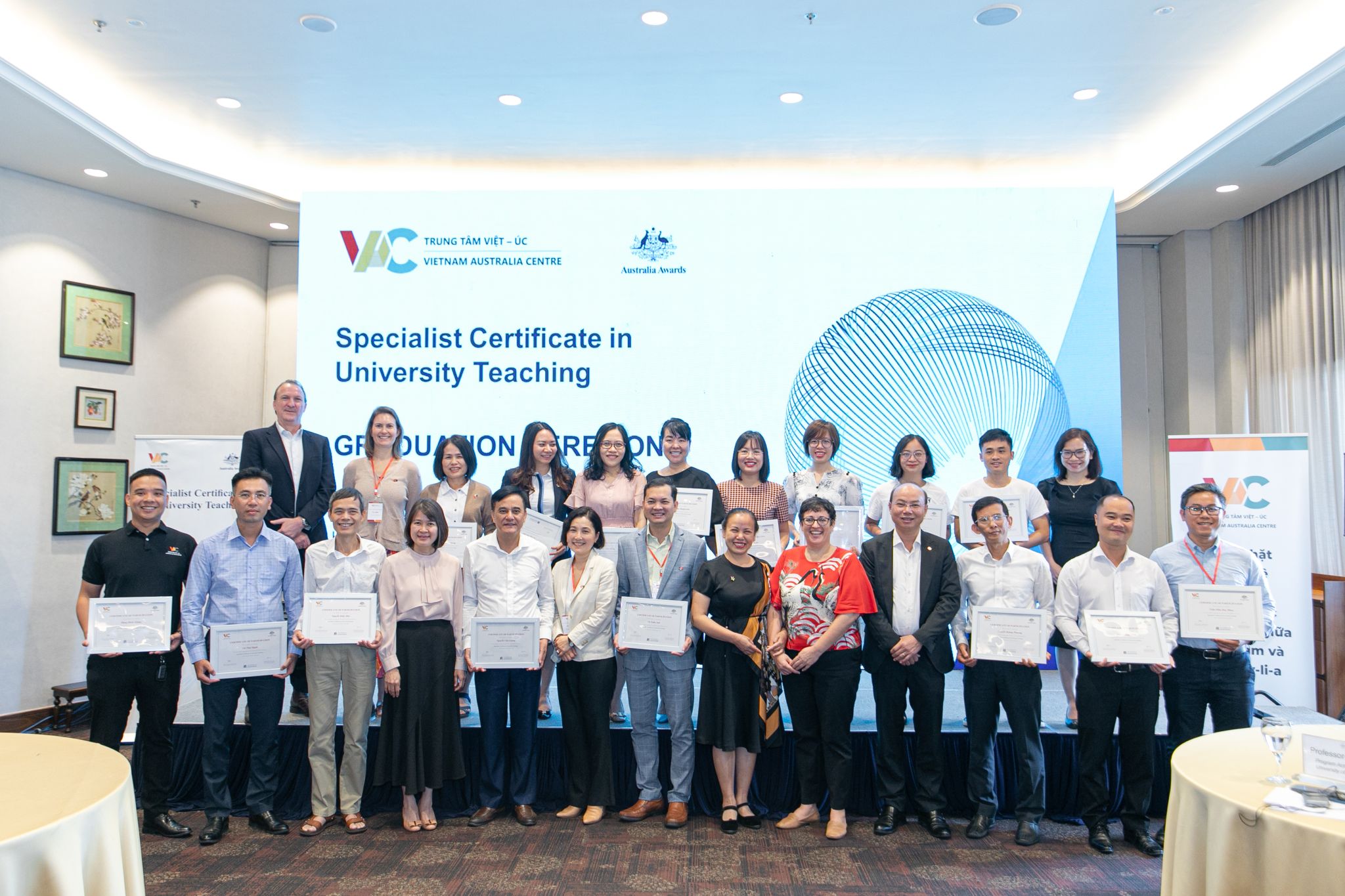
By combining VAC's deep understanding of the Vietnamese educational landscape with CSHE's world-class research and teaching expertise, this partnership created a platform for knowledge exchange between Vietnamese and Australian educators. The partnership facilitates not only the sharing of best practices but also the co-creation of innovative approaches to university teaching, tailored to meet the diverse needs of both nations' educational systems.
The structure of the SCUT reflects the partnership's commitment to blending theory with practice. Participants engage in a mix of theoretical seminars, practical exercises, micro-teaching sessions, and peer review activities. This comprehensive approach ensures that educators not only gain knowledge but also have ample opportunities to apply their learning in real-world contexts. Through developing an Application Learning Project and a comprehensive portfolio of reflections participants were encouraged to critically analyse their teaching experiences, apply newly acquired knowledge to real-world contexts, and continuously improve their pedagogical approaches, fostering a culture of self-assessment and professional growth throughout the course.
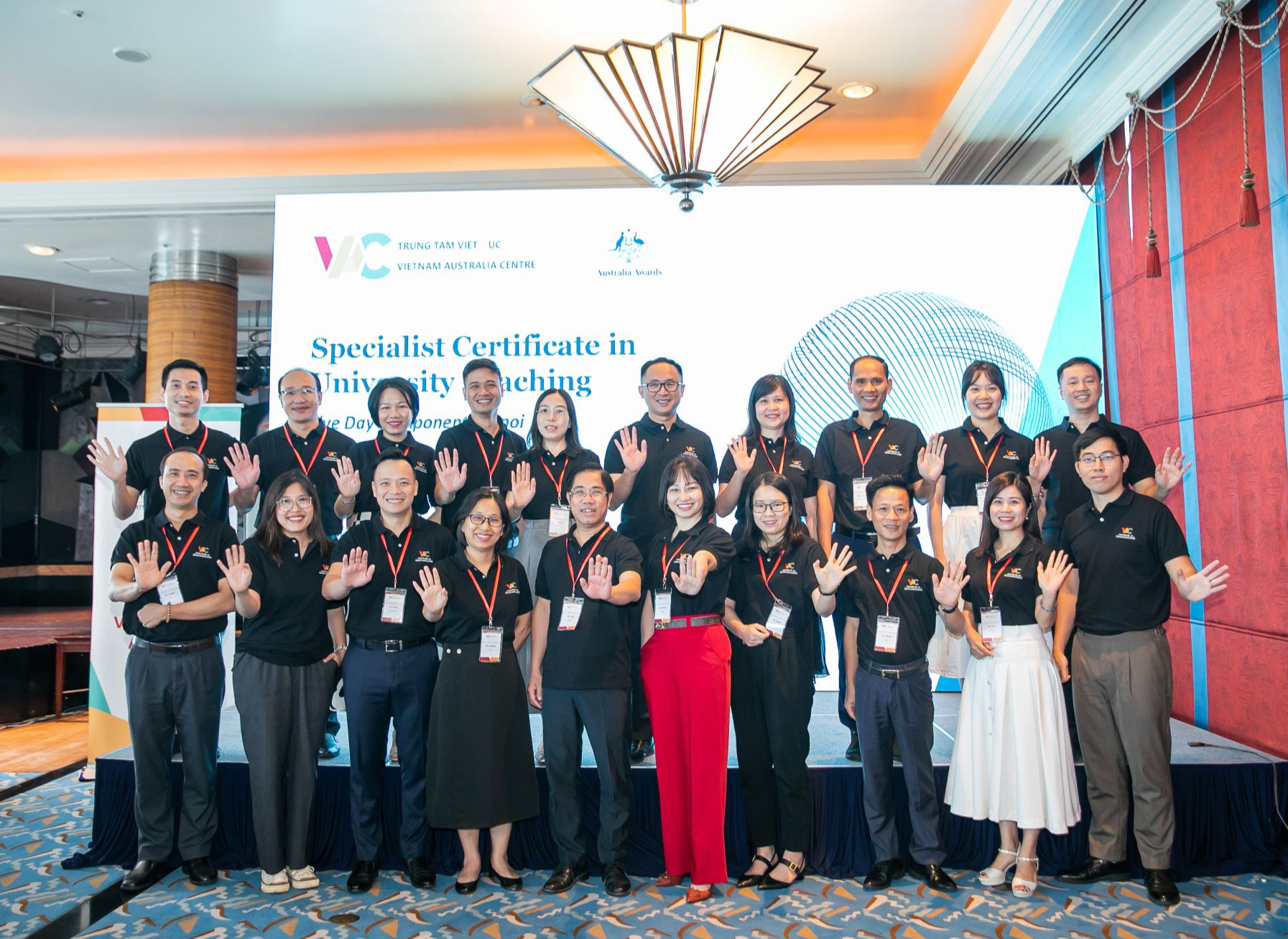
The course design incorporated components delivered in both Vietnam and Australia, highlighting the international nature of the collaboration and its potential to broaden participants' perspectives on global educational practices. As part of the course, participants spent four weeks in Melbourne, where they immersed themselves in workshops and teaching observations at the University of Melbourne's Parkville and Southbank campuses. During their time in Melbourne, participants also engaged with colleagues from other institutions. This included learning about the Victoria University block model during a visit to the VU City Campus, exploring teaching innovation and work-integrated learning with colleagues from the Technology Learning Transformations Unit and Employability Unit at Swinburne University of Technology, and hearing about the important work of the Learning Futures team at Deakin University. In addition to these informative discussions, participants explored cutting-edge facilities, such as the Factory of the Future, Air Hub, Smart Structures Lab, and Design Factory at Swinburne University of Technology, as well as the virtual production studio at Deakin University. These experiences provided participants with a comprehensive view of innovative approaches in higher education and facilities supporting modern teaching and learning practices.
The SCUT aims to develop a critical understanding of effective teaching principles in higher education, introduce participants to key research and debates in university pedagogy, and foster a student-centred perspective on education. Moreover, it enhances skills in curriculum design, assessment strategies, and the integration of educational technologies, all while encouraging reflective practice and continuous improvement among educators. This initiative made possible through ongoing collaboration with Aus4Skills and VAC, contributes to strengthening ties between the Vietnamese and Australian higher education sectors, promoting ongoing exchange of ideas, and playing a crucial role in shaping the future of university teaching in an increasingly interconnected world.