Interactive oral assessments (IOAs) have come to be seen as an effective means of securing assessments in higher education in response to the challenges posed by generative artificial intelligence. Proponents suggest that IOAs, done well, can provide clearer evidence of individual learning, can be more authentic and more human, and can support deeper learning and the development of communication skills. But have these potential benefits been realised in practice? And how do we address concerns about scalability, validity, and equity? This symposium brings together educators involved in developing, delivering and evaluating new IOA models, in order to build an evidence base to support good practice.
Enquiries
If you have any queries about the Symposium, please contact melbourne-cshe@unimelb.edu.au
The Symposium will include several parallel streams of presentations, grouped thematically. Presentations should be no longer than 15 minutes, with 10 minutes for Q&A.
We invite proposals for the presentation of research aligned with Symposium theme, including studies of higher education policy and management, teaching, learning and assessment, student experience and outcomes, and equity and inclusion.
Please submit a proposal using the following structure:
- Title of Presentation
- Keywords (enter one line of key or focus terms by which your paper can be indexed)
- Presentation summary, to be published on Symposium website (100 words)
- Abstract (approximately 600 words), including:
- Background/context, outlining how the presentation relates to the Symposium theme, including relevant literature
- Description of the research, initiative or practice
- Method(s) of data collection and analysis OR position/provocation statement
- Evidence of outcomes and effectiveness
- Contribution to scholarship and/or practice
- References
Proposal submission
The call for submissions has now closed.
Enquiries
If you have any queries about the proposal submission process, please contact melbourne-cshe@unimelb.edu.au.
Please see a draft program below
| 9.30-10.00am | Registration & morning tea Woodward Conference Centre, Law Building, level 10 | |||||
| 10.00-10.05am | Welcome and opening remarks | |||||
| 10.05-10.55am | Keynote address From panic to practice: What Interactive Oral Assessments have taught us after the AI shock A/Prof Popi Sotiriadou, Associate Professor in the Department of Tourism and Marketing at Griffith University | |||||
| 10.55-11.00am | Comfort break | |||||
| 11.00am-12.00pm | Panel discussions and Q&A: Issues and experiences of IOA A/Prof Erica Brady, Associate Professor in the Department of Marketing, Monash University Dr Thomas Corbin, Research Fellow, Centre for Research in Assessment and Digital Learning, Deakin University Prof Beth Driscoll, Professor in Publishing and Communications and Deputy Dean (Academic), Faculty of Arts, University of Melbourne Prof Katja Holtta-Otto, Professor of Engineering Design and the Head of the Department of Mechanical Engineering, University of Melbourne Moderator: Dr Daniel Czech, Senior Lecturer in Biotechnology, Faculty of Science, University of Melbourne | |||||
| 12.00-1.00pm | Networking lunch | |||||
| Concurrent sessions | ||||||
|---|---|---|---|---|---|---|
Large-scale and capstone implementations Moderators: A/Prof Guy Morrow & Sarah Song, University of Melbourne Uni Side (Room 1020), Level 10, Law Building | Equity, engagement and examiner / student perspectives Moderator: A/Prof Charne Miller, University of Melbourne City Side (Room 1019), Level 10, Law Building | Discipline-specific cases Moderators: Jenny Pesina & Ben White, University of Melbourne West Room (Room 1006), Level 10, Law Building | ||||
| 1.00-1.40pm | Assuring learning in large capstone subjects: Designing, calibrating and moderating Interactive Oral Assessments at scale Dr Eduardo Oliveira and Dr Maria Read, FEIT, University of Melbourne Using a suite of Interactive Oral Assessments for deep learning at scale in a transdisciplinary subject Dr Helena Robinson, University of Technology Sydney | Integrity without equity? Examiner judgement and cognitive demand in large-scale Interactive Oral Assessment Hasti Samadi and Dr Geela Chee, FEIT, University of Melbourne From anxiety to engagement: Lessons learned from implementing Interactive Oral Assessments in diverse and equity cohorts Dr Claudia Diaz, Charles Sturt University | Balancing learning and assessment in a medical humanities curriculum: A day at the museum Dr Heather Gaunt, Museums & Collections and Rosie Shea, MDHS, University of Melbourne From laboratory bench to final examination: Lessons learned from implementing Interactive Oral Assessments across an undergraduate bioscience course Dr Chris Della Vedova, Flinders University and Dr Sarah Davey, Adelaide University | |||
| 1.40-1.50pm | Break | |||||
| 1.50-2.30pm | Implementing a large-scale research capstone project with oral assessments Dr Xuan Vu and Prof Liana Jacobi, FBE, University of Melbourne Interactive Oral Assessment for semester-long team projects: Student and staff perspectives Dr Shannon Rios and Dr Paul Beuchat, FEIT, University of Melbourne | When every student speaks: Scaling oral assessment for equity in first-year learning Dr Narelle Hunter and Dr Chris Della Vedova, Flinders University, Dr Sarah Davey, Adelaide University Set questions in oral examinations: Evidence from student and staff perspectives Nancy Mase and Dr Andrea Pianella, ABP, University of Melbourne | Assuring reflective practice in the age of GenAI: Interactive Oral Assessment in an online work-integrated learning subject Dr Elena Balcaite, Arts, University of Melbourne Exploring avatar-based virtual environments for Interactive Oral Assessment training Ben Loveridge, SASS, University of Melbourne | |||
Keynote presentation
-
A/Prof Popi Sotiriadou, Associate Professor in the Department of Tourism and Marketing at Griffith University
Interactive oral (IO) assessments have gained prominence in higher education in response to generative artificial intelligence and their promise of more authentic, individualised evidence of learning. Yet important questions remain: have these benefits been realised in practice, and how do institutions address concerns about scalability, validity and equity?
Drawing on multi-institutional research, longitudinal implementation studies and a systematic review of advancements and applications of IOs since their inception, this keynote synthesises what is now known about IOs beyond early experimentation. It examines how design choices shape rigour and student experience, how staff workload evolves over time, and how structured professional judgement can strengthen reliability and fairness when paired with transparent criteria and inclusive design.
The presentation reframes IOs not as a defensive reaction to AI, but as part of a broader recalibration of assessment, foregrounding feedback, learning-in-action and student agency. The keynote concludes by setting out a sector-wide agenda for embedding IO assessments as a credible, equitable and scalable feature of contemporary assessment practice.
Large-scale and capstone implementations
-
Dr Eduardo Oliveira and Dr Maria Read, FEIT, University of Melbourne
This presentation reports on the implementation of Interactive Oral Assessments in a large graduate software engineering subject with approximately 150 students. Introduced in response to growing use of generative AI and concerns about assurance of learning, the IOA simulated client consultations in which student teams defended their architectural decisions using authentic artefacts. This session moves beyond theory to practice: the presenter will share the co-designed assessment rubrics, the specific tutor training and calibration workflows, and video excerpts of actual student assessments. Attendees will gain a scalable framework for strengthening assessment integrity and student engagement in project-based curricula.
-
Dr Helena Robinson and Dr Luis Lozano Paredes, University of Technology Sydney
As generative AI reshapes graduate work and disrupts entry-level roles, universities face renewed pressure to assess the “human-centric” skills that AI cannot replace. This presentation shares a case study from a large transdisciplinary elective subject in which three interactive oral assessments are used as a developmental spine across the curriculum. Designed as dialogic, workplace-aligned conversations rather than scripted performances, these assessments scaffold students’ communication, sensemaking, judgement, and reflexivity while embedding academic integrity by design. Drawing on recent scholarship, the presentation examines design principles, practical challenges, and evidence of effectiveness when implementing interactive oral assessment at scale.
-
Dr Xuan Vu and Prof Liana Jacobi, FBE, University of Melbourne
The role of Faculty of Business and Economics graduates increasingly requires skills to enable their active involvement in collaborative and creative problem solving and data-based decision-making. Over the past two years, our team has introduced a new research-based capstone learning experience within the large third-year subject Econometrics 2 (40% of final mark) to address those skill needs. Our newly developed multi-stage semester-long capstone learning experience with interactive oral assessments safeguards the integrity in the presence of AI while improving student learning and experiences.
-
Dr Paul Beuchat, Shen (Jason) Zhan, Dr Shannon Rios, Dr Madhurima Das, Dr Jillian Kenny, Prof Katja Hölttä-Otto, FEIT, University of Melbourne
This study explores student and staff perceptions of team-based Interactive Oral Assessment (IOA) in a compulsory engineering master's subject. The authentic scenario simulates team discussions with higher-level management, developing students' ability to communicate engineering decisions and justifications concisely and coherently as a team. Using a qualitative-dominant mixed-methods approach with focus groups, interviews, and surveys, findings reveal that team-based IOAs contribute to team building and instructor oversight and create generally positive experiences for both students and instructors. Interactive team discussions during summative IOAs emerged as a major teaching highlight. These evidence-based insights supported increasing IOA weighting from 12.5% to 30%.
Equity, engagement and examiner / student perspectives
-
Hasti Samadi and Dr Geela Chee, FEIT, University of Melbourne
Interactive Oral Assessments (IOAs) are increasingly promoted as authentic and integrity-enhancing alternatives to written assessment in the age of generative AI. However, empirical evidence examining whether IOAs deliver equitable outcomes at scale remains limited. This presentation reports on a multi-iteration study of IOA implementation in a large undergraduate data science subject. Drawing on assessment outcomes, examiner-level marking patterns, student feedback, and design artefacts, the study examines how examiner judgement and enacted cognitive demand shape equity and validity. Findings show persistent examiner-linked variation despite repeated design refinements, pointing to an under-examined source of inequity in interactive oral assessment.
-
Dr Claudia Diaz and Amita Krautloher, Charles Sturt University
This presentation shares insights from a three-year study implementing Interactive Oral Assessments (IOAs) in an information dense online Biopsychology subject at a regional Australian university. IOAs were introduced to enhance psychology literacy skills and academic integrity, deepen learning, and improve inclusivity for diverse cohorts. Mixed methods findings show IOAs were viewed as more secure than traditional assessments and valuable for learning, despite being perceived as more demanding. Students, particularly those with higher academic and emotional support needs, reported feeling more included, engaged, and motivated. Initial anxiety frequently shifted to positive experiences, demonstrating IOAs’ transformative potential in online learning for diverse cohorts.
-
Dr Narelle Hunter, A/Prof Masha Smallhorn and Dr Chris Della Vedova, Flinders University
Dr Sarah Davey, Adelaide UniversityLarge first-year courses face growing pressure to uphold academic integrity in a time of generative AI (GenAI) while ensuring authentic and equitable assessment at scale. Interactive Oral Assessments (IOAs) offer a rigorous, conversational format that enables students to demonstrate understanding, while mitigating risks associated with GenAI. This presentation reports on the replacement of a written laboratory report with an IOA in a large first-year biology course. We outline strategies that supported scalable implementation, including practise sessions, an asynchronous chatbot, structured feedback and staff training. We discuss key considerations around equity, student preparation and managing assessment anxiety in IOA contexts.
-
Nancy Mase and Dr Andrea Pianella, ABP, University of Melbourne
Interactive oral assessments (IOAs) are increasingly promoted as a secure and authentic response to generative AI in higher education. But what empirical evidence supports these claims? This presentation draws on a systematic review of research on generative AI in higher education, with particular attention to speaking and oral performance. Findings reveal that while writing-focused AI research is expanding rapidly, evidence on speaking, oral assessment, and sustained performance outcomes remains limited and methodologically uneven. The review highlights critical gaps regarding scalability, validity, and equity, offering a cautious and evidence-based perspective on the promises and limits of IOAs.
Discipline-specific cases, training and technology
-
Dr Heather Gaunt, Museums & Collections and Rosie Shea, MDHS, University of Melbourne
This presentation reports on a Medical Humanities subject for third year MD students at the University of Melbourne, introducing an oral assessment embedded in a museum based experiential curriculum. Students prepare for the assessment by viewing a video on visual analysis and writing a 500-word literature summary. The students then complete 30-minute oral presentations, in visual analysis and clinical connections, in pairs during a regional gallery field trip. Thematic analysis of focus groups across two iterations indicates high engagement: novelty, peer shared experience, perceived safety, and collaborative meaning making, enhanced learning and managing uncertainty. The approach is transferable across disciplines. week intensive Medical Humanities subject for thirdyear MD students at the University of Melbourne, introducing an oral assessment embedded in a museumbased experiential curriculum. Students prepared via a video on visual analysis and a 500word literature summary, then completed paired 30minute oral presentations during a regional gallery field trip (20 min visual analysis, 10 min clinical connections). Thematic analysis of focus groups across two iterations indicates high engagement: novelty, peer shared experience, perceived safety, and collaborative meaningmaking enhanced learning and managed uncertainty. The approach is transferable across disciplines.
-
Dr Chris Della Vedova, Flinders University and Dr Sarah Davey, Adelaide University
This presentation shares evidence-based lessons from implementing interactive oral assessments (IOA) in two distinct formats within an undergraduate Genetics course: regular short "mini-IOA" replacing written laboratory reports, and a longer "major-IOA" replacing the final written examination. Drawing on 15 years of longitudinal mixed-methods data from 722 students, findings demonstrate significantly improved academic performance, enhanced student satisfaction, and equitable outcomes across diverse cohorts. Key implementation lessons cover assessor training, scaffolding strategies, managing student anxiety, and maintaining academic integrity in an era of generative AI. Practical strategies for cross-disciplinary adaptation will be shared.
-
Dr Elena Balcaite, Arts, University of Melbourne
In experiential and work-integrated learning (WIL) pedagogies, reflection transforms real-world experiences into learning. This presentation examines a case study of interactive oral assessment in an undergraduate WIL placement subject. Drawing on the instructor’s reflections and student survey data, it explores whether the transformative potential of reflective practice in WIL can be assured through a structured sequence of interactive oral assessments and face-to-face marking of the final portfolio. Considering the subject’s online delivery mode, the presentation uses situated examples from the subject to also interrogate the validity of online forms of interactive oral assessment.
-
Ben Loveridge, SASS and A/Prof Jen Martin, Science, University of Melbourne
This presentation explores the use of avatar-based virtual environments to support graduate researchers preparing for high-stakes interactive oral assessments, including the newly introduced Viva. Fear of public speaking is common, and opportunities for authentic practice with targeted feedback are limited. A 2025 pilot using a VR platform enabled participants to rehearse presentations before virtual audiences while receiving real-time AI feedback. Initial responses showed potential for the system while highlighting challenges to deliver at-scale. A larger mixed-methods study is planned for 2026 to evaluate impacts on speaking anxiety, preparedness, and speaking confidence. This research contributes to scholarship on technology-enhanced assessment preparation in higher education.
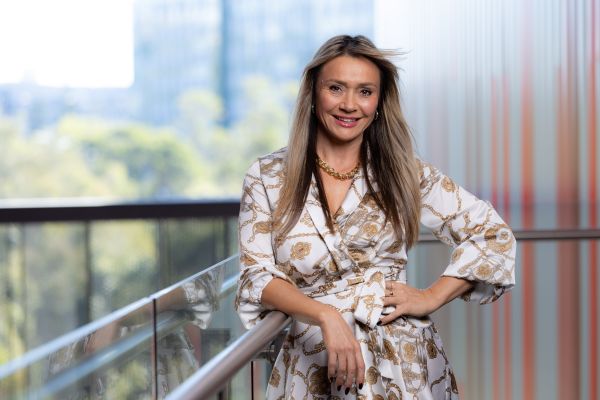
Keynote speaker
Associate Professor Popi Sotiriadou
Associate Professor Popi Sotiriadou (PFHEA) is an internationally recognised scholar in assessment innovation, academic integrity and interactive oral (IO) assessment design at Griffith University. Her work focuses on translating research into scalable, equitable and authentic assessment practices across disciplines and institutional contexts. She has led national and international projects on IO assessments, employability-focused assessment and technology-enhanced learning, and supports educators across institutions nationally and internationally in implementing IOs.
Popi is a recipient of the Australian Award for University Teaching (2022) and the Australian Financial Review Teaching & Learning Excellence Award (2023) and was a finalist for the Tracey Bretag Award for Academic Integrity. She has advised institutions and regulators internationally and is listed as an expert with TEQSA.
Featured speakers

Associate Professor Erica Brady
Erica Brady is an Education Focused Associate Professor in Marketing at Monash University. Currently the Course Director for the Bachelor of Business Administration at Monash University, she previously spent 10 years as the Director of Education in the Department of Marketing. In these roles she focused on enabling academics to develop their skills and knowledge in education practice and the design and development of organisational systems and processes that remove barriers to innovation. Throughout her career Erica has been responsible for teaching thousands of students, ranging in scope from large 500+ undergraduate units through to boutique Honours and specialised Masters courses. She has received an Australian Award for University Teaching (2025), a Vice-Chancellor's Award for Teaching Innovation (2024), Dean’s Awards for Teaching (2012, 2020, 2023), a Vice-Chancellors Citation for Outstanding Contribution to Student Learning (2013) and a Dean’s Commendation for PRME Education Excellence (2017). Her SoTL research explores assessment at three tiers; educational systems, program design and teaching practice.

Dr Thomas Corbin
Dr Thomas Corbin is a Research Fellow at Deakin University's Centre for Research in Assessment and Digital Learning (CRADLE), where he leads research on generative AI, assessment, and feedback in higher education. Originally a philosopher by training, Thomas focuses on some of the most urgent practical challenges facing universities today. His influential papers, including "Talk is Cheap" and "The Wicked Problem of AI and Assessment", continue to shape international debate on assessment in the age of AI. He also does research on Cicadas but will attempt to avoid dwelling on this in conversation.
Dr Daniel Czech
Dr Daniel Czech is an education focused Senior Lecturer within the School of BioSciences at The University of Melbourne. Daniel supports learning and teaching within the Master of Biotechnology and the Bachelor of Science programs. Daniel is a specialist in biomedical science, teaching and education scholarship. His teaching practice is founded upon evidence-based teaching and constructivist learning philosophy. Daniel's professional expertise extends to redefining industry involvement in higher education, reflecting his passion for enhancing student employability.

Professor Beth Driscoll
Beth Driscoll is Professor in Publishing and Communications and Deputy Dean (Academic) in the Faculty of Arts at the University of Melbourne. As Deputy Dean (Academic), she has responsibility for the strategic direction, oversight and implementation of the Arts Faculty's learning and teaching across undergraduate and graduate programs. In her discipline of publishing studies, her research focuses on contemporary book cultures and practices of reading, and the global publishing industry. Her most recent book is "What Readers Do: Aesthetic and Moral Practices of a Post-Digital Age" (Bloomsbury Academic, 2024) and her current research includes leading the Community Publishing in Regional Australia project, funded through an ARC Linkage grant.

Professor Katja Holtta-Otto
Dr. Katja Holtta-Otto is a Professor of Engineering Design and the Head of the Department of Mechanical Engineering. She works in design theory and methodology with specific emphasis on interdisciplinary topics linked to engineering design. She is an expert in interdisciplinary design education. She recently led the development of a FEIT wide core subject Interdisciplinary Design for Engineers, a project-based subject merging engineering design and professional skills. This team-taught large subject adopted Interactive Oral Assessment as part of the overall assessment. Dr. Holtta-Otto completed her doctorate at the Helsinki University of Technology, Finland (2005). She has worked as a Visiting Scholar at the Massachusetts Institute of Technology (MIT), Professor of Mechanical Engineering at the University of Massachusetts Dartmouth, USA; Professor in Engineering Product Development at the Singapore University of Technology and Design; and most recently as a professor of product development at the Aalto University, Finland.
| Date | Friday 27 March 2026 |
|---|---|
| Time | 10.00am-2.30pm, registration and morning tea from 9.30am for 10am start |
| Location | In-person on the University of Melbourne Parkville Campus Symposium keynote address and panel discussion will be available online via Zoom |
| Cost | In-person - UoM staff and graduate researchers: free In-person - Colleagues outside of the University of Melbourne: $75 (incl GST) Online (plenary sessions only, 10am-12pm): free |
| Registration | Registration for this event is now closed. |
Enquiries
If you have any queries about the registration process, please contact melbourne-cshe@unimelb.edu.au.