This Symposium showcases how design-led approaches can address the complex pedagogical challenges confronting higher education in an era of rapid global change—including the COVID19 pandemic and the accelerating use of generative artificial intelligence in learning and assessment. Positioning teaching and learning as a design science offers a pragmatic and rigorous way to respond to these challenges by generating innovations that are transferable, research-informed, and adaptable across diverse educational contexts.
The Symposium will explore collaborative, research-based design methodologies such as Design Based Research, Educational Design Research, Design Thinking, and Action Research. These approaches bring students, teachers, learning designers, and educational researchers together from the earliest stages of problem identification through iterative cycles of design, implementation, and evaluation. Such methods embrace the “messy” and fast changing realities of contemporary higher education.
Aligned with the University of Melbourne’s Framework for Educational Excellence, the Symposium highlights how design-led methodologies can be strengthened by connecting these seven dimensions to design-oriented pedagogical research. The Symposium illustrates how systematic, inquiry driven innovation can advance both theory and practice while supporting high quality, future-ready education at scale.
Possible topics include:
- Scholarship of Teaching and Learning (SoTL) grounded in a design framework
- Mixed methods evaluation of teaching and learning impact
- Collaborative and participatory design projects
- Evidence informed learning design
- Pragmatic, transformative, and transferable learning approaches
- Advancing educational theory and practice
The Symposium will feature an invited stream of presentations in collaboration with a special issue of JUTLP - Journal of University Teaching and Learning Practice (Q1) “Design-based research: Transforming higher education learning and teaching practice in response to rapid changes”
Enquiries
If you have any queries about the Symposium, please contact melbourne-cshe@unimelb.edu.au
The Symposium will include several parallel streams of presentations, grouped thematically. Presentations should be no longer than 10 minutes, with 10 minutes for Q&A after each presentation block.
We invite proposals for the presentation of research aligned with Symposium theme, including studies of higher education policy and management, teaching, learning and assessment, student experience and outcomes, and equity and inclusion.
Possible topics include:
- Scholarship of Teaching and Learning (SoTL) grounded in a design framework
- Mixed methods evaluation of teaching and learning impact
- Collaborative and participatory design projects
- Evidence informed learning design-informed learning design
- Pragmatic, transformative, and transferable learning approaches
- Advancing educational theory and practice
Please submit a proposal using the following structure:
- Title of Presentation
- Keywords (enter one line of key or focus terms by which your paper can be indexed)
- Presentation summary, to be published on Symposium website (100 words)
- Abstract (approximately 600 words), including:
- Background/context, outlining how the presentation relates to the Symposium theme, including relevant literature
- Description of the research, initiative or practice
- Method(s) of data collection and analysis OR position/provocation statement
- Evidence of outcomes and effectiveness
- Contribution to scholarship and/or practice
- References
Proposal submission
Proposal submissions are now closed. If you wish to submit one please email melbourne-cshe@unimelb.edu.au
Enquiries
If you have any queries about the proposal submission process, please contact melbourne-cshe@unimelb.edu.au.
| 9.30-10.00am | Registration & morning tea Woodward Conference Centre, Law Building, level 10 | |||||
| 10.00-10.05am | Welcome and opening remarks | |||||
| 10.05-10.55am | Keynote address Professor Sue Bennett, Deputy Vice-Chancellor (Academic), La Trobe University | |||||
| 10.55-11.00am | Comfort break | |||||
| 11.00am-12.00pm | Panel discussions and Q&A
A/Prof Marian Mahat, Associate Professor in Learning Environments, Faculty of Education, University of Melbourne A/Prof Mark Merolli, Associate Professor in Physiotherapy, Faculty of Medicine, Dentistry and Health Sciences, University of Melbourne A/Prof Margaret Osborne, Associate Professor in Psychology and Music, Faculty of Medicine, Dentistry and Health Sciences, University of Melbourne Moderator: A/Prof Kate Tregloan, Associate Professor in Higher Education, Centre for the Study of Higher Education, University of Melbourne | |||||
| 12.00-1.00pm | Networking lunch | |||||
| Concurrent sessions | ||||||
|---|---|---|---|---|---|---|
| Systemic and Scalable Learning Design Moderators: Natalie Kondos & Dr Gaby Nardari, University of Melbourne West Room (Room 1006), Level 10, Law Building | Curriculum Innovation, Authentic Assessment and Applied Literacies Moderators: Dr Lara Grollo & Dr Vivian Romero, University of Melbourne City Side (Room 1019), Level 10, Law Building | Design-based research in learning and teaching practice (JUTLP special issue presentations) Moderators: A/Prof Thomas Cochrane, University of Melbourne & Dr Kelly Galvin, Swinburne University Uni Side (Room 1020), Level 10, Law Building | ||||
| 1.00-1.40pm | Scaling personalised feedback in large classes: An evidence-informed learning design approach Micro-learning, macro-impact: A mixed-methods evaluation of a scalable microlearning program for faculty development in small group facilitation supported by a Community of Practice | Transforming higher education practice through storytelling assessment: A mixed methods study of student learning and impact Nada Jarni and Dr Jing Ye, RMIT University Public health hackathons as educational social innovation Holly Donaldson, Council of Academic Public Health Institutions Australasia (CAPHIA) and Dr Vivian Romero, University of Melbourne | Transforming educational approaches to address music performance anxiety through virtual reality simulation A/Prof Margaret Osborne, MDHS, Dr Solange Glasser, FFAM, and Ben Loveridge, TLI, University of Melbourne Strengthening design-based research through Brown's mixed-methods vision: A framework for impactful technology enhanced learning research Prof Michael Cowling, RMIT, Dr Robert Vanderburg and Dr Michelle Vanderburg, CQUniversity Operationalising generative AI to scaffold threshold concepts: A human-in-the-loop design-based research framework for STEM Dr Winn Chow and Dr Stella Peng, FEIT, University of Melbourne Expanding bounded rationality theory: Clinical reasoning through collaboration Dr Kelly Galvin, Swinburne University of Technology | |||
| 1.40-1.50pm | Break | Break | Break | |||
| 1.50-2.30pm | Monash Advanced Preparation Program (MAPP): Transforming learning and teaching Joab Hwang and Ruth Hellema, Monash College The mechanics of belonging: Designing cohort-scale learning in engineering A/Prof Christian Brandl, FEIT, University of Melbourne | Embedding coding and AI literacy into biomedical science education | The Iterative Blended Learning Design Framework: A Design-Based Research Study of Professional Development for Educators Tensions in transnational education: An activity theory analysis for ungraded curricula in Malaysia | |||
| 2.30-2.50pm | Simulating the Unruly: Design-Based Research on Stress-Testing Classroom Management Skills using Generative AI Agents Assist/Prof Meltem İpek Öner, and Prof Yelkin Diker Coskun, Yeditepe University Design and implementation of simulation-based teacher training program Dr Taibe Kulaksız, Heidelberg University of Education | |||||
Keynote presentation
-
Prof Sue Bennett, La Trobe University
This keynote explores how design-oriented approaches to teaching can respond to the critical challenges facing higher education in the age of generative AI. Drawing on more than three decades of research and experience in educational technology, I propose that the most significant enabler of educational change is not technology itself, but the everyday design work of teachers.
Framed as practice innovation, the presentation focuses on the iterative, situated and informed design changes that teachers make as they plan, enact and refine learning experiences. Research into teacher design practice shows that this work is ongoing, context-sensitive and deeply connected to teachers’ knowledge, values and judgements. From this perspective, meaningful innovation in higher education emerges not from adopting new tools, but from how teachers adapt and redesign their practice over time.
In the context of generative AI, this framing offers both continuity and provocation. While AI is often positioned as a transformative force, its impact ultimately depends on how it is taken up within teaching practice. Rather than replacing teachers, AI amplifies the complexity of their design work—raising new questions about what and how students should learn, how learning is evidenced, and how human and machine contributions are meaningfully integrated.
This leads to a broader consideration of academic work and leadership. If change in higher education is enacted through practice, then leadership must also be understood as a practice—one that involves developing ourselves and others as designers of learning. This includes building the capacity to make informed design decisions, to experiment and iterate, and to support colleagues in navigating uncertainty and change. I’ll explore some practical ways to approach this through scholarship, design-based inquiry and communities of practice.
At its core, this keynote offers a simple but critical provocation: teaching has meaning as a human, relational and purposeful activity oriented towards student learning. Technologies—including AI—may reshape how teaching is enacted, but they do not replace the fundamental purpose of higher education as a shared human endeavour. By centring teacher design practice, this presentation provides a research-informed and practice-oriented way forward for engaging with AI while keeping student learning, and the human experience of education, at the heart of our work.
Systemic and scalable learning design
-
Dr Linh Nguyen, FBE, University of Melbourne
Dr Hung (Harry) Viet Pham, FBE, University of Melbourne
Dr Xiaoting Wei, FBE, University of MelbourneStudent engagement with feedback remains a challenge in large courses, where many students do not actively use feedback to improve their learning. This project presents a scalable personalised feedback tool implemented in large undergraduate and postgraduate finance courses. The tool automatically generates tailored, actionable feedback based on students’ performance, highlighting key areas for improvement and directing students to relevant learning resources. By making feedback more accessible and easier to act on, the approach encourages students to revisit their work and apply feedback to subsequent tasks. The project shares practical insights into implementation, scalability, and how personalised feedback can enhance student engagement.
-
Dr Kylie Fitzgerald, MDHS, University of Melbourne (Presenting Author)
Dr Michael Poulton, MDHS, University of Melbourne
A/Prof Lisa Cheshire, MDHS, University of Melbourne
Tamara Clements, MDHS, University of Melbourne
Dr Brett Vaughan, University of Melbourne / Southern Cross University / Health Sciences University (UK)The Doctor of Medicine shifted to student‑centred curriculum model from 2022, and educators required upskilling in small‑group facilitation. With a large teaching cohort (>55 educators delivering 90 classes/week for 360 students), we implemented a weekly microlearning programme supported by a Community of Practice in 2023-2024. Using mixed‑methods evaluation (snapshot surveys, quantitative instruments, focus groups Kirkpatrick’s Levels 1-3), we found high perceived usefulness with reported behavioural changes in knowledge and classroom practice. Our model is responsive, sustainable and scalable and offers a training option for educators who may not have time or interest in engaging in formal micro-credentials or postgraduate programs.
-
Dr Joab Hwang, Monash College (Presenting Author)
Ruth Hellema, Monash College (Presenting Author)
Eleanor Wong, Monash CollegeThis presentation outlines the design and implementation of the MAPP, a 16-week pathway program developed in response to rapid changes in the international education landscape. It highlights how curriculum-embedded co-design approaches enabled the integration of transition pedagogy, aligned assessment, and AI-responsive practices. Working closely with subject matter experts, the initiative supported both pedagogical transformation and student success. Early outcomes include 100% progression into university degrees, strong student satisfaction, and no academic integrity breaches related to AI. The session offers a practical model for designing agile, future-focused learning in higher education contexts.
-
A/Prof Christian Brandl, FEIT, University of Melbourne
This presentation reports on a design-led transformation of a second-year engineering subject that uses team-based learning (TBL) to create scalable active learning in large STEM cohorts. Replacing small‑group classrooms with stable teams, structured collaborative tasks, and coordinated in‑lecture frameworks enabled 150–220 students to engage meaningfully in standard lecture theatres. Student reflections highlight how team interactions fostered engagement, confidence, and a sense of belonging despite spatial constraints. The results illustrate how intentionally designed team structures and whole‑cohort processes can deliver active, connected learning at scale without reliance on specialist learning spaces.
Curriculum innovation, authentic assessment and applied literacies
-
Nada Jarni, RMIT University
Dr Jing Ye, RMIT UniversityThis presentation reports a mixed methods evaluation of storytelling assessment implemented in two undergraduate nutrition science courses to explore its preliminary influence on student engagement and learning. Storytelling is recognised in higher education for supporting cognitive, affective and reflective development, as evidenced in recent systematic reviews (Wu and Chen 2020; Zaitseva et al. 2024). Early survey and interview responses indicate that students found the task engaging and meaningful, aligning with literature on storytelling’s role in communication and reflection. Students reported digital and collaborative challenges, suggesting storytelling’s promise for enhancing assessment and supporting authentic learning in a rapidly evolving higher‑education context.
-
-
Dr Jessica Manneken, Walter and Eliza Hall Institute of Medical Research and University of Melbourne (Presenting Author)
Dr Meg Taylor, Walter and Eliza Hall Institute of Medical Research and University of Melbourne (Presenting Author)
Kerry Ko, Walter and Eliza Hall Institute of Medical Research and University of Melbourne
A/Prof Jessica Borger, Monash UniversityThe rapid growth of data-driven biomedical research has made coding and AI literacy essential graduate capabilities, yet many students report low confidence and limited prior exposure. This presentation describes the design, implementation, and evaluation of a scaffolded postgraduate subject that embeds coding and responsible AI use within biomedical science education. Drawing on student feedback, assessment outcomes, and survey data, the session highlights how intentional learning design, combining practical coding tasks, guided AI use, and aligned assessment, can support learner confidence and engagement.
-
Dr Elektra Schubert, MDHS, University of Melbourne (Presenting Author)
Dr Vanja Rozenblat, MDHS, University of Melbourne (Presenting Author)
Dr Shi Xian Liew, MDHS, University of MelbourneThis presentation presents a step-by-step, evidence-based framework for subject redesign and improvement. Intended to be a practical tool to help educators respond to the rapidly changing environment that affects the university experiences of students, staff, and universities more broadly, our framework recommends a systematic process of problem identification, redesign, and evaluation. It aims to cover the experiences of varying levels of stakeholders, and emphasise recommended practices such student co-design. We then apply the framework to the redesign of a large-scale, undergraduate psychology capstone subject, detailing the processes and materials used to identify key issues and evaluate the effectiveness of the redesign.
Design-based research in learning and teaching
-
A/Prof Margaret Osborne, MDHS, University of Melbourne
Dr Solange Glasser, FFAM, University of Melbourne
Ben Loveridge, TLI, University of MelbourneThis design-based research investigates immersive virtual reality (VR) as a solution to performance anxiety in tertiary music education. Eight students in an undergraduate performance psychology subject learned a centering routine to regulate anxiety, then performed in a virtual concert hall whilst heart rate, distress levels, and confidence were measured. Results demonstrated that avatar realism triggered authentic performance anxiety responses, whilst the centering routine reduced anxiety ratings and increased confidence across two exposures. Using Activity Theory to map the learning ecology, the research proposes a transferable design framework for VR-enhanced performance training. This approach explores equitable access limitations of traditional simulations and offers potential applications across high-stress disciplines in higher education.
-
Prof Michael Cowling, RMIT University (Presenting Author)
Dr Robert Vanderburg & Dr Michelle Vanderburg, CQUniversityDesign-Based Research (DBR) is likely the dominant methodology in Technology Enhanced Learning, yet its inconsistent application limits effectiveness and the development of valid design principles. This paper argues for a return to DBR’s original mixed-methods vision, integrating qualitative insights with quantitative evidence. It proposes clear standards for iterative design decisions and introduces a dual-track reporting approach that balances contextual richness with rigorous, policy-relevant evidence. To address data underuse, it recommends shared repositories with standardised metadata for cross-study analysis. By synthesising existing research, this presentation proposes an enhanced framework offering stronger empirical grounding and improved methodological clarity for educational technology research.
-
Dr Winn Chow, FEIT, University of Melbourne
Dr Stella Peng, FEIT, University of MelbourneThis presentation introduces a Design-Based Research framework that operationalizes Generative AI (GenAI) to tackle persistent learning bottlenecks in STEM higher education. Traditional linear and static materials often fail to support students through complex Threshold Concepts, leaving them in a liminal state where they resort to superficial mimicry. By synthesizing educational frameworks like Cognitive Load Theory and Perkins’ Typology of Troublesome Knowledge, we demonstrate how educators can use GenAI as an advanced design and conversion tool to “translate” existing teaching materials into interactive, multimodal scaffolds. This human-in-the-loop approach ensures pedagogical rigor while empowering instructors to develop scalable active learning resources.
-
Dr Kelly Galvin, Swinburne University of Technology (Presenting Author)
Dr Louise Townsin, Torrens University Australia
Prof Timothy Moss, Torrens University AustraliaThis design based research project examined how bounded rationality theory can inform undergraduate health science students’ learning of clinical reasoning. Using a naturalistic lens, this study facilitated an ethical way to explore how imperfect information, cognitive limitations, and time constraints influence decision making within a problembased learning context. Iterative feedback from students, educators, and learning designers informed the development of a digital decision wheel integrated into independent and collaborative learning activities. Qualitative analysis across multiple research phases generated design principles that emphasised reflexivity, collaboration, and safe spaces for discussion. Findings suggest that structured collaboration can be deployed more broadly across disciplines to reduce decisionmaking constraints and extends bounded rationality theory by highlighting inability to collaborate as a key limiting factor.
-
Dr Christopher Tuffnell, University of Wollongong
As increasing number of higher education institutions move to adopt blended learning, educators can find themselves required to design complex learning environments that integrate the best components of online and in-person teaching. However, professional development initiatives often prioritise technology training rather than the development of learning design capability. This presentation reports a sustained design-based research (DBR) study that iteratively developed and evaluated a professional development intervention, supporting educators in redesigning courses for blended delivery. Across three DBR cycles, the study refined pedagogical strategies including flipped learning, collaborative design activities, and reflective practice. The research culminates in the Iterative Blended Learning Design (IBLD) framework, offering evidence-informed principles for supporting educators transitioning toward learning design-focused teaching practice.
-
Dr Andy Wear, FBE, University of Melbourne
A/Prof Andrew Anderson, MDHS, University of MelbourneThis presentation explores how aesthetic pedagogy can re-humanise academic development by engaging sensory, affective and embodied ways of knowing. Drawing on John Dewey’s concept of art as experience and Robert Shusterman’s somaesthetics, the study examines the Aesthetic Learning Experience (ALEx) program implemented through design-based research with cross-disciplinary educators. Workshop gameplay invited participants to experience learning through creative, relational and reflective processes. Analysis of focus groups, reflective artefacts and observations identified four key outcomes: stretch thinking, empathic perspective-taking, collaborative reflection and purposeful design. The findings offer practical tools for embedding creativity, relationality and imaginative thinking into academic development practice.
-
Tobias Blackwood, Swinburne University of Technology
This design-based research (DBR) project examines the role of cultural context in the delivery of ungraded curriculum from an Australian university to its transnational education (TNE) counterpart in Malaysia. Phase 1 of the study involved qualitative interviews with Malaysian educators regarding challenges and benefits of the ungraded approach. Informing Phase 2, thirty-one rubrics were audited, with language identified as an opportunity for improvement, informing development of new rubric prototypes currently being trialled across the Australian and Malaysia TNE campuses. Activity Theory is used as theoretical framework to guide the analysis across DBR phases, conducted through reflexive thematic analysis. Current findings suggest the revised rubrics are an improvement, with next steps including evaluation with students and educators.
-
Dr Steve Johnson, Murdoch University (Presenting author)
Dr Tara Zirakbash, Murdoch University
Dr Simon Order, Murdoch University
Dr Sangay Wangchuk, Murdoch UniversityThis presentation reports on a project combining Design-Based Research and a Trialogical or Object-Oriented approach to collaborations in work and learning. The approach builds on Activity Theory by focussing on the role of knowledge objects in collaborative practices. Our current research focus is the co-design of project-based assessments in a transitional postgraduate engineering unit designed to foster both human and Generative AI capabilities. Now in its third cycle, the project has followed Trialogical design principles across the DBR process. This presentation reports on the use of academic and student perceptions about knowledge objects in the redesign of assessment materials. It concludes with the relevance of the Trialogical approach to other disciplines.
-
Assist/Prof Meltem İpek Öner, and Prof Yelkin Diker Coskun, Yeditepe University
The transition from theoretical knowledge to practical classroom management is a persistent challenge in teacher education. This presentation introduces an innovative AI-driven simulator designed to address this gap. Utilizing Design Based Research (DBR), the study explores how generative AI agents, programmed with algorithmic friction, simulate complex, challenging student behaviours. By subjecting pre-service teachers to high-stakes, low-risk emotional scenarios, the research investigates the transition from habitual reactions to critical pedagogical reflection. We detail the iterative development across three disciplinary cohorts, showcasing how generative AI transforms higher education practices by developing professional agency and classroom management fluency in a safe environment.
-
Dr Özge Kelleci Alkan, Hasan Kalyoncu University
Dr Taibe Kulaksiz, Heidelberg University of Education (Presenting Author)
Dr Şeyma Yildirim, Hasan Kalyoncu University
Dr Fatma Çiloğlan Konur, Hasan Kalyoncu University
Prof Veysi Işler, Hasan Kalyoncu UniversityVirtual classroom simulations provide a safe environment for pre-service teachers to practice teaching; however, the effective integration of simulation-based learning in teacher education requires iterative program design that is sensitive to contextual realities, learner needs, and the dynamics of teaching practice. This design-based research study explored how a simulation-based teacher training program can be effectively designed and investigated its effects on pre-service teachers’ instructional competencies. Two iterative cycles of design, implementation, and refinement were conducted with senior pre-service teachers. Qualitative and quantitative findings indicated significant improvement in technology integration, classroom management, and lesson planning. The refined program was found to be effective in both online and face-to-face practicum settings.
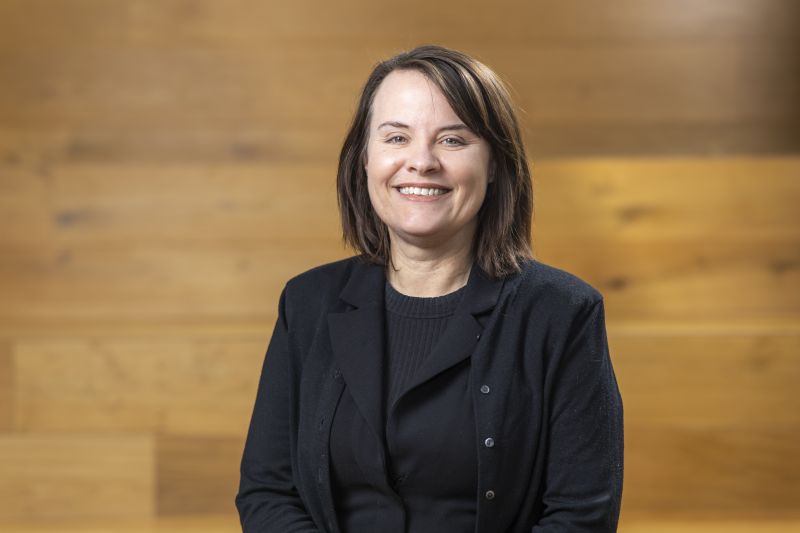
Keynote speaker
Professor Sue Bennett
Sue Bennett has more than 30 years’ experience teaching in Australian universities. She started out in science, completing an honours degree in physics, followed by a Masters degree in science communication, later moving into education with a graduate certificate and PhD. She has worked as a writer, programmer, educational designer, higher education teacher and university academic. Sue’s research has explored living and learning with technology, working with multidisciplinary teams across the life course from the early years through to adulthood. She is committed to working collaboratively with practitioners and organisations, and disseminates the findings of her work to researchers, teachers, students, higher education leaders and policymakers. She is currently Deputy Vice-Chancellor Academic at La Trobe University.
Featured speakers

A/Prof Marian Mahat
Associate Professor Marian Mahat is an internationally recognised expert in learning environments, known for her influential work on the relationship between learning environments and pedagogy. She leads innovative, practice-informed research that empowers educators to design and use learning environments more effectively. Her work on spatial competency has shaped policy, professional learning, and school design across multiple countries. With over 100 publications and extensive experience collaborating with schools, systems, and industry, Marian brings a powerful, evidence-based perspective on creating future-ready learning environments that improves teaching and learning outcomes.

A/Prof Mark Merolli
Associate Professor Mark Merolli is a Physiotherapist. He is an expert in digital health and health informatics and has an extensive active portfolio in digital health capability building in tertiary education and within workforce advancement. He is Director of Innovation & Enterprise (program delivery & support) in the Faculty of MDHS. Mark has projects that cross-cut research, education, and innovation in the Melbourne Entrepreneurial Centre (MEC). He is one of the educational technology Community of Practice chairs over at MEC

A/Prof Margaret Osborne
Margaret Osborne is an Associate Professor in Psychology and Music (Performance Science) at the University of Melbourne. In addition, she maintains a performance psychology practice. From Margaret's earliest music performance experiences when she struggled to achieve her best performance under pressure, she's been fascinated by the elements that support supreme performance execution when it counts. One key aspect is simulating high stress performance scenarios ahead of the “main event”, so that performers of all types – musicians, athletes, public speakers, health students etc - can learn how to execute the required task at the required time to the best of their ability, all whilst managing the heightened emotional and physiological load that typically accompanies it. In this panel Margaret will reflect on her experiences using design methodologies to enhance her teaching activities and learning experiences for students in performance and clinical health domains.

A/Prof Kate Tregloan
Dr Kate Tregloan is Associate Professor in Higher Education at the Centre for the Study of Higher Education. Kate focuses on the intersections of design and higher education. These include the design of contemporary curriculum, as well as the development of design skillsets by students of all disciplines. She is most interested in the decisions and values that impact creative engagement as well as quality assessment in higher education. Outcomes deliver innovative and learning-centred responses to community need. She has long-standing research interests in the design and evaluation of environments that support people with disability, and the development of digital tools that enable interdisciplinary learning and making.
| Date | Friday 1 May 2026 |
|---|---|
| Time | 10.00am-2.30pm, registration and morning tea from 9.30am for 10am start |
| Location |
In-person on the University of Melbourne Parkville Campus Symposium keynote address and panel discussion will be available online via Zoom |
| Cost |
In-person - UoM staff and graduate researchers: free In-person - Colleagues outside of the University of Melbourne: $75 (incl GST) Online (plenary sessions only, 10am-12pm): free |
| Registration | Registration for this event is now closed. |
Enquiries
If you have any queries about the registration process, please contact melbourne-cshe@unimelb.edu.au.