Join us for a dynamic and collaborative event exploring the Scholarship of Teaching and Learning (SoTL). This event invites you to share your innovative practices, explore evidence-based approaches to teaching and learning, as well as critical reflections on curriculum design.
Bringing together educators, learning designers and researchers, this symposium showcases research-informed teaching innovations and evidence-based strategies that enhance student learning across disciplines. Through presentations, roundtable discussions, and networking opportunities, the showcase fosters interdisciplinary dialogue, supports professional development, and promotes a culture of teaching excellence in our community. Whether you're new to SoTL or an experienced practitioner, this showcase offers space for you to explore diverse perspectives across roles and disciplines, as well as establish new connections and potential collaborations.
In this showcase, we invite participants to reflect on the question: What is SoTL? As pedagogical priorities shift and student needs evolve, this question opens up rich conversations about identity, methods, evidence, and the broader culture of teaching and learning in higher education. This question also encourages us to reflect not just on what we do in teaching and learning, but also how and why we do it, and what it means to do so with scholarly intent.
Examples of showcase themes include (but not limited to):
- Curriculum design and innovations
- Scoping reviews
- Faculty development programs
- Education in workplace settings
- Interdisciplinary learning
- Student experience
- Health and wellbeing
Join the UoM SoTL CoP (General | SoTL Community of Practice | Microsoft Teams), a community-led space to support and promote scholarly approaches to teaching and learning, including its evaluation, communication and publication.
Enquiries
If you have any queries about the Showcase, please contact melbourne-cshe@unimelb.edu.au
| 9.30-10.00am | Registration & morning tea (Foyer, Ground level, Arts West Building - North Wing) | |||||
| Plenary sessions (Kathleen Fitzpatrick Theatre - Basement level) | ||||||
| 10.00-10.05am | Welcome and opening remarks A/Prof Thomas Cochrane, Centre for the Study of Higher Education (CSHE) | |||||
| 10.05-10.55am | Keynote address SoTL, SoAD, and Theories of Change: Four Lenses to Achieve Our Aims Professor Mary Wright, Professor of Education Scholarship Educational Innovation Team, Deputy Vice Chancellor (Education), The University of Sydney A theory of change is a hypothesis or prediction about how a desired outcome can occur. Often these are implicit or intuitional, but much research suggests that the presence of explicit and intentional theories of change is critical for achieving our goals successfully. What is our – and our institutions’ – theory of change around the Scholarship of Teaching and Learning (SoTL) and the Scholarship of Academic Development (SoAD)? For example, is the primary purpose to develop critically reflective educators or to promote rigorous research? In this talk, I argue that our theories of change may be muddled in ways that hinder the outcomes we can achieve. I apply four lenses – or theories of change – that emerge from the sociology of higher education (Stevens, Armstrong, and Arum, 2008, as adapted in Wright, 2023). These shed light on possibilities and chart more intentional pathways for maximizing the transformative potential of scholarly approaches to teaching and academic development in higher education. | |||||
| 10.55-11.00am | Comfort break | |||||
| 11.00am-12.00pm | Panel discussions and Q&A: How can the University of Melbourne create more explicit and intentional pathways to maximize the potential of SoTL? Professor Sally Male, Director, Teaching and Learning Lab (Tll), Faculty of Engineering and Information Technology Professor Karena Waller, Department of Microbiology and Immunology, Faculty of Medicine, Dentistry and Health Sciences A/Prof Grace Thompson, Music Therapy, Melbourne Conservatorium of Music, Faculty of Fine Arts and Music Dr Angelito Calma, Senior Lecturer in Higher Education, Faculty of Business and Economics Q&A Moderator: A/Prof Kwang Cham, Department of Optometry and Vision Sciences, Faculty of Medicine, Dentistry and Health Sciences | |||||
| 12.00-1.00pm | Networking lunch (Foyer, Ground level, Arts West Building - North Wing) | |||||
| Concurrent sessions | ||||||
|---|---|---|---|---|---|---|
Curriculum Design and Student Engagement Forum Theatre (Level 1, Room 153) | Innovative Teaching Methods Lectorial Room (Level 1, Room 156) | Technology and Digital Integration in Education Flex Learning Space (Level 2, Room 256) Chair: A/Prof Angelina Fong, MDHS | ||||
| 1.00-1.30pm | Flexibility or Procrastination? A Longitudinal Study of Lecture Engagement Patterns and Academic Performance Muqing Guo and Dr Marc Cheong, FEIT | Unlocking revision: Using escape rooms to engage students in oral exam preparation Dr Andrea Pianella and Nancy Mase, ABP | Seeing the Unseen: How Digital Pedagogy Advance Place-based Literacy in Urban Planning Education Dejan Malenic and Leonardo Nogueira de Moraes, ABP | |||
| 1.30-2.00pm | aSSERT – Sustainability Self-Efficacy Reflection Tool Mark Latham, FEIT, Dr Helena Bender, Science, Dr Franz Wohlgezogen, FBE and Dr Yi Huang, Science | Microlearning in Action: A Rapid Demonstration for Faculty Development Dr Kylie Fitzgerald and Dr Michael Poulton, MDHS | Enhancing Undergraduate Pathology Education: Leveraging Automated Personalised Feedback to Optimise Student Learning Outcome Dr Sophie Paquet-Fifield, Lachlan McOmish and Dr Jessica Stander, MDHS | |||
| 2.00-2.30pm | Designing for Accessibility: Experiences, Lessons, and Reflections on Developing a New Subject Dr Paul Fijn and Dr Age Zanca, Science | Developing a critical reading practice through scriptwriting and role-playing in the age of hyper-distraction: Insights from a first-year sociology subject Dr Liz Dean, Dr Garrity Hill, Dr Elena Balcaite and Dr Andrea Dodo-Balu, Arts | AI-powered, academic-driven: An approach for personalised student feedback and learning Dr Andrew Cutting, Science Participants are invited to take this personalised feedback demo quiz which is part of a demo in this presentation. | |||
Keynote presentation
-
Professor Mary Wright, Professor of Education Scholarship Educational Innovation Team, Deputy Vice Chancellor (Education), The University of Sydney, Australia
A theory of change is a hypothesis or prediction about how a desired outcome can occur. Often these are implicit or intuitional, but much research suggests that the presence of explicit and intentional theories of change is critical for achieving our goals successfully. What is our – and our institutions’ – theory of change around the Scholarship of Teaching and Learning (SoTL) and the Scholarship of Academic Development (SoAD)? For example, is the primary purpose to develop critically reflective educators or to promote rigorous research? In this talk, I argue that our theories of change may be muddled in ways that hinder the outcomes we can achieve. I apply four lenses – or theories of change – that emerge from the sociology of higher education (Stevens, Armstrong, and Arum, 2008, as adapted in Wright, 2023). These shed light on possibilities and chart more intentional pathways for maximizing the transformative potential of scholarly approaches to teaching and academic development in higher education.
Curriculum Design and Student Engagement
-
Winn Wing-Yiu Chow, Qianyi Li, Muqing Guo (Presenting Author), Stella Peng, Marc Cheong (Presenting Author), and Julian Marx, Faculty of Engineering and Information Technology
The widespread adoption of lecture capture systems has paradoxically been linked to declining lecture attendance and inconsistent student engagement. This study moves beyond attendance metrics by using learning analytics to examine how postgraduate students navigate flexible learning. Through a mixed-methods approach, we identified four distinct engagement patterns with nearly half of participants falling into a “Disengaged” cluster that showed significantly poorer academic outcomes. Our findings highlight that unstructured flexibility functions as a “double-edged sword”: it benefits self-regulated learners but exacerbates procrastination in others. We conclude with evidence-based recommendations for implementing supportive scaffolding that mitigates procrastination while preserving student autonomy.
-
Mark Latham (Presenting Author), Faculty of Engineering and Information Technology
Helena Bender (Presenting Author), Faculty of Science
Franz Wohlgezogen (Presenting Author), Faculty of Business and Economics
Andrew King, Faculty of Science
Yi Huang (Presenting Author), Faculty of Science
Rose Hawkins, Chief Operating OfficerEducation is one of the key ways that the University aims to make a positive impact on society, yet it has few mechanisms for understanding the impact that education has in achieving these aims. Typically, education-related sustainability reporting by Universities tends to focus on the content of the curriculum, rather than the outcomes experienced by the student. This session reports on a multi-year, cross-faculty, multi-subject, chancellery-supported project that built and trialled a sustainability self-efficacy reflection tool (aSSERT). The presentation will focus on the research that informed the design of aSSERT, survey results and reflections on its implementation.
-
Paul Fijn and Age Zanca, Faculty of Science
Designing a new university statistics course was an opportunity to create a subject founded entirely on inclusion, celebrating and valuing students’ diverse backgrounds, experiences, and neurodiversity. Content, resources, technology, classes, assessments, and learning management systems were all created and designed incorporating the principles of universal design for learning, with varying ease of implementation and time-commitment required. We summarise and reflect on our experiences in trying to design for accessibility: we will discuss which aspects were most successful, which would be simplest to implement in existing subjects with established content and resources, and the challenges we faced in developing this subject.
Innovative Teaching Methods
-
Andrea Pianella and Nancy Mase, Faculty of Architecture, Building and Planning
This project explores the use of an educational escape room as a playful yet purposeful revision activity to prepare students for a high-stakes oral exam. Instead of a traditional recap lecture, students collaborated in small groups to solve puzzles linked to subject content, rehearsing skills of reasoning, justification, and teamwork, in preparing them for their oral exam. Student reflections revealed that the escape room motivated earlier preparation, boosted confidence, and reduced anxiety. Tutors confirmed the activities strong alignment with exam demands. This session demonstrates how playful learning can transform revision into an engaging and effective learning experience.
-
Dr Kylie Fitzgerald (Presenting Author), Dr Michael Poulton (Presenting Author), Tamara Clements, Lisa Cheshire, and Brett Vaughan, Faculty of Medicine, Dentistry and Health Sciences
Our concise, interactive session demonstrates the power of microlearning in faculty development, using effective questioning strategies as an example. Participants will experience a brief microlearning snippet, engage in quick peer discussions, and participate in a short facilitated sharing session. Based on our research in medical education (presented at MDHS L&T 2024 & ANZAHPE 2025), this approach showcases how we can enhance educator skills across disciplines. We'll efficiently explore the implementation, challenges, and benefits of microlearning and Communities of Practice in faculty development, providing attendees with practical insights for their own educational contexts.
-
Liz Dean, Garrity Hill, Elena Balcaite and Andrea Dodo-Balu, Faculty of Arts
In today’s hyper-distracted world, engaging first-year Bachelor of Arts students with required readings can be a challenge. To address this SOCI10003 Inequalities: Future Challenges, enable students to extend reading through writing dialogues. Students work in pairs to produce a short one-page dialogue drawing on one of several readings on feminism before role-playing this the following week. Students’ dialogues transferred reading material to real-world social interactions, demonstrating the activation of critical thinking. This presentation outlines the design of this intervention, shares preliminary data from students and invites the audience to consider how similar interventions could be transferred to their teaching contexts.
Technology and Digital Integration in Education
-
Xiao Ma, Dejan Malenic (Presenting Author), Sam Holland, Leonardo Nogueira de Moraes (Presenting Author) and James Thompson, Faculty of Architecture, Building and Planning
This project addresses the increasing need for developing students’ place-based understanding while internationalising curriculum in urban planning education. We developed multimedia-enhanced Virtual Site Visits (VSVs) that enable students to explore housing issues in Melbourne and Bandung, Indonesia. Through mixed-methods analysis, we found VSVs democratise access to diverse urban fabric, amplify marginalised voices through firsthand community accounts, and enable comparative analysis across different environments. Student feedback reveals three key VSV design principles: question-led exploration, immersive self-directed learning via 360-degree video and 3D built environment scanning, and integrated stakeholder storytelling. This approach transforms traditional education by challenging expert-dominated knowledge curriculum and developing critical digital citizenship skills essential for future urban planning practice.
-
Sophie Paquet-Fifield (Presenting Author), Lachlan McOmish (Presenting Author), Jessica Stander (Presenting Author), Vivienne Mak, Margaret Osborne, Bonnie Tsai, Coral Fang, Kate Huo, and Grace Kiosoglous, Faculty of Medicine, Dentistry and Health Sciences
This presentation explores the development, implementation, and evaluation of an automated feedback system in an undergraduate Pathology course with 158 students. The system aims to enhance automated personalised feedback while reducing educator workload. We discuss the strategic educational alignment, deployment process, and effectiveness evaluation from both staff and student perspectives. The analysis covers user costs, time commitments, infrastructure requirements, and impact on student learning and experience. Our findings will inform recommendations for wider implementation, supporting innovative teaching and learning experiences in higher education.
-
Dr Andrew Cutting, Faculty of Science
AI has the potential to revolutionise personalised student feedback and learning, however building bespoke AI feedback tools is inaccessible for most educators, and many off-the-shelf tools give generalised feedback that doesn’t integrate with curriculums or student’s learning trajectory. Here, I show how Generative AI (GenAI) can create highly personalised feedback that is accurate, accessible, and linked to subject learning outcomes and student performance. When piloted with first-year agriculture students (n=164), 45% engaged with the feedback. Of those surveyed (n=42), 71% agreed/strongly agreed that it helped them review their engagement, and 62% agreed/strongly agreed that it helped them self-assess their strengths and weaknesses.
Participants are invited to take this personalised feedback demo quiz which is part of a demo in this presentation. It takes just a few minutes and demonstrates Andrew's approach to the personalised feedback and learning method.
Poster presentations

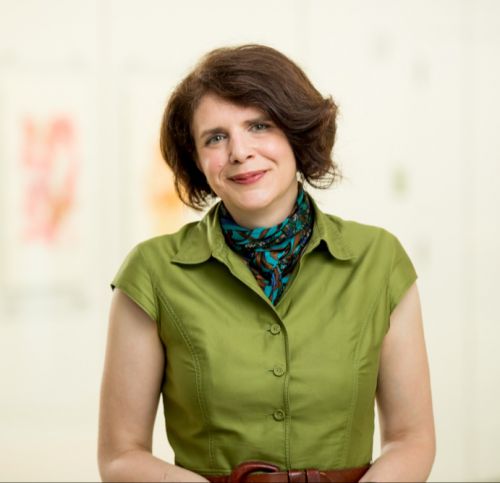
Keynote speaker
Professor Mary Wright
Professor of Education Scholarship
Educational Innovation Team| Deputy Vice Chancellor (Education) | University of Sydney, Australia
Dr. Mary C. Wright is currently serving as Professor of Educational Scholarship at Educational Innovation, DVC (Education) at the University of Sydney, Australia. From 2016-2025, Mary served as Associate Provost for Teaching and Learning, Executive Director of the Sheridan Center for Teaching and Learning, and a Professor (Research) in the Department of Sociology, Brown University. Previous to Brown, Mary worked at the University of Michigan’s Center for Research on Learning and Teaching for 13 years. Her PhD area is Sociology (University of Michigan), and she holds a master’s in higher education administration (University of Michigan) and a BA in sociology (Princeton University).
Mary’s most recent book, Centers for Teaching and Learning: The New Landscape of Higher Education, was published by Johns Hopkins Press in 2023. She is a co-editor of the International Journal for Academic Development (IJAD), the journal of ICED (the International Consortium for Educational Development). Developing High-Impact Course Design Institutes: A Model for Change (Jodan Troisi, Michael Palmer, Mary Wright, Lori Hostetler, & Carol Hurney) was published in 2025 by Routledge.
She is a co-author on the ACE-POD Center for Teaching and Learning (CTL) Matrix (2017), which created operational standards for CTLs, as well as Defining What Matters (2018), which established guidelines for CTL evaluation. She is also a co-author on the Equity/Excellence Imperative: A 2030 Blueprint for Undergraduate Education at Research Universities.
Featured speakers
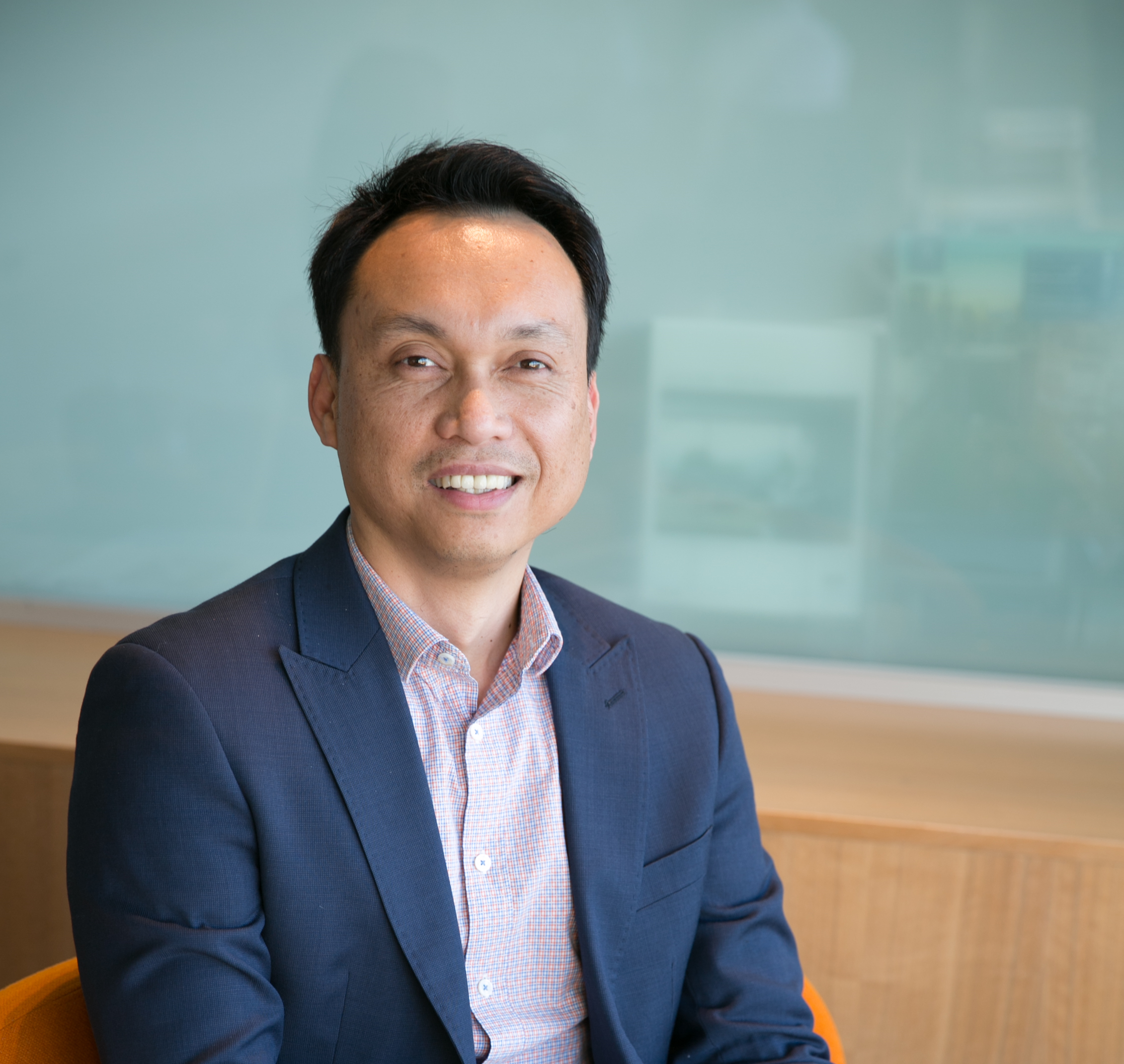
Dr Angelito Calma
Dr Angelito Calma is a Senior Lecturer in Higher Education at the Williams Centre for Learning Advancement, Faculty of Business and Economics. He designs and delivers various professional development programs to support business academics, manages the Faculty's assurance of learning in relation to AACSB accreditation, and teaches commerce students at WorkHub, an on-campus internship experience where students solve real-world problems. Angelito has over 20 years of experience teaching management subjects and publishes in higher education and business and management journals. He connects education-focussed academics through the FBE SoTL Network and his recent SoTL research focuses on business students' development of key skills such as critical thinking and problem solving.
Associate Professor Kwang Cham
As an Education Focused Academic, Associate Professor Cham's SoTL research primarily focuses on preparing students for effective clinical practice, with overarching themes including feedback and assessment, inter-professional education and collaborative practice, curriculum design and innovations, and digital technologies. He has also been involved in various projects funded by local and international grants, such as enhancing student engagement through digital 3D technology and promoting healthy aging through interprofessional education.
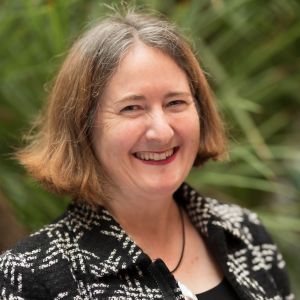
Professor Sally Male
Professor Sally Male was awarded the 2023 World Federation of Engineering Organizations Medal for Excellence in Engineering Education. As Director of the Teaching and Learning Laboratory in the Faculty of Engineering and IT at the University of Melbourne, Professor Male leads a program of research in engineering and computing education, and higher education, and a program of development and support for engineering educators. Her mission in her research and teaching, is to ensure that students have the best possible opportunities to develop capabilities and attributes to lead successful lives contributing to society. Specifically, Professor Male's research interests are curriculum development, employability, work integrated learning, and gender inclusion.

Associate Professor Grace Thompson
Grace Thompson is an Associate Professor in Music Therapy in the Faculty of Fine Arts and Music, and a registered music therapist. Grace has worked with disabled children and young people, and their families, for over 20 years within the early childhood and special education sectors. Alongside her music therapy research, Grace is an innovative teacher who has supported educators to develop their teacher presence, teaching presentation skills, and foster inclusive learning spaces. She is a former Senior Academic Fellow with the Melbourne Centre for the Study of Higher Education, past recipient of the GEM Scott Teaching Fellowship (2022), and is a member of the Faculty of Fine Arts and Music College of Reviewers for peer review of teaching.

Professor Karena Waller
Dr Karena Waller is a Professor in the Department of Microbiology and Immunology, the Deputy Program Director of the Bachelor of Biomedicine and was appointed Academic Director, Education-focussed Careers (Office of the Provost) in 2024. Karena joined the Department's academic teaching staff in 2010 after completing 15 years in local and international malaria research. Today, Karena contributes significantly to the subject coordination and teaching and learning of microbiology and foundational biomedical sciences to first, second and third year Bachelor of Biomedicine and Bachelor of Science students. External to the Department, Karena sits on numerous School, Faculty, Institute and University Committees, primarily focusing on teaching and learning, student experience and engagement, and academic governance and program management
| Date | Thursday 30 October 2025 |
|---|---|
| Time | 10.00am-2.30pm (registration and morning tea from 9.30am for 10.00am start) |
| Location | In-person event only (Parkville Campus) |
| Cost | The Showcase is free for the University of Melbourne staff and graduate researchers |
| Registration | Registration is closed |
Enquiries
If you have any queries about the registration process, please contact melbourne-cshe@unimelb.edu.au.